
News
5 Common Mistakes When Choosing Hydraulic Press Manufacturers
Welcome to My Blog!
I’m so glad you’re here. Before we dive into the content, I’d love to connect with you beyond this page. On my social media, I regularly share industry insights, product updates, and behind-the-scenes moments — plus, it’s a great place for us to interact!
Follow us on Facebook: Shandong Chuangxin Automation Equipment Co., Ltd
Let’s grow together and stay connected. Now, let’s jump into the blog — I hope you find the content informative, engaging, and truly valuable.
Table of Contents
Choosing the right hydraulic press manufacturers can make or break your plywood production line. Whether you are a seasoned production manager, quality engineer, or plywood mill owner, one wrong choice can lead to inconsistent bond strength, costly downtime, and long-term profitability issues. In this comprehensive guide, we go beyond superficial buying tips to provide technical data, industry insights, comparison models, and expert thinking frameworks that will help you make an informed and strategic decision when evaluating hydraulic press manufacturers for your plywood operation.
This article will help you:
- Understand key plywood pressing parameters and what they mean
- Avoid the most damaging mistakes in selecting hydraulic press manufacturers
- Learn how to compare machines on the right technical metrics
- Recognize why after-sales support can outweigh initial price differences
- Evaluate engineering transparency and long-term reliability
Let’s dive into the details of why choosing the right manufacturers matters—and how to avoid the costly traps most buyers fall into.
Why Choosing the Right Hydraulic Press Manufacturers Matters
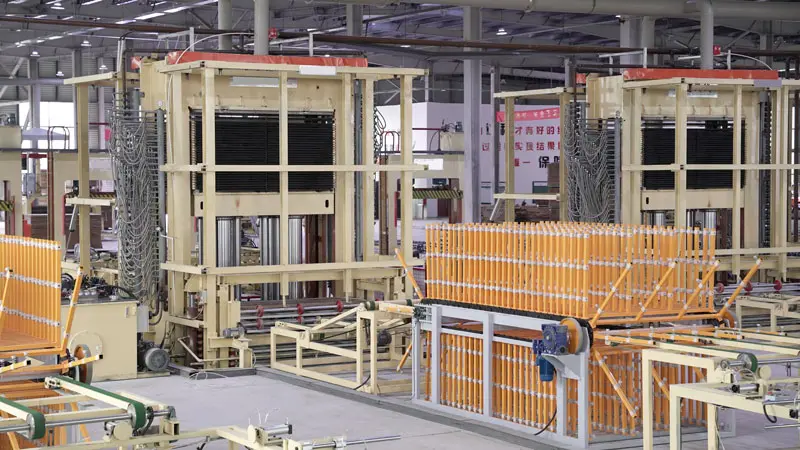
Hydraulic press systems are the heart of plywood production—the final moment when veneers bond together into strong panels. A high-quality press ensures uniform pressure distribution, precise control, and lasting durability under continuous cycles.
The Core Role of Hydraulic Presses in Plywood Production
Hydraulic presses for plywood typically supply pressure ranging from 400 to 800 tons or more, depending on your panel size and production requirements. Most pre-press cold hydraulic systems commonly used in plywood lines are rated at 400T, 500T, or 600T of nominal pressure, with customization available based on production scale and sheet size.
In cold pressing, uniform pressure up to these tonnages ensures good veneer contact and air removal before hot pressing—and these parameters directly affect adhesive curing and final board strength.
Mistake 1: Not Defining Real Plywood Pressing Requirements
Why Vague Requirements Lead to Poor Equipment Choices
Too many buyers approach hydraulic press manufacturers without clearly defined operational goals. Do you need cold press only? Do you plan to expand into high-density plywood grades? The answers affect:
- Recommended tonnage
- Platen surface size
- Hydraulic cylinder arrangement
Without clear operational definitions, manufacturers may propose generic machines that look good on spec sheets but underperform in your actual application.
What “Good Requirements” Look Like
A detailed set of pressing requirements should include:
- Final board size and thickness range
- Desired daily throughput (sheets/hour)
- Glue type and curing profile
- Cycle time expectations
When you articulate these clearly before contacting hydraulic press manufacturers, you create the conditions for more accurate quotations and machine fits.
Mistake 2: Choosing Hydraulic Press Manufacturers Based on Price Alone

Short-Term Savings vs Long-Term Value
When selecting hydraulic press manufacturers, going after the lowest quote is a false economy. True cost evaluation should look at total cost of ownership, including downtime, replacement parts, consumables, and machine longevity.
Here’s an industry-level comparison:
| Cost Category | Instant Benefit | Long-Term Impact |
|---|---|---|
| Lowest Price Only | Lower acquisition cost | Frequent maintenance, possible quality issues |
| Balanced Investment | Stable performance | Lower risk of downtime and regrets |
| High Specification Focus | Premium durability | Predictable ROI over years |
From industry examples, a 500T cold press capable of handling standard 4’×8′ plywood sheets is readily available; these often feature robust hydraulic systems and PLC control for stable pressure application. Systems that try to cut costs on hydraulic components or maintain substandard tolerances will often fail prematurely under continuous use.
Cost Mistake Case Study: Pressure vs Life Span
Industry experts often highlight that hydraulic systems fail not because of nominal tonnage deficits, but because of poor component quality—such as low-grade seals or unreliable valves. The initial investment in quality pump units, cylinders, and control valves often pays off quickly in reduced maintenance and longer service windows.
Mistake 3: Ignoring Technical Transparency from Hydraulic Press Manufacturers
Red Flags: Marketing Over Engineering
Many hydraulic press manufacturers use marketing language that sounds impressive but lacks technical transparency. For example:
- Ambiguous pressure distribution claims
- No pressure curves or hydraulic system diagrams
- No data on repeatability and control accuracy
A credible manufacturer should be able to explain:
- How pressure is maintained and equalized across all platen zones
- What the control system logic is (e.g., PLC vs manual)
- How maintenance impacts future performance
Key Technical Concepts You Should Understand
Pressure Uniformity: Good systems ensure that the force is applied evenly across the entire platen surface, avoiding weak bonding or uneven panel thickness.
Control Repeatability: The ability to execute the same pressure profile across thousands of cycles matters as much as peak pressure rating.
Mistake 4: Overlooking After-Sales Capability and Support Structure
Service: A Central Part of Machine Value
Hydraulic presses are complex electromechanical systems. Even the most reliable models need:
- Periodic maintenance
- PLC updates
- Spare parts replacement
Hydraulic press manufacturers who do not offer structured after-sales service can leave you stranded when issues emerge. This includes:
- Remote troubleshooting
- Guaranteed response times
- Quality spare parts availability
A manufacturer that provides training, installation support, and a clear escalation matrix helps ensure minimal production disruption.
Mistake 5: Failing to Compare Manufacturers on the Right Criteria
Avoiding Surface-Level Comparison Metrics
It is deceptively simple to compare manufacturers just on:
- Price
- Maximum tonnage
- Plate size
These are only superficial measures.
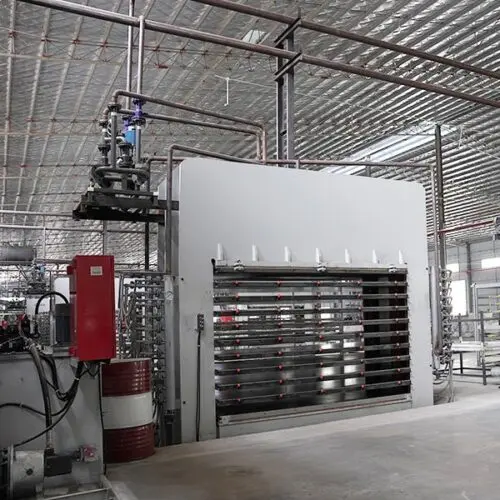
What truly matters in plywood hydraulic press selection:
- Pressure uniformity over large platen areas
- Hydraulic efficiency and stability
- Control system precision beneath variable production conditions
- Modularity for future upgrades
Here’s a more helpful comparison approach:
| Evaluation Factor | Shallow Metric | Smart Metric |
|---|---|---|
| Press Power | Max Tonnage | Pressure consistency over time |
| Control System | Manual / Basic PLC | Precision & repeatability |
| System Stability | Basic Specs | Response under load fluctuations |
Experts in wood processing stress that it’s better to get a balanced machine with predictable performance curves than to chase the highest tonnage rating. This principle helps separate marketing claims from engineering reality.
Practical Industry Data: Typical Press Parameters & Standards
Several industry sources show that hydraulic presses for plywood can range widely in specification:
Common Hydraulic Press Specifications
| Application | Nominal Pressure | Typical Use |
|---|---|---|
| Small furniture board pressing | 50–100 T | Light panels and furniture boards (cold press) |
| Standard plywood production | 400–800 T | Pre-pressing before hot pressing (cold press) |
| Large industrial plywood lines | >800 T | Large boards or multi-layer pressing |
Pressure Requirements by Plywood Thickness
According to engineering references, required panel pressure often depends on thickness:
- <10 mm thick boards: ~40–50 MPa
- 10 mm boards: ~50–60 MPa
This is a useful ballpark when discussing system sizing with hydraulic press manufacturers.
Case Study: Cold Press vs Hot Press in Plywood Lines
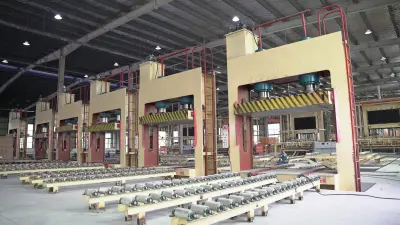
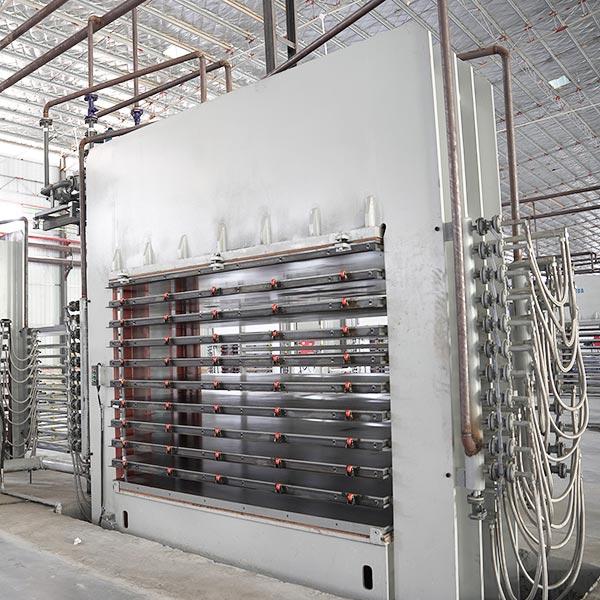
To illustrate why choosing the right manufacturers matters, we can compare two pressing approaches:
Cold Press Stage
- Primary goal: remove air pockets, pre-bond veneers
- Pressure range: 400–800 T
- Output impact: improves final bond strength and reduces defects
Hot Press Stage
- Applies heat and pressure for curing resin
- Temperatures and pressures coordinated with adhesive chemistry
- Often involves multi-opening hot press systems for high throughput
Successful plywood production typically relies on an optimized combination of both press stages. Hydraulic press manufacturers who understand plywood resin chemistry, heat transfer, and pressure profiles will design systems that operate reliably in tandem.
Real Expert Insights & Industry Perspectives
Production Engineers Common Viewpoint:
“Reliable pressure distribution and control repeatability are far more valuable than impressive max tonnage specs on paper. A press that delivers consistent pressure cycle after cycle directly affects board quality and reduces raw material waste.”
Technical Managers Often Recommend:
Always ask manufacturers to provide pressure curves and repeatability data over a 6–12‑month projected cycle count. Plans that lack these data often underperform after initial deployment.
Industry surveys reveal that presses with programmed logic control (PLC) and diagnostic visualization see fewer unscheduled stops and require less corrective maintenance.
Beyond Pressure: Other Key Selection Criteria
Hydraulic System Design Quality
Ask about:
- Pump type and brand
- Cylinder sealing methodology
- Oil temperature and filtration control
These directly impact performance consistency and machine lifespan.
Structural Frame Rigidity
A strong frame mitigates deformation under high loads, which:
- Improves platen alignment
- Reduces uneven bonding across panels
- Enhances longevity
Final Thoughts: Making a Smart Investment
Selecting the right hydraulic press manufacturers is not a one‑dimensional purchase decision. It’s a strategic step in ensuring quality plywood output, long machine life, stable production, and strong ROI.
Key takeaways for buyers:
- Define your actual production needs first
- Compare performance on technical fundamentals
- Factor in service and support capability
- Use data, not just sales pitch
With these principles, you will avoid common mistakes and choose a partner that helps you grow rather than hinder your plywood operation.
FAQ
What pressure should I look for in a hydraulic press for plywood?
Typical hydraulic presses for plywood production range from about 50T for light panel applications to 400–800T or more for standard cold press operations.
Do hydraulic press manufacturers customize machines?
Yes—many capable manufacturers offer customization for platen size, pressure range, and control systems if you provide your detailed production requirements.
How important is control precision?
Very important. Precision pressure control ensures consistent plywood quality, lower scrap rates, and fewer rejects.
Can hydraulic presses be upgraded?
In many cases, yes. Modular hydraulic units, control systems, and sensor add-ons can be added later to extend machine usefulness.
Why not just pick the highest tonnage machine offered?
Because pressure distribution and actual usable force matter more than advertised peak tonnage. A well-designed 500T system with excellent control may outperform an 800T system with poor engineering
 English
  Vietnamese
  Arabic