
News
7 Key Facts: Cold Press Machine vs Hot Press Machine
Welcome to Chuangxin Automation!
I’m delighted to have you here! Before exploring our world of cutting-edge automation solutions, let’s stay connected—follow us on social media for industry insights, expert discussions, and real-time updates. Here’s where you can reach us:
🌐 Facebook: Shandong Chuangxin Automation Equipment Co., Ltd
Let’s innovate together! Whether you’re here for technical expertise, product updates, or collaborative opportunities, I hope you find our content valuable and inspiring. Dive in and discover the future of automation with us!
Happy browsing! 🚀
Table of Contents
Introduction
In the plywood and engineered wood manufacturing industry, choosing between a cold press machine and a hot press machine is a critical decision. Each machine serves a unique purpose in the production process and offers distinct benefits and limitations. Understanding the differences between the two is essential for plywood manufacturers aiming to improve efficiency, optimize product quality, and reduce operational costs.
This article explores the seven key facts you need to know when comparing a cold press machine vs hot press machine, with practical insights for equipment buyers in the wood panel industry. We’ll also introduce examples from Shandong Chuangxin Automation Equipment Co., Ltd., a trusted manufacturer of wood-based board machinery, to illustrate how these machines function in real-world production.
Key Fact 1: The Role of Cold Press Machines in Plywood Production
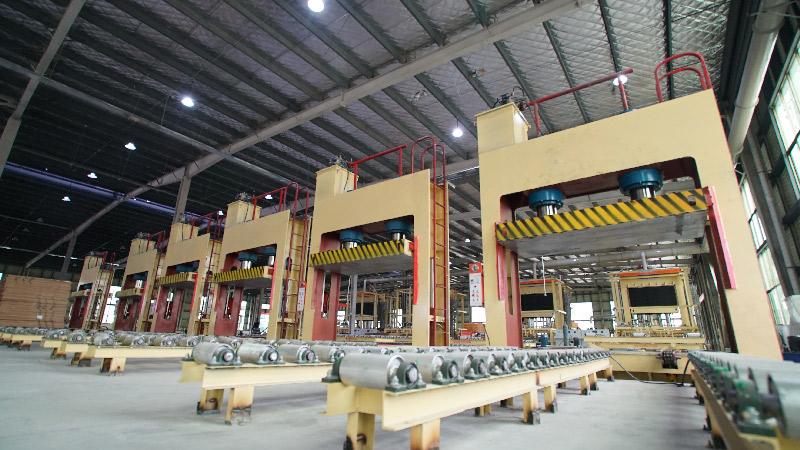
A cold press machine is typically used in the preliminary stage of plywood production. It functions by applying uniform hydraulic pressure to glue-coated veneer layers to stabilize their alignment and remove trapped air before hot pressing. This pre-pressing stage ensures improved bonding, better panel flatness, and fewer defects in the final product.
Advantages of Cold Press Machines:
- Energy-efficient (no heating required)
- Simple structure and low maintenance
- Prevents misalignment of veneers
- Enhances glue curing consistency
Example: 400T Bottom-Type Cold Pre-Press Machine from Shandong Chuangxin is designed for high-volume plywood lines with a pressing pressure of up to 400T and fully automatic control.
Key Fact 2: Hot Press Machines Deliver Final Strength and Finish
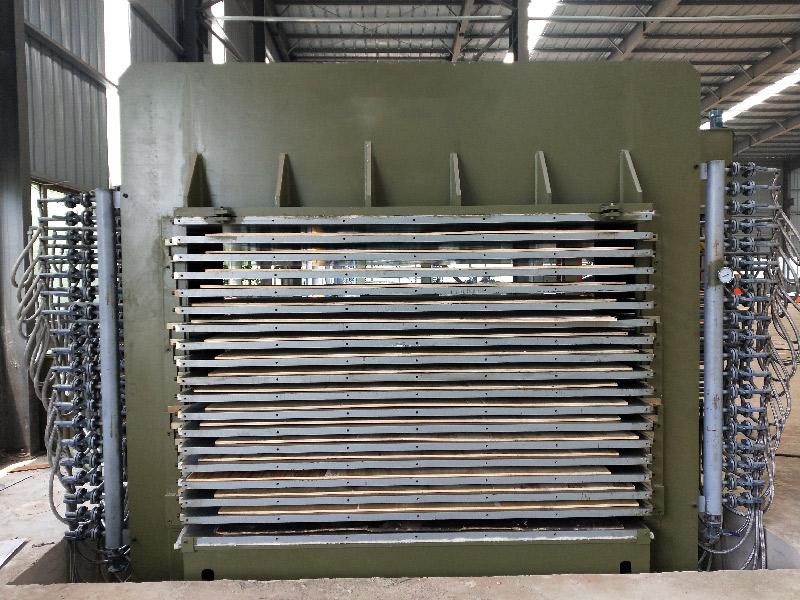
Unlike the cold press, a hot press machine applies both heat and pressure to permanently cure the adhesive and bond veneer layers into a solid panel. It plays a decisive role in determining the final strength, surface quality, and production speed.
Advantages of Hot Press Machines:
- Fast curing of glue
- High pressure and heat ensure strong bonding
- Smooth surface finish
- High efficiency for mass production
Example: 500T 20-Layer Hot Press Machine from Shandong Chuangxin offers 21 heated plates, precision temperature control, and PLC automation for continuous, high-speed output.
Key Fact 3: Cold Press Machine vs Hot Press Machine – Functional Differences

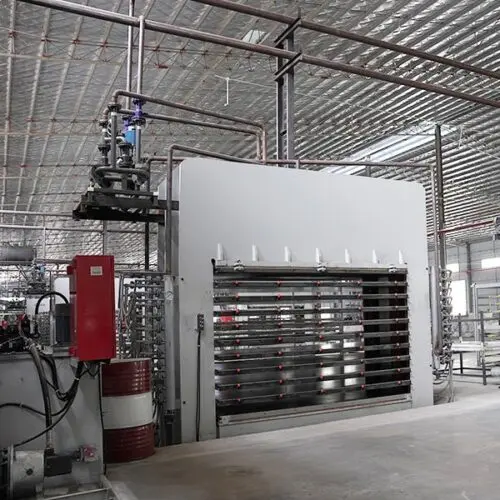
The table below provides a detailed comparison between a cold press machine vs hot press machine in terms of function, pressure, energy use, and application.
| Feature | Cold Press Machine | Hot Press Machine |
|---|---|---|
| Main Function | Pre-pressing, veneer alignment | Final bonding, glue curing |
| Heat Requirement | No | Yes |
| Pressure Range | 1–5 MPa | 5–25 MPa |
| Cycle Time | 3–10 minutes | 4–7 minutes (per cycle) |
| Energy Consumption | Low | High |
| Glue Curing Stage | Partial | Complete |
| Typical Usage | Veneer stabilization before hot pressing | Laminating and final bonding of plywood panels |
| Best For | Small to mid-scale operations, pre-bonding | Large-scale, high-output plywood production |
| Example Product | 400T Cold Pre-Press from Shandong Innovation | 500T Hot Press from Shandong Innovation |
Key Fact 4: Hydraulic Systems and Frame Structures Matter
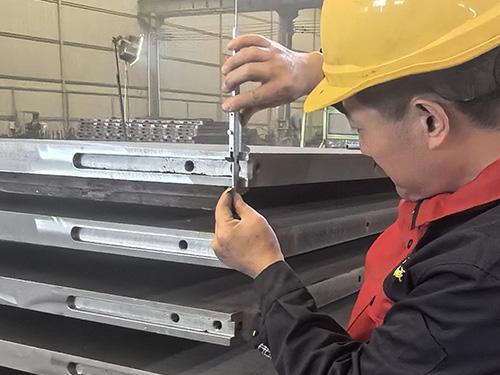
Both cold press machine vs hot press machine rely heavily on powerful hydraulic systems to apply pressure during pressing operations. The design, durability, and configuration of these hydraulic systems significantly impact overall performance, output consistency, and machine lifespan.
Shandong Chuangxin equips both its cold press machines and hot press machines with pollution-free hydraulic stations and high-strength cast steel cylinders. These systems ensure efficient force transmission and reliable performance under constant use. Additionally, the heavy-duty welded frame structures—up to 40 mm thick in hot press models—prevent deformation and support long-term industrial operation.
- Cold Press Machine: Equipped with 2 cast steel cylinders (320 x 900 mm), supporting a total pressure capacity of 400T.
- Hot Press Machine: Integrated with 4 cast steel cylinders (260 x 1400 mm), delivering a total capacity of 500T.
Such robust construction helps minimize machine downtime and ensures product uniformity even under intensive workloads, reinforcing why choosing the right cold press machine vs hot press machine setup is essential for production quality.
Key Fact 5: Control Systems Influence Productivity
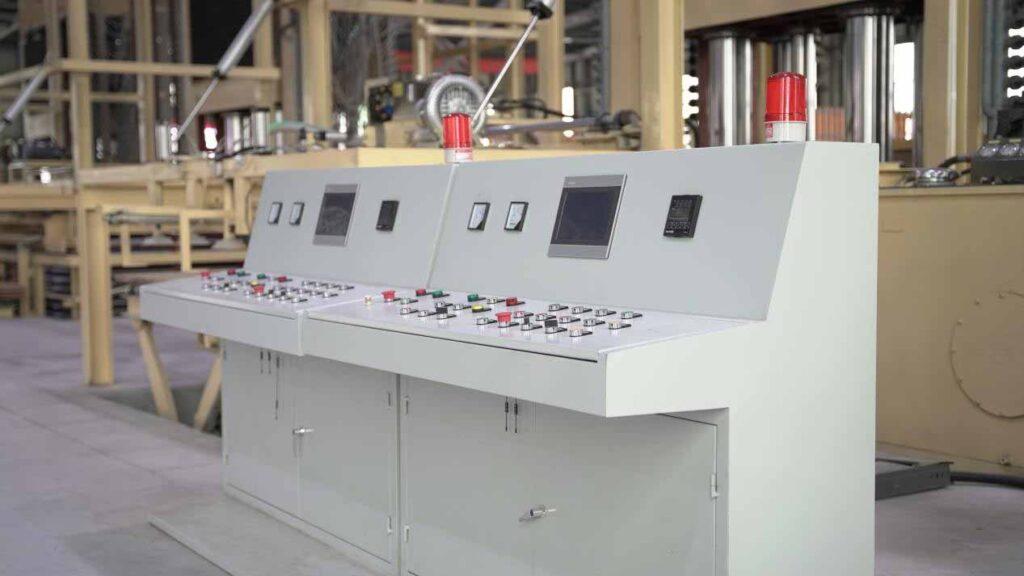
Automation and digital control systems are critical when comparing cold press machine vs hot press machine. These systems directly affect cycle speed, operator efficiency, and defect minimization.
Shandong Chuangxin equips its presses with advanced automation options tailored to the machine type:
- Cold Press Machine: Features a fully automatic control system optimized for consistent panel loading, pre-press timing, and platen alignment.
- Hot Press Machine: Utilizes PLC-based computer programming for precise monitoring and regulation of temperature, pressure, and timing across multiple layers.
These intelligent control systems help reduce manual error, lower labor costs, and ensure uniform results—making them indispensable when deciding between a cold press machine vs hot press machine for your plywood operation.
Key Fact 6: Heating Systems Make the Difference

The cold press operates without heat, offering savings in energy and maintenance. In contrast, the hot press The inclusion—or absence—of a heating system is one of the most defining differences between a cold press machine vs hot press machine.
Cold press machines operate without heat, offering notable savings in energy use and maintenance needs. They are ideal for the pre-press stage where adhesive curing does not require thermal activation. On the other hand, hot press machines are built with advanced heating systems to facilitate final glue curing and bonding.
Shandong Chuangxin’s hot press machine is designed with performance and efficiency in mind, featuring:
- Double inlet and outlet hot plate oil circuits for uniform heat distribution
- Q355B manganese steel heating plates for superior durability and conductivity
- Flatness tolerance control within 0.1 mm to ensure product accuracy
Understanding the purpose of the heating system is crucial when evaluating a cold press machine vs hot press machine, as it influences both operational cost and product quality.
Key Fact 7: Choose Based on Production Scale and Goals
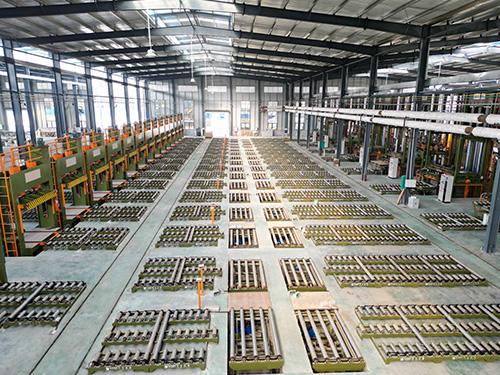
Ultimately, selecting the right cold press machine vs hot press machine depends on your manufacturing scale, production targets, and equipment investment strategy.
Choose a cold press machine if:
- You need to stabilize glue lines before final pressing
- Your plant operates on a small to medium production scale
- Lower energy consumption and long-term equipment stability are priorities
Opt for a hot press machine if:
- Final bonding strength and cycle speed are top concerns
- You produce high plywood volumes on a daily basis
- Advanced automation and precision controls are essential
Balancing your current output with future capacity goals will help guide the right choice between a cold press machine vs hot press machine.
Conclusion
Understanding the core differences between a cold press machine vs hot press machine is essential for plywood production success. Each machine type plays a unique role in ensuring quality, efficiency, and scalability. Cold presses offer pre-bonding stability and energy efficiency, while hot presses provide high-speed production with strong adhesive bonding and smooth finishes.
At Shandong Chuangxin Automation Equipment Co., Ltd., we provide complete wood-based board machinery solutions, including advanced cold and hot press machines tailored to different production needs. With over 100 types of equipment and a strong R&D team, we’re your reliable partner for optimizing plywood manufacturing lines.
Contact us today to request a quote or get advice on selecting the right press machine for your operation.
FAQ
What’s the main difference between a cold press and a hot press machine?
The key difference in the cold press machine vs hot press machine comparison lies in their use of heat. A cold press machine operates using only hydraulic pressure without any heat, making it ideal for the initial bonding of veneers. In contrast, a hot press machine combines both heat and pressure, enabling complete adhesive curing and creating a stronger, smoother final product.
Can I use only a cold press for plywood production?
While a cold press machine plays a crucial role in stabilizing glued veneers, it cannot complete the plywood production process on its own. A cold press machine vs hot press machine setup shows that the cold press is used for pre-pressing only. Final bonding and curing require a hot press machine to achieve the necessary strength and durability.
Is a hot press machine more expensive to operate?
Yes. When comparing a cold press machine vs hot press machine, the hot press generally incurs higher operational costs due to its integrated heating systems. However, this investment translates into faster curing times, greater bonding strength, and higher throughput, which may offset the initial energy expenses in large-scale production settings.
What size plant is best suited for a cold press machine?
In the cold press machine vs hot press machine context, cold presses are more suited for small to medium-sized plants or as a supporting machine in larger lines. Their lower energy consumption and simpler maintenance make them attractive to manufacturers focused on cost-efficiency and precision during the pre-press phase.
Why choose Shandong Chuangxin for press machines?
When evaluating suppliers for cold press machine vs hot press machine solutions, Shandong Chuangxin stands out for its engineering expertise and broad product range. We offer customizable machines built with robust hydraulic systems, smart automation, and durable frame structures. Our comprehensive support and innovative designs help plywood producers scale efficiently and maintain competitive production standards.
 English
  Vietnamese
  Arabic