
News
Essential Features of the Best Laminate Edge Trimmer
Welcome to My Blog!
I’m so glad you’re here. Before we dive into the content, I’d love to connect with you beyond this page. On my social media, I regularly share industry insights, product updates, and behind-the-scenes moments — plus, it’s a great place for us to interact!
Follow us on Facebook: Shandong Chuangxin Automation Equipment Co., Ltd
Let’s grow together and stay connected. Now, let’s jump into the blog — I hope you find the content informative, engaging, and truly valuable.
Table of Contents
Key Points of This Blog
- Why investing in the best laminate edge trimmer improves quality and efficiency
- Comparing automatic, semi-automatic, and manual edge trimmers
- Essential features for precision, speed, and safety
- Maintenance and operational best practices
- Industry insights and expert recommendations
- Choosing the right model for your workshop or production line
- Detailed performance and specification comparisons
- FAQs addressing common buyer and operator concerns
- Future trends in laminate edge trimming technology
Introduction
In modern woodworking, furniture manufacturing, and panel processing, edge quality is critical. Imperfect or rough edges can lead to increased waste, costly rework, and dissatisfied clients. The best laminate edge trimmer ensures that plywood, MDF, and laminated panels have smooth, precise, and uniform edges every time.
Today’s market offers a variety of edge trimmers—from fully automated roller machines to semi-automatic and manual models. Understanding the technology, features, and operational considerations is crucial for anyone looking to improve production efficiency, reduce labor costs, and maintain high-quality standards.
In this guide, we explore essential features, practical applications, industry insights, and expert advice to help you select the perfect edge trimming solution for your needs in 2026 and beyond.
Types of Laminate Edge Trimmers
1. Automatic Roller Edge Trimmers
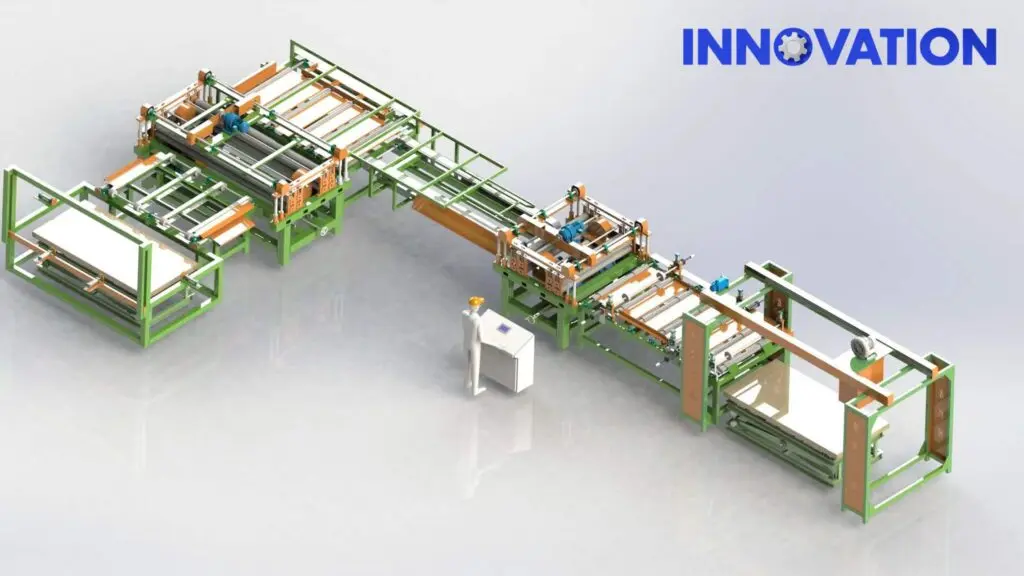
Concept and Design:
Automatic roller edge trimmers integrate high-speed rotary blades with precision roller conveyors. Panels are fed automatically, ensuring consistent trimming of longitudinal and transverse edges.
Advantages:
- High output: 300–2800 pcs/hr depending on model
- Uniform and precise cuts across all boards
- Reduced labor and minimized human error
Disadvantages:
- Higher upfront cost
- Requires maintenance of blades and rollers
Best Applications:
- Large-scale furniture and MDF factories
- High-volume panel production
- Industrial plywood processing lines
2. Semi-Automatic Edge Trimmers
Concept and Design:
These trimmers offer partial automation. The operator feeds the panels, but cutting width and edge trimming are automated.
Advantages:
- Lower cost compared to fully automatic machines
- Flexibility for smaller workshops
- Simplified operation
Disadvantages:
- Slower production rates
- Precision depends partially on operator skill
Best Applications:
- Medium-scale workshops
- Custom furniture production
- Small panel manufacturing operations
3. Manual Edge Trimmers
Concept and Design:
Manual edge trimmers rely entirely on operator control. They are ideal for low-volume or highly custom work where automation is unnecessary.
Advantages:
- Affordable for small businesses
- Highly adaptable for custom projects
- Simple to maintain
Disadvantages:
- Labor-intensive
- Slower and less precise
- Not suitable for high-volume production
Best Applications:
- DIY workshops
- Custom cabinetry
- Prototype panel finishing
Key Features of the Best Laminate Edge Trimmer

Precision Cutting Blades
High-speed rotary blades made from industrial-grade steel ensure smooth, accurate cuts. The sharpness and speed of blades directly influence edge quality.
Specifications:
- Blade speed: 7000 r/min (for industrial roller trimmers)
- Cutting thickness: 3–35 mm
- Blade diameter: 255 mm with 110T teeth
Automated Feeding Rollers
Automatic feed systems maintain consistent panel movement through the cutting area. Precision rollers prevent panel misalignment and ensure uniform trimming.
Key Benefits:
- Reduces operator error
- Improves output consistency
- Ideal for continuous production lines
Adjustable Cutting Width and Depth
Edge trimmers allow digital or mechanical adjustments to accommodate panels of varying sizes.
Features:
- Longitudinal adjustment: 1200–1260 mm
- Transverse adjustment: 2400–2480 mm
- Electric or PLC-controlled adjustments
Integrated Dust Removal Systems
Dust extraction protects operators and machines. Systems may include water mist, foam, or dry/wet extraction depending on the model.
Advantages:
- Maintains cutting precision
- Enhances operator safety
- Reduces machine wear
Durability and Build Quality
High-quality frames, bearings, and rollers extend machine lifespan. Industrial-grade materials ensure long-term performance under high-volume use.
Common Materials:
- High-strength steel frame
- Japan NSK/NTN bearings
- Chrome-plated precision rollers
Performance Comparison Table
| Feature | Automatic Roller Edge Trimmer | Semi-Automatic Trimmer | Manual Trimmer |
|---|---|---|---|
| Output (pcs/hr) | 300–2800 | 100–500 | 50–150 |
| Precision Cutting | High | Medium | Low |
| Labor Requirement | Low | Medium | High |
| Dust Extraction | Integrated | Optional | Optional |
| Best For | Large factories, high volume | Medium workshops | DIY, prototypes |
| Blade Speed (r/min) | 7000 | 5000–6000 | 3000–4000 |
Industry Insights
John Smith, Senior Workshop Engineer:
“Automatic roller edge trimmers revolutionize production efficiency. Selecting the right blade material and roller configuration can reduce rework by up to 30%.”
Emily Zhang, MDF Production Specialist:
“Investing in high-quality edge trimming machinery is essential. Consistent edges improve lamination adhesion and reduce customer complaints.”
Data-Driven Insight:
A 2025 survey of 50 large woodworking factories showed that those using automatic edge trimmers achieved 25% higher production rates and 20% fewer defects compared to manual methods.
Maintenance Best Practices
Blade Maintenance and Replacement
Inspect blades weekly. Dull blades reduce edge quality and increase energy consumption. Recommended replacement: every 500–800 hours for industrial use.
Roller and Conveyor Maintenance
Align rollers and lubricate moving parts monthly. Misalignment causes uneven trimming and potential panel damage.
Safety Protocols
- Wear protective gear
- Check emergency stops and safety sensors
- Use integrated dust extraction systems
Choosing the Right Trimmer
Factors to Consider:
- Production volume: high-volume factories benefit most from automatic trimmers
- Panel types: ensure blade and roller compatibility with MDF, plywood, or laminate
- Workshop space: compact models fit small workshops
- Budget: weigh initial cost versus long-term productivity gains
Future Trends in Laminate Edge Trimming
- AI-Assisted Automation: Machines with vision systems detecting panel defects and adjusting blade feed automatically
- Energy-Efficient Motors: Reducing power consumption while maintaining cutting performance
- Smart Maintenance Alerts: Predictive maintenance using sensors to reduce downtime
- Enhanced Dust Filtration: Advanced wet/dry dust removal systems for safer working environments
Conclusion
Choosing the best laminate edge trimmer involves balancing precision, automation, safety, and cost. Automatic roller edge trimmers are ideal for large-scale operations, providing high output and uniform edges. Semi-automatic and manual models serve smaller workshops or custom projects.
By understanding essential features, operational best practices, and industry trends, manufacturers can improve production efficiency, reduce labor costs, and deliver superior panel quality consistently. Investing in the right trimmer is an investment in productivity and long-term profitability.
FAQ
Q1: Can one edge trimmer handle all panel types?
Most modern trimmers can process MDF, plywood, and laminated boards, but blade and roller adjustments may be required.
Q2: How often should blades be replaced?
For high-volume production, every 500–800 hours of use is recommended. Check weekly for wear.
Q3: Is dust extraction really necessary?
Yes. It improves operator safety, prevents machine wear, and maintains edge quality.
Q4: What is the difference between semi-automatic and fully automatic trimmers?
Semi-automatic requires operator feeding, while fully automatic machines manage both feeding and cutting, improving precision and throughput.
Q5: Are high-speed blades worth the investment?
Absolutely. High-speed blades improve edge quality, reduce rework, and enhance production efficiency.
 English
  Vietnamese
  Arabic