
News
Wood Panel Edge Cutting Guide: Edge Cutters Explained
Welcome to My Blog!
I’m so glad you’re here. Before we dive into the content, I’d love to connect with you beyond this page. On my social media, I regularly share industry insights, product updates, and behind-the-scenes moments — plus, it’s a great place for us to interact!
Follow us on Facebook: Shandong Chuangxin Automation Equipment Co., Ltd
Let’s grow together and stay connected. Now, let’s jump into the blog — I hope you find the content informative, engaging, and truly valuable.
Table of Contents
Key Takeaways
- Edge cutters play a critical role in achieving smooth, accurate panel edges
- Modern edge cutting machines outperform traditional manual trimming methods
- Precision edge cutting improves downstream processes like edge banding and lamination
- Automated systems ensure consistency, speed, and reduced labor costs
- Choosing the right method depends on production scale, material type, and accuracy needs
Introduction
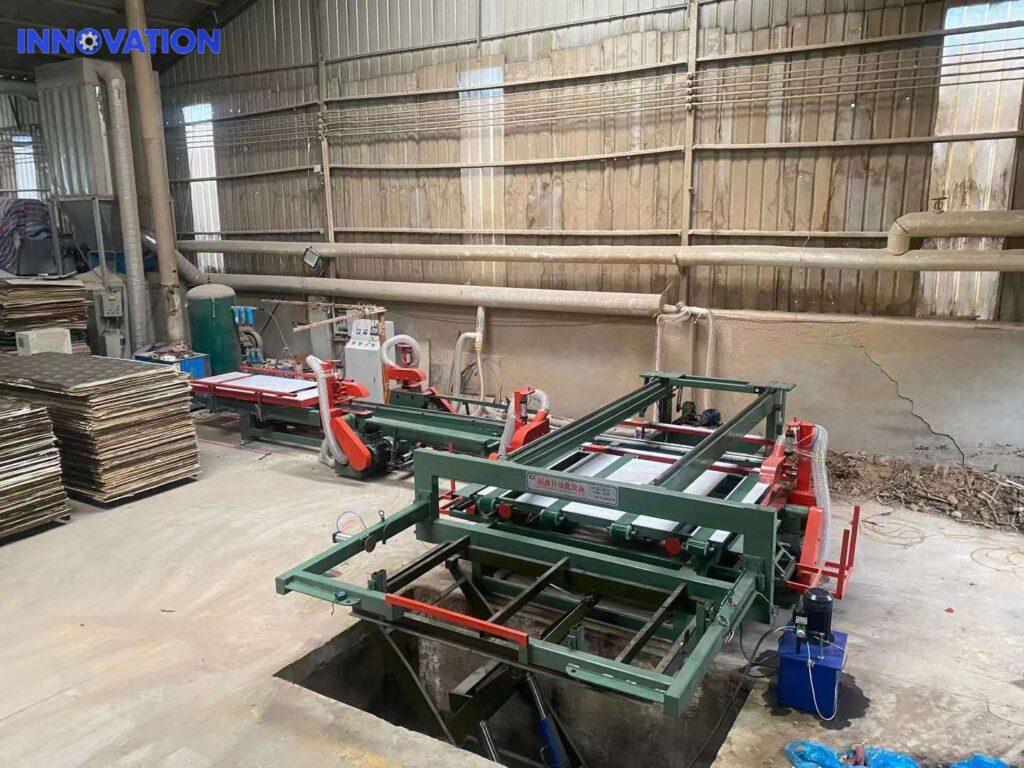
In modern woodworking and panel manufacturing, the difference between a high-quality finished product and a rejected batch often comes down to one critical step—edge cutting. Whether you are producing furniture panels, laminated boards, or structural plywood, the edge determines not only the appearance but also the dimensional accuracy and downstream processing efficiency.
With the growing demand for precision manufacturing and mass production, traditional trimming methods are no longer sufficient. Today, edge cutters have become essential equipment in wood-based panel industries, enabling manufacturers to achieve consistent quality, higher throughput, and reduced operational costs.
This guide explores the full spectrum of wood panel edge cutting—from foundational concepts to advanced automation systems—helping you understand how to optimize your production line and choose the right solutions.
Understanding Wood Panel Edge Cutting with Edge Cutters
What Is Wood Panel Edge Cutting?
Wood panel edge cutting refers to the process of removing irregular, rough, or excess material from the edges of panels after pressing, laminating, or cutting.
This process ensures that panels meet strict dimensional tolerances and surface quality requirements.
It is a critical step before further processing such as edge banding, drilling, or assembly.
Why Edge Cutters Are Important in Panel Processing
Edge cutters are designed to deliver precise, repeatable trimming results across different types of wood panels.
They reduce defects such as chipping, uneven edges, and dimensional inconsistencies.
In industrial environments, they also contribute to standardized production and improved product grading.
Types of Edge Cutters Used in Woodworking
Manual Edge Cutters
Basic Concept
Manual edge cutters are simple tools used for trimming edges by hand.
They are suitable for small-scale operations or repair work.
However, they require skilled labor and cannot guarantee consistent accuracy.
Limitations
Manual trimming often results in tolerance deviations of ±1–2 mm.
Surface finish quality depends heavily on operator experience.
Production speed is extremely limited compared to automated systems.
Semi-Automatic Edge Cutting Machines
Working Principle
Semi-automatic machines combine powered cutting blades with manual feeding.
Operators position the panel while the machine performs the trimming.
This improves cutting accuracy and reduces physical effort.
Application Scope
These machines are commonly used in medium-sized workshops.
They provide a balance between cost and performance.
However, productivity is still constrained by manual handling.
Automatic Edge Cutters
Industrial Automation Concept
Automatic edge cutters integrate conveyor systems, PLC controls, and high-speed blades.
They enable continuous processing without manual intervention.
These machines are widely used in large-scale panel manufacturing plants.
Performance Characteristics
- Feeding speed: up to 55 m/min
- Cutting accuracy: ±0.2 mm
- Output capacity: 250–350 panels/hour
These metrics highlight the efficiency advantages of automated systems.
Traditional Methods vs Modern Edge Cutters
Traditional Edge Trimming Methods
Hand Saw Cutting
Hand saw trimming was widely used before industrialization.
It required significant labor and often produced inconsistent edges.
Material waste was also relatively high due to low precision.
Router-Based Trimming
Routers improved edge smoothness compared to hand tools.
They allowed better control but still lacked scalability.
Dust generation and tool wear were common operational issues.
Modern Edge Cutters Advantages
Automation and Precision
Modern edge cutters use high-speed rotating blades and stable guiding systems.
They deliver uniform edge quality across all panels.
Precision levels can reach industrial standards required for export products.
Efficiency Improvement
Automated systems dramatically increase production speed.
For example, a roller-type edge cutter can process over 300 panels per hour.
This significantly reduces production cycle time.
Standardization and Compliance
Modern equipment helps manufacturers comply with international standards such as:
- ISO 9001 (Quality Management)
- EN 14322 (Wood-based panels for furniture)
- ANSI A208 (Particleboard standards)
Key Edge Cutting Equipment in Panel Production
Automatic Roller Edge Trimming Saw
Concept Overview
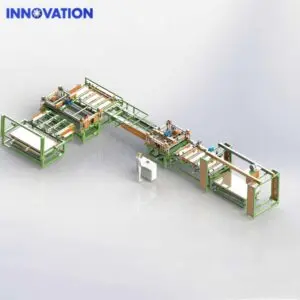
This advanced edge cutter uses synchronized roller conveyors and high-speed saw blades.
It ensures stable feeding and precise trimming.
Panels are processed continuously, improving efficiency.
Workflow Concept
Panels are placed on an infeed roller system and guided into the cutting zone.
Saw blades trim both longitudinal and transverse edges simultaneously.
Finished panels are discharged automatically for further processing.
Technical Data Reference
- Total power: approximately 40–45 kW
- Saw blade speed: up to 7000 rpm
- Processing thickness: 3–35 mm
- Output: up to 300 panels/hour
These parameters demonstrate the machine’s industrial capability.
Edge Trimming Machine
Functional Concept
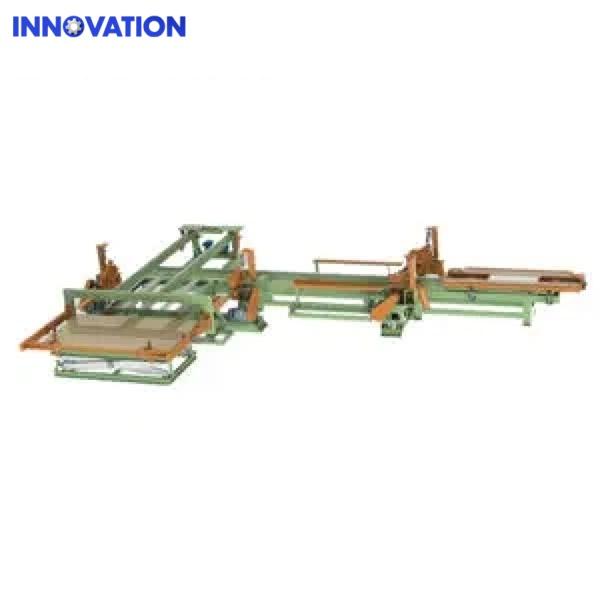
Edge trimming machines are designed for post-lamination or post-pressing trimming.
They ensure precise edge alignment and smooth finishes.
These machines are essential in high-end panel production lines.
Core Features
- High-speed rotary blades for clean cuts
- Adjustable cutting width for flexibility
- PLC control systems for automation
- Conveyor systems for continuous operation
Performance Data
- Daily output: up to 2800 panels
- Motor configuration: multi-motor system for stability
- Adjustment range: suitable for standard panel sizes
Edge Cutters vs Other Woodworking Cutting Tools
| Feature | Edge Cutters | Circular Saws | Routers |
|---|---|---|---|
| Precision | High (±0.2 mm) | Medium | High |
| Efficiency | Very High | Medium | Low to Medium |
| Labor Requirement | Low | Medium | High |
| Best Use Case | Panel edge trimming | General cutting | Fine detailing |
| Consistency | Excellent | Moderate | Operator-dependent |
Edge Cutting Techniques for Different Panel Types
Plywood Edge Cutting
Plywood requires stable cutting to prevent veneer tearing.
High-speed blades with fine teeth are recommended.
Proper pressure control ensures clean edges.
MDF Edge Cutting
MDF panels are dense and require sharp blades to avoid burning.
Dust extraction systems are essential for safe operation.
Consistent feed speed improves surface quality.
Particle Board Edge Cutting
Particle boards are prone to chipping.
Using scoring blades helps minimize edge defects.
Proper blade alignment is critical.
Precision and Quality Control in Edge Cutting
Dimensional Accuracy Standards
In industrial production, edge tolerance is typically controlled within ±0.2–0.5 mm.
High-end furniture manufacturing may require tighter tolerances.
Accurate edge cutting ensures proper assembly and fit.
Surface Finish Quality
Smooth edges reduce the need for secondary processing.
They also improve adhesion in edge banding operations.
Surface roughness is often measured using Ra values in microns.
Industry Trends and Technological Innovations
Smart Manufacturing Integration
Modern edge cutters are increasingly integrated with Industry 4.0 systems.
They use sensors and data analytics for real-time monitoring.
This improves efficiency and reduces downtime.
Energy Efficiency Improvements
New machines are designed to reduce energy consumption.
Variable frequency drives optimize motor performance.
Energy savings can reach 10–20% compared to older systems.
Case Example: High-Volume Panel Factory
A large panel manufacturer upgraded to automatic edge cutters.
Production efficiency increased by 35%, while labor costs decreased by 25%.
Defect rates were reduced significantly, improving overall profitability.
Benefits of Using Advanced Edge Cutters
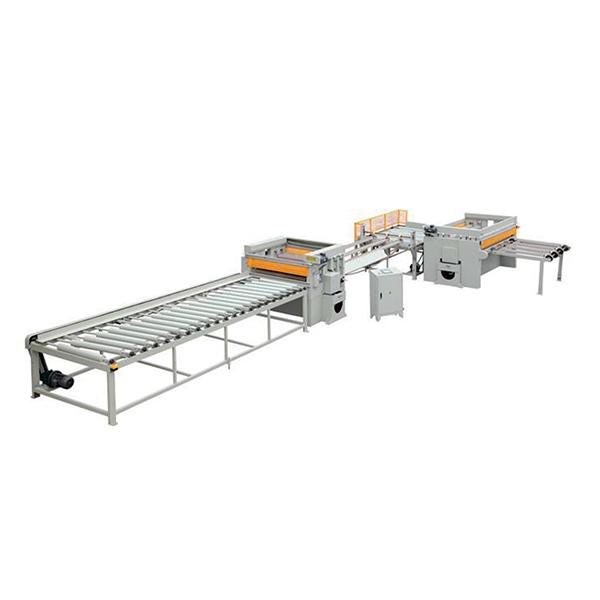
Improved Edge Quality
Modern edge cutters produce clean, splinter-free edges.
This enhances both appearance and structural integrity.
High-quality edges are essential for premium products.
Reduced Labor Costs
Automation minimizes manual handling.
This lowers labor expenses and improves safety conditions.
Fewer operators are required for large-scale production.
Higher Production Efficiency
Continuous processing increases output significantly.
Manufacturers can meet growing market demand.
Production lines become more streamlined.
Consistent Results
Automated systems ensure uniform quality.
This reduces rejection rates and material waste.
Consistency is critical for brand reputation.
Factors to Consider When Choosing Edge Cutters
Material Compatibility
Different materials require specific cutting parameters.
Choosing the right equipment ensures optimal performance.
Blade selection is also important.
Production Scale
Large factories benefit from fully automated systems.
Small workshops may prefer compact machines.
Investment should match production needs.
Precision Requirements
High-end applications demand tighter tolerances.
Advanced machines provide better accuracy.
This is essential for export-quality products.
Maintenance and Durability
Regular maintenance ensures long-term performance.
Industrial machines are designed for heavy-duty use.
Durability reduces downtime and repair costs.
Conclusion
Wood panel edge cutting has evolved into a highly specialized and technology-driven process. From manual tools to fully automated systems, the development of edge cutters has transformed the woodworking industry.
By adopting advanced edge cutting solutions, manufacturers can achieve superior product quality, higher efficiency, and greater competitiveness. Understanding the principles, equipment, and techniques involved is essential for making informed decisions and optimizing production processes in today’s demanding market.
FAQ
What is the best way to cut panel edges cleanly?
Using automated edge cutters with high-speed blades provides the best results.
They ensure smooth, precise edges with minimal defects.
Are edge cutters suitable for all wood panels?
Yes, they can process plywood, MDF, and particle board.
Adjustments may be required depending on material type.
How do edge cutters improve production efficiency?
They automate feeding and cutting processes.
This reduces labor and increases output significantly.
Can small workshops benefit from edge cutters?
Yes, compact or semi-automatic machines are available.
They improve accuracy and reduce manual workload.
What should I look for when buying edge cutters?
Focus on precision, efficiency, durability, and compatibility.
Choose equipment based on your production requirements.
 English
  Vietnamese
  Arabic