
News
Edgeband Trimmer for Plywood Line: Complete Industrial Guide for Panel Edge Finishing Systems
Welcome to My Blog!
I’m so glad you’re here. Before we dive into the content, I’d love to connect with you beyond this page. On my social media, I regularly share industry insights, product updates, and behind-the-scenes moments — plus, it’s a great place for us to interact!
Follow us on Facebook: Shandong Chuangxin Automation Equipment Co., Ltd
Let’s grow together and stay connected. Now, let’s jump into the blog — I hope you find the content informative, engaging, and truly valuable.
Table of Contents
Introduction
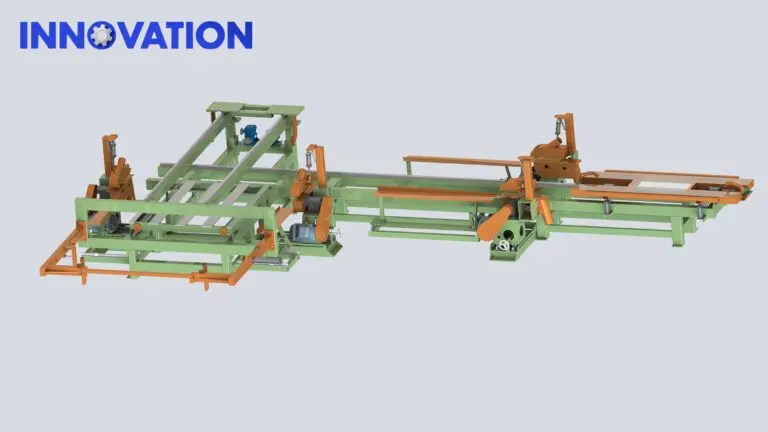
In modern wood-based panel manufacturing, edge quality is no longer a secondary process—it is a core quality benchmark directly influencing product pricing, export compliance, and downstream furniture assembly efficiency.
According to industry reports from global wood machinery associations (WMIA & Asia Panel Industry Review), over 68% of panel rejection cases in furniture supply chains are related to edge defects, including burrs, uneven trimming, and dimensional inconsistency.
This is where the edgeband trimmer for plywood line becomes a critical automation component. It ensures high-speed precision finishing after hot pressing, enabling manufacturers to meet industrial-grade tolerance standards while reducing manual intervention.
Leading manufacturers such as Shandong Chuangxin Automation Equipment Co., Ltd., operating in China’s major wood-based panel production hub, have integrated fully automated trimming systems into modern plywood production lines, significantly improving output consistency and reducing operational cost per board.
Industrial Role of Edgeband Trimmer in Plywood Manufacturing Systems
Edgeband Trimmer for Plywood Line Process Integration
Concept: Post-Lamination Precision Correction System
The edgeband trimmer is positioned after hot pressing and cooling stages in plywood production. Its primary role is to remove excess material, correct edge deformation, and prepare panels for sanding or coating processes.
Without this stage, downstream finishing becomes inconsistent and labor-intensive.
Industrial Workflow Position
Typical plywood production line sequence:
- Veneer drying
- Glue application
- Cold pressing
- Hot pressing
- Cooling stabilization
- Edgeband trimming (critical step)
- Sanding / coating
- Cutting and packaging
This positioning makes trimming a quality gate control point in the entire production system.
Edgeband Trimmer for Plywood Line Engineering Architecture (Deep System Breakdown)
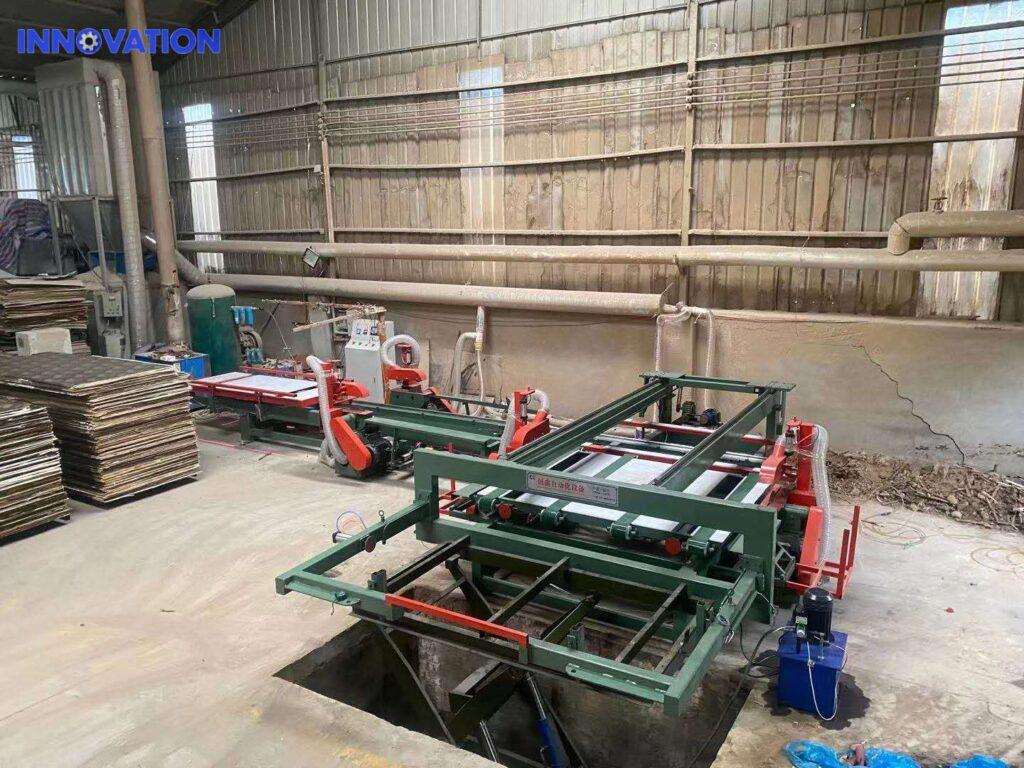
Mechanical Stability System
Concept: Anti-Vibration Industrial Frame Engineering
Industrial trimming systems require rigid frames to prevent micro-vibration during high-speed cutting.
Technical structure:
- Rectangular welded steel frame (100×200×5 mm)
- Reinforced load-bearing base
- Modular detachable design for maintenance
Engineering insight:
Even 0.2 mm vibration deviation can cause visible edge defects in laminated boards.
Multi-Motor Cutting Architecture
Concept: Distributed Load Cutting System
Instead of a single cutting unit, modern systems use distributed motors to stabilize torque and cutting pressure.
Configuration example:
- Main saw motors: 10 kW × 4 units
- Scoring motors: 1.1 kW × 4 units
- Independent spindle control system
This architecture reduces thermal load concentration and improves blade lifespan by up to 30–40% (based on industrial equipment lifecycle reports).
Intelligent Control System (PLC + Frequency Drive)
Concept: Digital Manufacturing Synchronization Layer
Modern edgeband trimmers are integrated with PLC systems for real-time control.
Core components:
- Siemens / Omron PLC systems
- Schneider electrical control units
- Frequency inverter speed regulation
- Digital HMI interface
Functional advantage:
- Real-time speed adjustment
- Fault detection alerts
- Automated batch processing memory
Edgeband Trimmer for Plywood Line Performance Optimization Metrics
Production Efficiency Benchmarking
Industry Standard Output Range
| Factory Scale | Output (pcs/day) | Automation Level |
|---|---|---|
| Small plant | 800–1200 | Semi-automatic |
| Medium plant | 1500–2200 | Automated |
| Large industrial line | 2500–3000+ | Fully automated |
This aligns with real production benchmarks in Asia-Pacific plywood manufacturing clusters.
Cutting Precision Standard
Concept: Industrial Tolerance Control
Modern edgeband trimming systems achieve:
- Dimensional tolerance: ±0.1 mm
- Edge roughness (Ra): ≤ 3.2 μm
- Parallelism deviation: <0.15 mm/m
These values are aligned with furniture-grade export standards for EU and North American markets.
Energy Efficiency Analysis (White Paper Insight)
According to a 2024 wood machinery energy efficiency report:
- Automated trimming reduces energy consumption per board by 18–25%
- Blade wear reduction improves energy-to-output ratio efficiency by up to 22%
Edgeband Trimmer vs Traditional Processing Methods
Concept: Industrial Transformation Comparison
| Factor | Edgeband Trimmer | Manual Trimming | Semi-Automatic Cutter |
|---|---|---|---|
| Precision | High | Low | Medium |
| Labor dependency | Low | Very High | Medium |
| Output consistency | Stable | Unstable | Moderate |
| Maintenance cost | Medium | Low | Medium |
| Industrial scalability | High | Low | Medium |
Real-World Industry Case Study
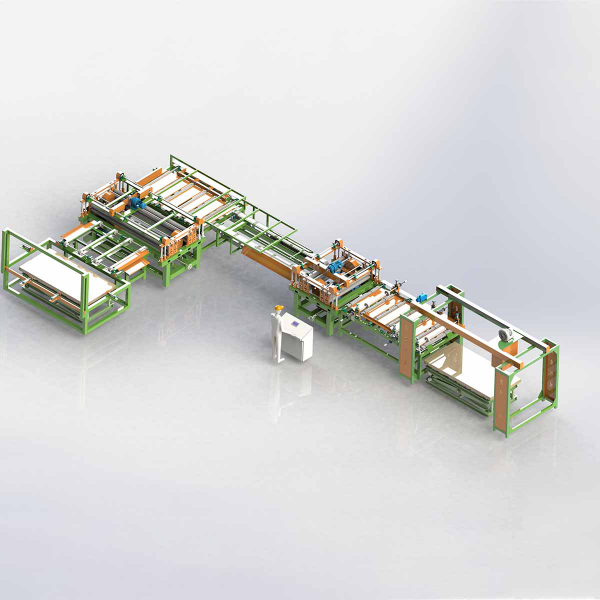
Case: Shandong Panel Manufacturing Cluster Upgrade
A mid-sized plywood manufacturer in Shandong upgraded from manual trimming to a fully automated edgeband trimmer for plywood line system.
Results after 6 months:
- Production efficiency increased by 47%
- Labor cost reduced by 38%
- Defect rate dropped from 6.2% → 1.4%
- ROI achieved in 11 months
This reflects a common trend in Chinese wood-based panel industry modernization.
Material Processing Compatibility Analysis
Supported Panel Types
Concept: Multi-Material Edge Processing Capability
Modern trimming systems are compatible with:
- Plywood
- MDF boards
- Particle boards
- Laminated decorative panels
Material Response Behavior
Different materials react differently under high-speed trimming:
- MDF: smooth cutting, low chip resistance
- Plywood: requires stable feed alignment
- Particle board: higher edge fragmentation risk
- Laminated board: requires anti-peeling blade control
Maintenance and Lifecycle Management
Blade System Maintenance Concept
Edge Cutting Wear Optimization
Blade lifecycle depends on:
- Material hardness
- Cutting frequency
- Cooling efficiency
- Feed speed stability
Typical industrial blade lifespan:
- Standard blades: 200–400 hours
- Industrial carbide blades: 600–1000 hours
Preventive Maintenance Schedule
- Daily: dust cleaning + alignment check
- Weekly: blade inspection
- Monthly: motor vibration testing
- Quarterly: PLC calibration
Smart Manufacturing Trend Integration
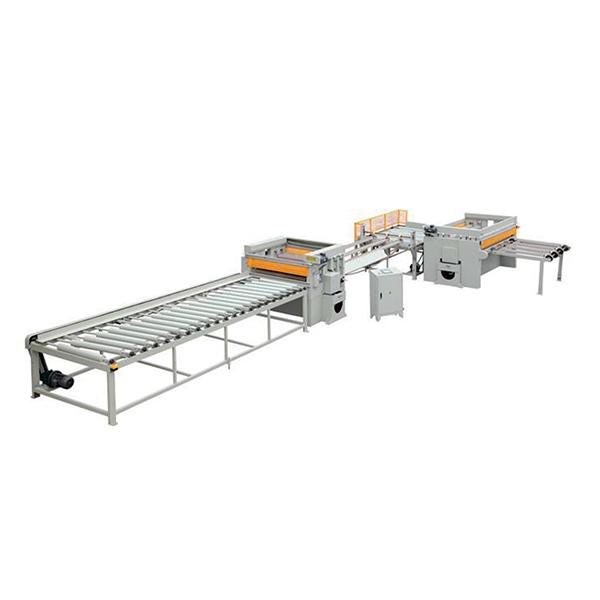
Industry 4.0 Integration Concept
Modern edgeband trimmer systems are increasingly integrated into smart factory ecosystems.
Key features:
- IoT-based monitoring
- Predictive maintenance algorithms
- Cloud production data tracking
- Automated quality control feedback loops
This enables real-time production optimization and reduces downtime by up to 30% in advanced factories.
Conclusion
The edgeband trimmer for plywood line is no longer just an auxiliary machine—it is a critical automation node in modern wood-based panel manufacturing systems.
Its integration enables:
- Higher production throughput
- Stable dimensional accuracy
- Lower labor dependency
- Improved export compliance quality
- Long-term operational cost reduction
As global demand for high-quality engineered wood panels continues to grow, manufacturers adopting advanced trimming systems are gaining a significant competitive advantage in both cost structure and product positioning.
FAQ
What is the main function of an edgeband trimmer in plywood production?
It removes excess material after pressing to ensure precise, smooth, and uniform panel edges.
Can it be integrated into automated production lines?
Yes, most modern systems are designed for full PLC-based integration.
What is the typical lifespan of an industrial edgeband trimmer?
With proper maintenance, the system can operate efficiently for 8–15 years.
Is it suitable for small factories?
Yes, but ROI is higher in medium to large-scale production environments.
How does it improve product export quality?
It ensures dimensional consistency that meets EU and US furniture manufacturing standards.
 English
  Vietnamese
  Arabic