
News
How to Maintain Your Plywood Edge Trimming Saw
Welcome to My Blog!
I’m so glad you’re here. Before we dive into the content, I’d love to connect with you beyond this page. On my social media, I regularly share industry insights, product updates, and behind-the-scenes moments — plus, it’s a great place for us to interact!
Follow us on Facebook: Shandong Chuangxin Automation Equipment Co., Ltd
Let’s grow together and stay connected. Now, let’s jump into the blog — I hope you find the content informative, engaging, and truly valuable.
Table of Contents
Key Points Covered in This Article
- Importance of regular maintenance for plywood edge trimming saws
- Daily, weekly, and monthly maintenance procedures
- Lubrication, cleaning, calibration, and safety checks
- Troubleshooting common issues and optimizing performance
- Comparison of manual vs. automatic edge trimming saw maintenance
- Technical specifications and maintenance schedule
- Industry standards and case studies for maintenance practices
- FAQ addressing typical user questions
- Best practices for prolonging saw life and enhancing production quality
Introduction
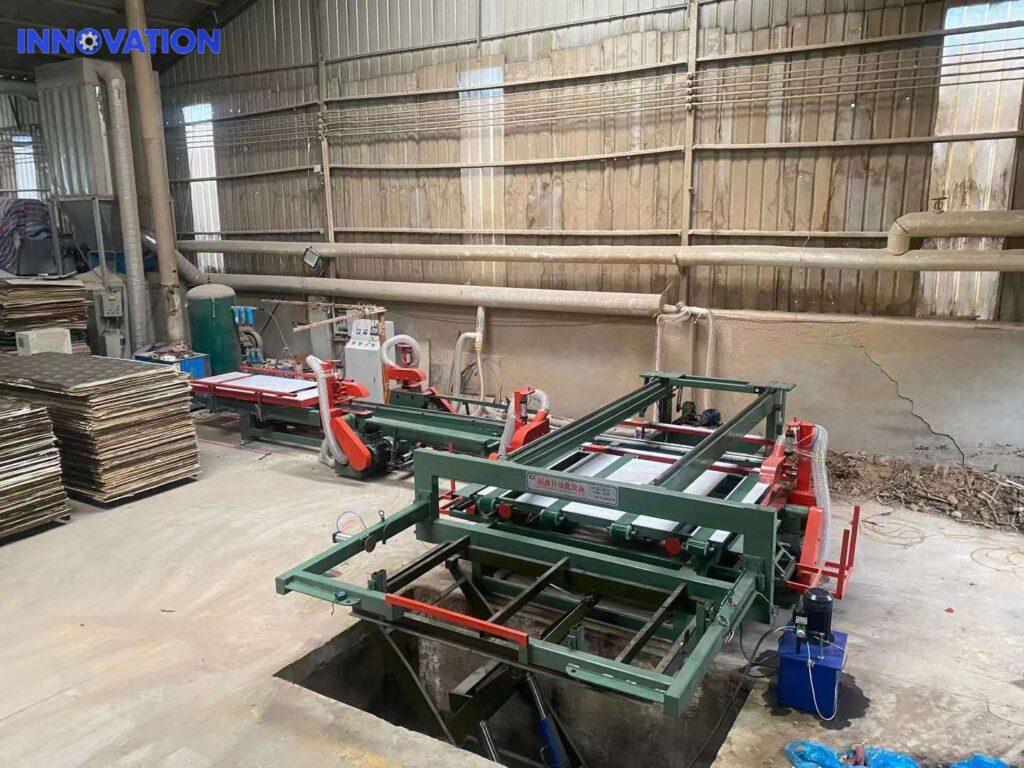
In modern plywood and panel production, precision is critical. A poorly maintained plywood edge trimming saw can lead to uneven edges, production delays, increased waste, and higher operational costs. According to a 2023 industry report by the International Woodworking Machinery Association (IWMA), 38% of manufacturing defects in plywood factories are directly linked to inadequate edge trimming saw maintenance.
Maintaining these machines not only ensures smooth and precise cuts but also prolongs equipment lifespan, reduces downtime, and improves overall factory efficiency. This guide will provide comprehensive strategies, technical insights, and actionable tips for optimizing your saw maintenance.
Daily Maintenance Practices for Plywood Edge Trimming Saws
Inspect Saw Blades for Wear
Regular blade inspection ensures clean, precise cuts. Dull or chipped blades can result in poor panel quality and excessive material waste. Replace or sharpen blades immediately when signs of wear appear.
Tip: Keep spare blades on hand to avoid production delays.
Clean Machine Surfaces
Remove sawdust, glue, and adhesive buildup from the machine’s feeding rollers, guide rails, and frame. Use compressed air or vacuum systems for thorough cleaning. Clean machinery improves operational stability and reduces friction.
Lubricate Moving Parts
Apply manufacturer-recommended lubricants to bearings, rollers, and sliding mechanisms. Proper lubrication reduces wear and tear, prevents overheating, and ensures smooth movement.
Example: Omron and NSK bearings, commonly used in automatic roller edge trimming saws, require lubrication every 40–50 operating hours for optimal performance.
Weekly Maintenance Checklist
Alignment and Calibration
Check lateral and longitudinal alignment of saw heads and feeding rollers. Misalignment leads to uneven edges and can damage plywood panels. Use precision measuring tools or laser alignment systems to maintain tolerances.
Standard Reference: ISO 19085-5:2017 specifies maximum alignment deviation of 0.1 mm for woodworking machinery used in panel production.
Inspect Electrical Systems
Review wiring, sensors, and control panels for wear or damage. Faulty electrical components may cause unexpected shutdowns or inconsistent performance. Ensure all components meet safety standards like IEC 60204-1:2018.
Hydraulic and Pneumatic Systems Check
Inspect cylinders, hoses, and pressure systems for leaks or abnormal operation. Confirm that pneumatic and hydraulic pressures are within manufacturer specifications (typically 6–8 bar for pneumatic rollers and 20–26 MPa for hydraulic saw actuators).
Monthly and Periodic Maintenance
Thorough Component Inspection
Disassemble critical parts, including saw heads, conveyor rollers, and extrusion mechanisms, for detailed inspection. Replace worn or damaged parts to prevent catastrophic failures.
Blade Balancing and Vibration Analysis
Use vibration analysis tools to detect misaligned or unbalanced saw blades. According to a 2022 whitepaper by WoodTech Solutions, balanced blades reduce edge chipping by up to 25% and extend blade life by 15%.
Control System Updates
Automatic saws with PLC controls should be updated with the latest firmware to ensure precision, energy efficiency, and compatibility with factory automation systems.
Safety Considerations
Protective Guards and Emergency Stops
Always ensure that all safety shields are in place and functional. Emergency stop systems should be tested weekly to guarantee immediate shutdown during hazards.
Personal Protective Equipment (PPE)
Operators must wear gloves, eye protection, and hearing protection. According to OSHA woodworking safety standards, proper PPE can reduce injury risk by over 40% in high-speed saw operations.
Troubleshooting Common Plywood Edge Trimming Saw Issues
| Issue | Possible Cause | Recommended Solution |
|---|---|---|
| Irregular Edge Trimming | Blade misalignment, dull blades | Re-align saw, sharpen or replace blades |
| Machine Jamming | Accumulated debris, uneven feeding | Clean rollers, verify tension, lubricate |
| Excessive Vibration | Loose fasteners, worn bearings | Tighten fasteners, replace bearings |
| Inconsistent Feed | Faulty feed rollers, PLC calibration errors | Inspect rollers, reset PLC, update firmware |
Comparison: Manual vs. Automatic Edge Trimming Saws
| Feature | Manual Edge Trimming Saw | Automatic Roller Edge Trimming Saw |
|---|---|---|
| Daily Cleaning | Moderate | Easy, with automated dust collection |
| Blade Alignment | Manual measurement | Auto-calibration available |
| Lubrication | Manual | Auto-lubrication system available |
| Downtime Risk | Higher | Lower with scheduled maintenance alerts |
| Labor Requirement | Higher | Lower, more efficient workflow |
| Precision | Moderate | High precision, repeatable cuts |
Automatic saws generally reduce labor costs, minimize human error, and offer consistent edge quality, though both types require scheduled maintenance for optimal performance.
Industry Standards and Guidelines
- ISO 19085-5:2017 – Specifies tolerance, alignment, and operational standards for woodworking machinery.
- IEC 60204-1:2018 – Electrical safety for machinery controls.
- OSHA 1910.213 – Safety standards for woodworking equipment.
- Whitepaper Reference: “Optimizing Edge Trimming Saw Maintenance in Plywood Production,” WoodTech Solutions, 2022.
Case Study: Reducing Downtime in a Plywood Factory
A factory in Shandong, China, implemented a strict maintenance schedule for their automatic roller edge trimming saws. By combining daily blade checks, weekly calibration, and monthly vibration analysis, they reduced downtime by 32% and increased product consistency by 18% over six months.
Conclusion
Maintaining a plywood edge trimming saw is essential to ensure accuracy, efficiency, and longevity in plywood production lines. A comprehensive maintenance program—including daily inspections, lubrication, alignment, and periodic detailed checks—enhances operational safety, reduces downtime, and improves product quality. Comparing manual versus automatic systems and following industry standards ensures that your factory stays productive and competitive. By following these strategies, plywood manufacturers can achieve high-quality edge finishing, lower labor costs, and a consistent production workflow.
Best Practices for Long-Term Maintenance
- Maintain a log of all maintenance tasks and replacement schedules.
- Train operators on proper cleaning, lubrication, and adjustment procedures.
- Implement predictive maintenance with sensors to monitor blade wear, vibration, and motor load.
- Keep spare parts like blades, bearings, and rollers readily available to reduce downtime.
FAQ
Q1: How often should saw blades be replaced or sharpened?
A1: Typically every 2–4 weeks depending on usage and wood type. High-density plywood may require more frequent blade sharpening.
Q2: Can I use generic lubricants?
A2: Only manufacturer-recommended lubricants should be used to prevent damage.
Q3: Is it necessary to calibrate the saw weekly?
A3: Weekly calibration is ideal for high-volume, high-precision operations.
Q4: What are the most common causes of machine vibration?
A4: Loose fasteners, unbalanced blades, or worn bearings are common sources.
Q5: Does regular maintenance improve product quality?
A5: Yes, it ensures smooth, uniform edges and reduces scrap material.
 English
  Vietnamese
  Arabic