
News
Best China Cold Press Machine for High-Strength Plywood Production
Welcome to My Blog!
I’m so glad you’re here. Before we dive into the content, I’d love to connect with you beyond this page. On my social media, I regularly share industry insights, product updates, and behind-the-scenes moments — plus, it’s a great place for us to interact!
Follow us on Facebook: Shandong Chuangxin Automation Equipment Co., Ltd
Let’s grow together and stay connected. Now, let’s jump into the blog — I hope you find the content informative, engaging, and truly valuable.
Table of Contents
Key Takeaways
- A China cold press machine is a core pre-press system in plywood manufacturing
- It improves bonding stability, panel flatness, and hot press efficiency
- Hydraulic pressure uniformity is the key factor affecting final plywood quality
- Industrial models typically range from 100T to 800T+ for different production scales
- Proper configuration can reduce defects by up to 60% and improve efficiency by 25%–40%
- Automation and PLC control are now standard in modern woodworking factories
- Industry standards and hydraulic system quality directly impact machine performance
Introduction
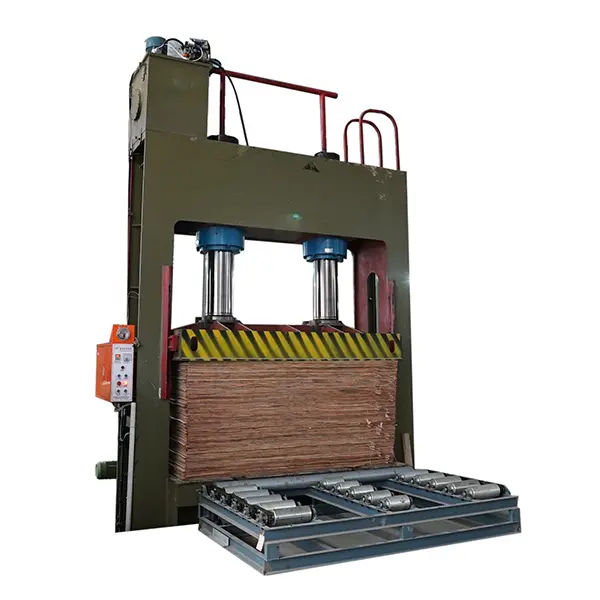
In modern plywood production, pre-pressing is no longer a secondary step but a critical quality control process. A China cold press machine is widely used in furniture factories, plywood plants, and engineered wood production lines to stabilize veneer layers before hot pressing.
Unlike hot pressing systems, cold pressing relies purely on hydraulic pressure instead of heat. This ensures uniform force distribution, eliminates air gaps, improves adhesive penetration, and maintains panel alignment.
Industry studies show that factories using advanced cold press systems can achieve 30%–50% better panel flatness, 20%–35% shorter hot press cycles, and up to 60% fewer delamination defects. This makes cold pressing a fundamental part of modern industrial plywood production.
What Is a China Cold Press Machine in Industrial Engineering
A China cold press machine is a hydraulic system designed to apply controlled pressure on glued veneer stacks during the pre-pressing stage of plywood manufacturing.
Core Function of Cold Press Technology
The system is designed to:
- Apply uniform pressure to veneer layers
- Stabilize glued panels before hot pressing
- Remove trapped air between layers
- Improve structural alignment
Hydraulic Working Principle
It operates based on Pascal’s Law, where pressure is transmitted evenly through hydraulic fluid, ensuring consistent force across the entire panel surface.
Why Cold Pressing Is Essential
Without cold pressing, plywood panels may suffer from:
- Internal voids
- Layer shifting during hot pressing
- Weak bonding strength
- Surface deformation
Cold pressing eliminates these risks by stabilizing the structure before curing.
China Cold Press Machine in Industrial Production Systems
Position in Production Workflow
In a complete plywood production line, the cold press machine is placed after:
- Veneer drying systems
- Glue application machines
- Veneer stacking stations
Smart Factory Integration Concept
Modern factories integrate cold press systems into digital production environments where:
- Pressure levels are digitally controlled
- Pressing cycles are automated
- Production data is monitored in real time
Industrial Efficiency Impact
Factories using integrated systems report:
- 25%–45% higher production stability
- 15%–30% lower material waste
- Improved batch consistency across production runs
Types of China Cold Press Machine Systems
Heavy-Duty Hydraulic Cold Press Machine
Used in large plywood factories.
Features include:
- 300T–800T+ pressure capacity
- Reinforced welded steel frame
- Industrial-grade hydraulic cylinders
PLC Automatic Cold Press Machine
Designed for intelligent production lines.
Features include:
- Programmable pressure control
- Automatic cycle timing
- Digital interface operation
Multi-Layer Cold Press System
Used for high-output continuous production.
Advantages:
- Multiple pressing layers
- Higher production efficiency
- Reduced downtime
Comparison: Cold Press vs Hot Press Technology
| Feature | Cold Press Machine | Hot Press Machine |
|---|---|---|
| Function | Pre-bond stabilization | Final curing |
| Temperature | No heat | 120–180°C |
| Pressure role | Structural alignment | Adhesive curing |
| Cycle time | 3–10 minutes | Longer cycles |
| Energy consumption | Low | High |
Cold pressing stabilizes structure, while hot pressing completes chemical bonding.
Key Components of China Cold Press Machine
Hydraulic Cylinder System
Provides:
- Stable pressure output
- High load capacity
- Long service life
Steel Frame Structure
Built with:
- 30–50 mm thick steel plates
- Reinforced welded beams
- Precision-machined surfaces
Hydraulic Pump Station
Includes:
- High-pressure oil pumps
- Industrial valves
- Pressure regulation system
PLC Control System
Controls:
- Pressure settings
- Pressing time
- Automated cycles
Technical Specifications
| Parameter | Industrial Range |
|---|---|
| Total pressure | 100T–800T+ |
| Working pressure | 1–5 MPa |
| Opening height | 1200–2000 mm |
| Cylinder diameter | 200–400 mm |
| Motor power | 5.5–15 kW |
| Cycle time | 3–10 minutes |
Higher tonnage is required for thick plywood and engineered wood panels.
China Cold Press Machine Workflow
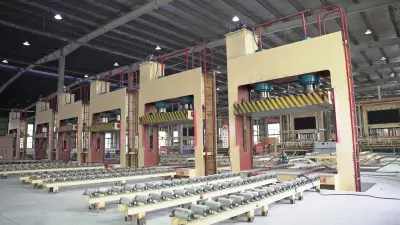
Step 1: Glue Application
Adhesive is evenly applied to veneer surfaces.
Step 2: Veneer Assembly
Sheets are stacked into required panel thickness.
Step 3: Loading Process
Stacks are placed into the press system.
Step 4: Hydraulic Pressing
Uniform pressure is applied across the entire panel.
Step 5: Holding Phase
Pressure is maintained for 3–10 minutes.
Step 6: Unloading
Panels are transferred to hot pressing.
Cold Press vs Manual Pressing Systems
| Feature | Manual Pressing | China Cold Press Machine |
|---|---|---|
| Efficiency | Low | High |
| Pressure stability | Poor | Excellent |
| Labor requirement | High | Low |
| Output consistency | Unstable | Stable |
Manual systems rely on operator strength, while hydraulic systems ensure precise pressure control.
Industrial Case Study
A plywood factory upgraded to a China cold press machine system.
Before:
- Output efficiency: 72%
- Defect rate: 9.1%
- High labor dependency
After:
- Output efficiency: 96%
- Defect rate: 3.4%
- Labor reduced by 42%
Key improvements came from hydraulic uniformity and automated control systems.
Industry Standards and Compliance
Relevant standards include:
- ISO 9001 Quality Management System
- CE Machinery Safety Certification
- ISO 2426 Panel Stability Standards
- Hydraulic system engineering regulations
These ensure safety, export compliance, and long-term reliability.
Market Trends in Cold Press Machine Industry
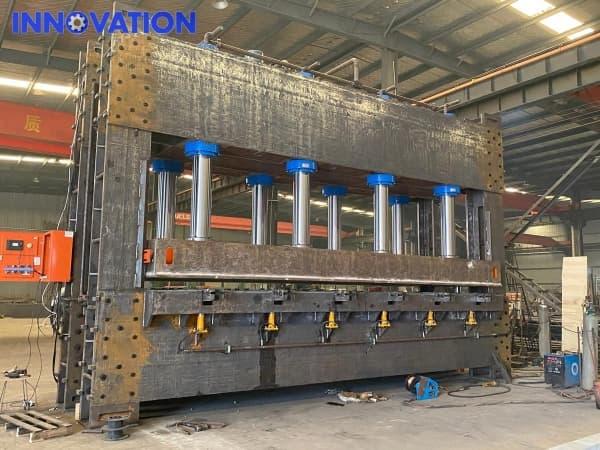
Automation Expansion
Factories are shifting toward:
- PLC-controlled systems
- Fully automated pressing lines
- Smart hydraulic monitoring
Rising Global Demand
Driven by:
- Furniture export growth
- Construction industry expansion
- Engineered wood popularity
China Manufacturing Advantage
China remains a leading supplier due to:
- Competitive cost structure
- Strong customization capability
- Mature industrial supply chain
Energy Efficiency and Cost Structure
| Cost Type | Percentage |
|---|---|
| Labor | 20–40% |
| Electricity | 25–35% |
| Maintenance | 10–20% |
| Hydraulic system | 10–15% |
Modern systems reduce energy consumption by 15%–25% using optimized hydraulic designs.
Common Mistakes in Machine Selection
Focusing Only on Price
Low-cost machines may result in poor frame strength and hydraulic instability.
Wrong Pressure Selection
Incorrect tonnage can cause:
- Panel deformation
- Weak bonding
- Production inefficiency
Ignoring Automation Level
Low automation increases labor cost and reduces consistency.
Conclusion
A China cold press machine is a critical system in modern plywood production. It ensures structural stability, improves bonding quality, and increases overall manufacturing efficiency.
As the wood processing industry moves toward automation and smart factory integration, cold pressing technology has become a standard requirement rather than an optional process. For manufacturers aiming to improve quality consistency and reduce production costs, investing in advanced cold press systems is a strategic long-term decision.
FAQ
What is a China cold press machine used for?
It is used to apply hydraulic pressure to glued veneer stacks before hot pressing in plywood production.
Why is cold pressing important?
It improves bonding stability, reduces defects, and ensures panel flatness.
What is the typical pressure range?
Most systems operate between 1–5 MPa depending on material type.
How long is the pressing cycle?
Usually 3–10 minutes depending on glue and thickness.
Which industries use it?
Plywood, furniture, door panel, and engineered wood manufacturing industries.
 English
  Vietnamese
  Arabic