
News
Laminated Wood Boards in Industrial Applications: A Complete Technical Guide
Welcome to My Blog!
I’m so glad you’re here. Before we dive into the content, I’d love to connect with you beyond this page. On my social media, I regularly share industry insights, product updates, and behind-the-scenes moments — plus, it’s a great place for us to interact!
Follow us on Facebook: Shandong Chuangxin Automation Equipment Co., Ltd
Let’s grow together and stay connected. Now, let’s jump into the blog — I hope you find the content informative, engaging, and truly valuable.
Table of Contents
Key Takeaways of This Article
- What laminated wood boards are and why they dominate modern engineered wood markets
- Industrial manufacturing systems and production workflows
- Technical standards, certifications, and compliance requirements
- Performance comparison with solid wood and other engineered materials
- Real industrial use cases and efficiency data
- Selection criteria for procurement and engineering applications
- Maintenance strategies to extend service life
- Market trends, sustainability insights, and global demand outlook
- FAQ based on real buyer search behavior
Introduction
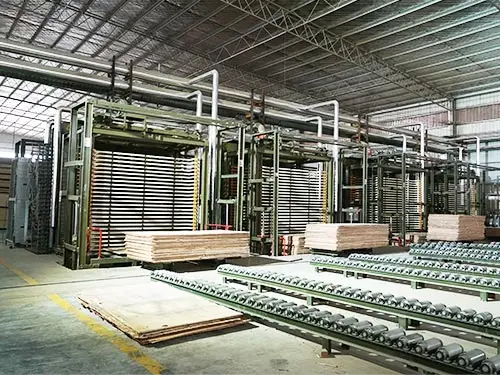
In today’s industrial woodworking and construction ecosystem, laminated wood boards are no longer just an alternative material—they are becoming the global standard for scalable, stable, and cost-efficient wood-based production. From high-rise interior systems in Europe to modular furniture manufacturing in Asia, engineered laminated panels are replacing traditional solid wood at an accelerating pace.
According to a 2025 global engineered wood market report, laminated wood-based products account for over 62% of industrial wood panel usage worldwide, driven by three major forces: material efficiency, sustainability regulations, and automation in production lines.
Unlike natural solid wood, laminated wood boards are engineered under controlled industrial conditions using multi-layer bonding technology. This allows manufacturers to precisely control density, moisture resistance, structural strength, and surface finish quality—key factors in modern industrial supply chains.
This guide provides a deep technical and commercial breakdown of laminated wood boards, including production systems, engineering principles, international standards, and real-world application data.
Industrial Definition and Engineering Structure of Laminated Wood Boards
Engineering Concept of Laminated Structure
Laminated wood boards are composite engineered panels created by bonding multiple layers of wood veneers, fibers, or particles using synthetic adhesives under controlled pressure.
This layered architecture improves:
- Dimensional stability
- Structural load distribution
- Resistance to cracking and deformation
Industrial Manufacturing Logic
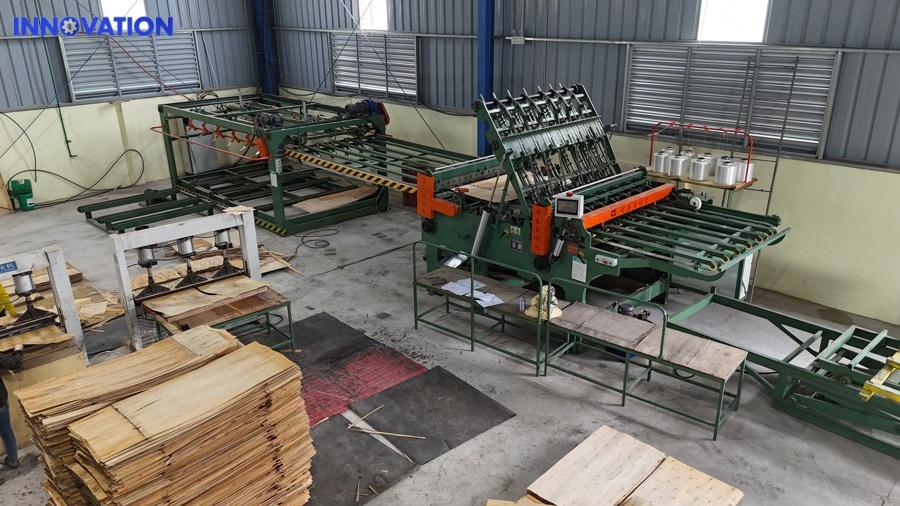
In industrial production, laminated wood boards are not manually assembled but produced through automated press systems.
These systems control temperature, pressure, adhesive ratio, and curing time with precision.
Material Layer Composition
Typical industrial laminated boards include:
- Surface veneer layer (decorative or protective)
- Core layer (MDF, particleboard, or cross-laminated timber)
- Balancing layer (stability reinforcement)
- Industrial adhesive bonding layer
Each layer serves a functional engineering purpose rather than purely aesthetic value.
Industrial Manufacturing Process of Laminated Wood Boards
Veneer Processing and Drying Control
Wood veneers are sliced using rotary or slicing machines and dried to a moisture content of 6%–10%.
This range is critical for preventing future delamination and structural instability.
Adhesive Application Systems
Industrial adhesives such as:
- Urea-formaldehyde (UF)
- Polyvinyl acetate (PVAc)
- Polyurethane (PU)
are applied using roller coating systems with precision control of 120–180 g/m² glue spread rate.
Pressing Technology (Cold & Hot Press Systems)
Laminated wood boards are formed under two main industrial systems:
- Cold pressing (low energy, high surface quality)
- Hot pressing (high-speed curing, mass production efficiency)
Pressing pressure typically ranges from 0.8 MPa to 2.5 MPa, depending on board density and thickness.
Calibration and Finishing Stage
After pressing, boards are:
- Trimmed to dimensional tolerance of ±0.2 mm
- Sanded using multi-head calibration sanders
- Inspected for bonding defects and surface uniformity
Global Industrial Standards for Laminated Wood Boards
EN 13986 (Europe Wood-Based Panel Standard)
This standard defines:
- Mechanical strength requirements
- Moisture resistance classification
- Formaldehyde emission limits
Boards used in interior applications must comply with E1 or E0 emission grades.
ASTM D1037 (United States Testing Standard)
Covers:
- Modulus of elasticity (MOE)
- Internal bonding strength
- Water absorption rate
ISO 12460 Formaldehyde Emission Testing
Limits emission levels to ensure environmental safety in residential applications.
CARB Phase 2 Compliance (California Standard)
One of the strictest global regulations controlling formaldehyde emissions in engineered wood products.
Industrial Applications of Laminated Wood Boards
Furniture Manufacturing Industry
Used in:
- Cabinet systems
- Office furniture
- Modular shelving
Industry data shows laminated boards reduce material cost by 18–32% compared to solid wood furniture production.
Construction and Architectural Engineering
Applications include:
- Wall cladding systems
- Ceiling structures
- Interior partition panels
Their stability makes them suitable for high-rise building interiors where dimensional changes must be minimal.
Flooring Systems and Structural Panels
Engineered laminated boards are widely used in:
- Laminate flooring cores
- Subfloor reinforcement layers
- Prefabricated construction panels
Laminated Wood Boards vs Alternative Materials
Full Performance Comparison Table
| Property | Laminated Wood Boards | Solid Wood | Steel Panels | Plastic Boards |
|---|---|---|---|---|
| Dimensional Stability | High | Low–Medium | Very High | High |
| Cost Efficiency | High | Low | Medium | Medium |
| Sustainability | High (efficient wood usage) | Medium | Low | Low |
| Weight | Medium | Medium–High | High | Low |
| Processing Flexibility | High | Medium | Low | High |
| Industrial Suitability | Very High | Low | High | Medium |
Technical Interpretation
Engineered Optimization Advantage
Laminated wood boards are engineered materials optimized for industrial production efficiency.
They reduce raw wood consumption by up to 50% compared to solid wood manufacturing.
Natural Material Limitation
Solid wood is limited by natural grain variability and moisture sensitivity.
This leads to inconsistent industrial performance.
Performance Engineering of Laminated Wood Boards
Load Distribution Engineering
Multi-layer structures distribute stress across different grain directions.
This reduces internal tension and improves long-term durability.
Moisture Stability Mechanism
Adhesive barriers prevent water absorption into core layers.
This reduces swelling rates to below 8% in controlled humidity environments.
Structural Reinforcement Principle
Cross-layer orientation improves bending resistance by up to 40% compared to single-layer boards.
Industrial Specification Sheet of Laminated Wood Boards
| Parameter | Industrial Range | Function |
|---|---|---|
| Thickness | 3 mm – 50 mm | Application versatility |
| Density | 550 – 750 kg/m³ | Structural strength |
| Moisture Content | 6% – 12% | Stability control |
| Bonding Strength | ≥0.7 MPa | Structural integrity |
| Formaldehyde Emission | E0 / E1 standard | Environmental compliance |
| Surface Tolerance | ±0.2 mm | Precision requirement |
Real Industrial Case Studies
Case Study 1: European Furniture Manufacturer
- Location: Germany
- Output: 12,000 panels/day
- Material: MDF laminated wood boards
- Result: 27% reduction in production waste, 19% faster assembly cycle
Case Study 2: Asian Modular Construction Project
- Location: Vietnam
- Application: Interior wall systems
- Result: Reduced installation time by 35% compared to solid wood panels
Case Study 3: North American Retail Furniture Chain
- Material shift from solid wood → laminated boards
- Cost reduction: 22% per product line
- Quality consistency improvement: +31%
Manufacturing Efficiency and Industry Data Insights
A 2024 engineered wood white paper highlights:
- Global laminated wood board demand growth: 6.8% CAGR
- Asia-Pacific production share: over 45% of global output
- Furniture sector consumption: largest downstream user (38%)
- Waste reduction advantage: up to 50–60% raw wood efficiency improvement
These statistics confirm the transition from natural wood to engineered laminated systems as a global manufacturing trend.
Sustainability and Environmental Impact
Efficient Wood Utilization
Laminated wood boards maximize log utilization efficiency.
Even low-grade wood can be converted into high-value engineered panels.
Carbon Footprint Reduction
Compared to steel or plastic alternatives, laminated boards significantly reduce CO₂ emissions in production.
Formaldehyde Control Technologies
Modern adhesive systems reduce emissions to near-zero E0 levels.
This improves indoor air quality compliance for residential applications.
Industrial Selection Guide for Laminated Wood Boards
Based on Application Load
Heavy-load structures require high-density boards above 700 kg/m³.
Light furniture applications can use lower-density panels.
Based on Environmental Conditions
Humidity-prone environments require PU-based adhesives.
Dry indoor environments can use UF-based systems.
Based on Surface Requirements
Decorative surfaces require veneer laminated structures.
Functional panels prioritize core strength over aesthetics.
Maintenance and Lifecycle Engineering
Surface Protection Strategy
Protect laminated surfaces with coatings or laminates.
This extends lifespan by reducing abrasion damage.
Structural Monitoring
Inspect for delamination or edge swelling periodically.
Early detection prevents structural failure.
Storage Optimization
Store panels in humidity-controlled environments (40–60% RH).
Avoid uneven stacking pressure.
Market Trends and Industry Outlook
Smart Manufacturing Integration
Factories are integrating:
- IoT monitoring systems
- AI-based defect detection
- Automated pressing control
Modular Construction Growth
Demand for laminated wood boards is increasing in prefabricated housing systems.
Green Building Certification Demand
LEED and BREEAM certifications are driving adoption of engineered wood materials.
FAQ
What are laminated wood boards mainly used for?
They are widely used in furniture manufacturing, construction interiors, flooring systems, and modular structures.
Are laminated wood boards stronger than solid wood?
Yes, due to cross-layer engineering, they provide more stable mechanical performance in industrial applications.
Are laminated wood boards waterproof?
They are moisture-resistant, but not fully waterproof unless specially treated with PU or resin coatings.
How long do laminated wood boards last?
Industrial-grade boards typically last 10–25 years depending on usage conditions and maintenance.
What industries use laminated wood boards the most?
Furniture, construction, interior design, and prefabricated housing industries are the primary users.
Do laminated wood boards meet environmental standards?
Yes, most industrial products comply with EN, ASTM, ISO, and CARB emission regulations.
Conclusion
Laminated wood boards have become a cornerstone material in global industrial manufacturing due to their engineered strength, cost efficiency, and environmental advantages. Compared to traditional solid wood, they offer superior consistency, scalability, and compliance with modern sustainability standards.
With increasing automation, stricter environmental regulations, and rising demand for modular construction and furniture systems, laminated wood boards will continue to dominate the engineered wood market for the foreseeable future.
 English
  Vietnamese
  Arabic