
News
Hot Press Machine for High Pressure Laminates and Industrial HPL Press 2026 Overview
Welcome to My Blog!
I’m so glad you’re here. Before we dive into the content, I’d love to connect with you beyond this page. On my social media, I regularly share industry insights, product updates, and behind-the-scenes moments — plus, it’s a great place for us to interact!
Follow us on Facebook: Shandong Chuangxin Automation Equipment Co., Ltd
Let’s grow together and stay connected. Now, let’s jump into the blog — I hope you find the content informative, engaging, and truly valuable.
Table of Contents
Key Takeaways of This Article
- Understanding modern high pressure laminate (HPL) pressing technology and its industrial role
- How a hot press machine for high pressure laminates improves bonding strength and surface durability
- Core structural, hydraulic, and thermal concepts behind HPL production systems
- 2026 industrial trends in automated laminate hot pressing lines
- Comparison between hot press and cold press technologies in laminate manufacturing
- Real technical specifications and production-level configuration example
- FAQ section based on real user search intent and buying behavior
Introduction
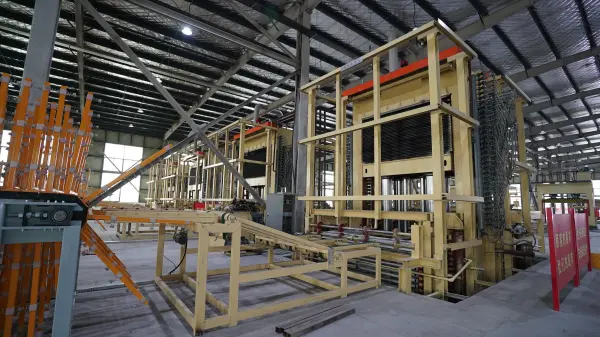
High pressure laminates (HPL) are widely used in furniture, wall panels, countertops, flooring, and commercial interior systems. Their performance depends heavily on how well layers are bonded under heat and pressure.
A hot press machine for high pressure laminates is the core equipment used to fuse decorative paper, resin-impregnated layers, and core substrates into a durable composite panel. In 2026, manufacturers are shifting toward automated, energy-efficient, and high-precision pressing systems to meet global quality and environmental standards.
As demand grows for scratch-resistant, moisture-resistant, and fire-resistant surfaces, HPL hot pressing technology continues to evolve into a highly engineered industrial process.
Industrial HPL Press 2026 System Overview
What is a High Pressure Laminate Press System?
A high pressure laminate press system is an industrial setup designed to bond multiple layers under controlled heat, pressure, and timing conditions.
Core functions include:
- Resin curing under high temperature
- Multi-layer bonding of decorative surfaces
- Surface densification and finishing
- Structural stabilization of composite boards
Role of Hot Press Machine for High Pressure Laminates
The hot press machine for high pressure laminates ensures permanent bonding of resin-impregnated layers.
It transforms raw material stacks into high-density, wear-resistant panels used in demanding environments.
Why 2026 Industrial Systems Are Different
Modern systems focus on:
- Higher automation levels
- Lower energy consumption
- Precision temperature zoning
- Smart PLC-based control systems
Hot Press Machine for High Pressure Laminates Working Principle
Heat-Pressure Activation Concept
The machine applies heat to activate thermosetting resins.
Simultaneously, hydraulic pressure ensures full penetration into fiber structures.
Thermal Oil Circulation System
Thermal oil flows through platen channels for stable heat distribution.
This prevents uneven curing and surface defects.
Hydraulic Compression Technology
High-pressure cylinders apply uniform force across multiple layers.
This ensures consistent density and structural integrity.
Industrial HPL Press 2026 Structural Design
Heavy-Duty Steel Frame Concept
The frame is designed for long-term industrial operation.
It resists deformation under continuous high-pressure cycles.
Multi-Layer Platen System Design
Multi-layer systems increase production efficiency by pressing multiple boards at once.
Key characteristics:
- 10–15 layer production capability
- Precision-machined platen surfaces
- Dual oil inlet/outlet thermal design
PLC Intelligent Control System Concept
Automation is a key feature in 2026 systems.
Functions include:
- Temperature zoning control
- Pressure stage programming
- Automatic loading coordination
- Safety interlock monitoring
Hot Press Machine for High Pressure Laminates Workflow
Resin Impregnation Stage
Decorative paper is impregnated with thermosetting resin.
This forms the foundation of HPL surface durability.
Layer Assembly Process
Multiple layers are stacked in precise alignment.
Even slight misalignment can affect final surface quality.
Hot Pressing Cycle Phase
Heat and pressure are applied for curing.
Typical industrial parameters:
- Temperature: 130°C – 180°C
- Pressure: 10 – 25 MPa
- Cycle time: 5 – 20 minutes
Cooling and Stabilization Phase
After pressing, panels are cooled to stabilize internal structure.
This prevents warping and stress deformation.
Industrial Specification Example: HPL Hot Press System
| Component | Specification |
|---|---|
| Total Pressure | 600T |
| Platen Size | 1370 × 2700 mm |
| Number of Platens | 11 layers |
| Heating Method | Thermal oil system |
| Hydraulic Cylinders | 220 × 1000 mm × 6 units |
| Control System | PLC fully automatic |
| Installed Power | 29.5KW |
This type of configuration is widely used in industrial HPL production facilities requiring high output and stable surface quality.
Hot Press Machine for High Pressure Laminates vs Cold Press Systems
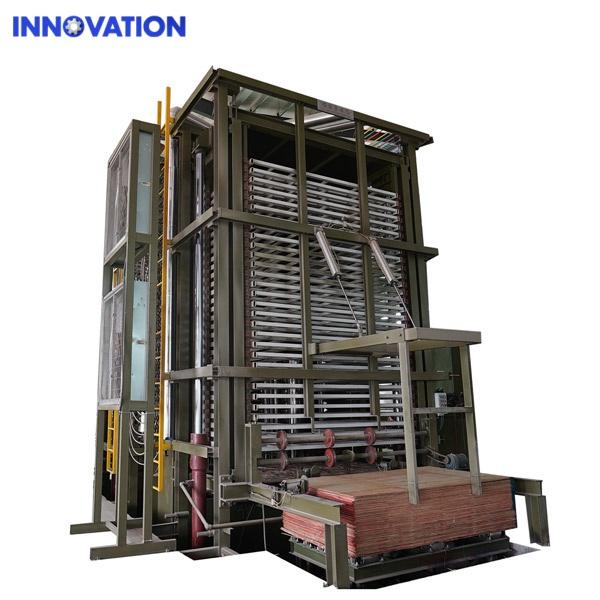
Functional Role Comparison
Hot press machines complete final curing.
Cold press systems stabilize materials before heating.
Energy System Comparison
Hot pressing requires thermal energy input.
Cold pressing operates without heat.
Production Stage Comparison
Cold press = pre-press stabilization
Hot press = final curing and surface formation
Output Quality Comparison
Hot pressing produces high-density, wear-resistant surfaces.
Cold pressing ensures structural alignment and defect reduction.
Comparison Table: Hot Press vs Cold Press in HPL Production
| Feature | Hot Press Machine | Cold Press Machine |
|---|---|---|
| Heat Requirement | Yes | No |
| Pressure Range | High (10–25 MPa) | Low–Medium (1–5 MPa) |
| Function | Final curing | Pre-stabilization |
| Surface Quality | High gloss, durable | Basic alignment |
| Energy Consumption | High | Low |
| Production Role | Final product formation | Pre-processing stage |
Industrial Applications of HPL Press Technology
Furniture Manufacturing Industry
Used for cabinets, office furniture, and decorative panels.
Provides scratch-resistant and visually appealing surfaces.
Architectural Interior Systems
Used in wall cladding and decorative interior panels.
Ensures long-term durability in commercial spaces.
Kitchen and Countertop Industry
Used for moisture-resistant and heat-resistant surfaces.
Improves hygiene and durability performance.
Public Infrastructure Projects
Used in hospitals, schools, and transportation interiors.
Provides fire-resistant and impact-resistant surfaces.
Hot Press Machine for High Pressure Laminates Selection Guide
Pressure Capacity Selection Concept
Higher pressure systems are required for thick or multi-layer HPL sheets.
Small factories typically use medium-tonnage systems.
Heating System Selection Concept
Thermal oil systems offer stable temperature control.
Electric systems provide simpler maintenance.
Automation Level Selection Concept
Fully automated systems increase efficiency and reduce labor.
Semi-automatic systems reduce initial investment cost.
Production Scale Matching Concept
System selection must align with daily output requirements.
Large-scale production requires multi-layer pressing systems.
2026 Industrial Trends in HPL Press Systems
Smart Automation Integration
Factories are increasingly adopting PLC + IoT monitoring systems.
This allows real-time production tracking and quality control.
Energy Optimization Systems
New machines focus on reducing thermal energy consumption.
Heat recycling systems are becoming more common.
High Precision Manufacturing
Modern presses achieve platen flatness within 0.1 mm tolerance.
This improves surface consistency in HPL production.
Sustainable Production Demand
Environmental regulations push for low-emission adhesives and efficient energy systems.
Manufacturers are upgrading equipment to meet global compliance standards.
Real Production Case Study
A laminate manufacturer upgraded its system with a hot press machine for high pressure laminates.
Before Upgrade:
- Uneven surface finish
- 9–12% defect rate
- High energy consumption
After Upgrade:
- Defect rate reduced to 3–5%
- Improved surface gloss consistency
- 25% increase in production efficiency
Final Result:
The factory improved export competitiveness and reduced material waste significantly.
FAQ
What is a hot press machine for high pressure laminates used for?
It is used to bond resin-impregnated layers into durable, high-density decorative panels under heat and pressure.
What temperature is used in HPL hot pressing?
Typically between 130°C and 180°C depending on resin type and material thickness.
How long is the hot pressing cycle?
Most cycles range from 5 to 20 minutes depending on production requirements.
What is the difference between HPL and regular laminate?
HPL uses higher pressure and temperature, resulting in stronger and more durable surfaces.
Is hot pressing necessary for HPL production?
Yes, it is essential for resin curing and achieving final surface strength.
What industries use HPL pressing systems?
Furniture, architecture, kitchen systems, and commercial interior industries.
Conclusion
A hot press machine for high pressure laminates is the core of modern HPL production. It ensures strong bonding, premium surface quality, and stable industrial output.
In 2026, manufacturers adopting advanced HPL pressing systems gain clear advantages in efficiency, durability, and global market competitiveness.
 English
  Vietnamese
  Arabic