
أخبار
Press Board Sheets Cutting and Handling Tips
مرحباً بكم في مدونتي!
يسعدني جدًا وجودك هنا. قبل أن نتعمق في المحتوى، يسعدني التواصل معك عبر هذه الصفحة. أشارك بانتظام رؤىً حول الصناعة، وتحديثاتٍ حول المنتجات، ولحظاتٍ من وراء الكواليس على حساباتي على مواقع التواصل الاجتماعي، كما أنها منصةٌ رائعةٌ للتواصل!
تابعونا على الفيسبوك: شركة شاندونغ تشوانغشين لمعدات الأتمتة المحدودة
لننمو معًا ونبقى على تواصل. والآن، لننتقل إلى المدونة - آمل أن تجدوا محتواها غنيًا بالمعلومات، وجذابًا، وقيّمًا حقًا.
جدول المحتويات
Key Takeaways for This Guide
- Understanding different types of press board sheets
- Tools and machinery for precise cutting
- Safe handling practices to prevent damage and injuries
- Comparison of cutting techniques and equipment
- Tips for reducing waste and improving efficiency
- Maintenance and storage practices for press board sheets
- Industry standards and safety compliance
- Case studies and practical examples
- Frequently asked questions (FAQ) for quick reference
Press board sheets are a cornerstone in modern furniture manufacturing, interior design, and industrial projects. They provide a cost-effective and versatile alternative to plywood or MDF for non-structural applications. However, improper cutting, handling, or storage can compromise the board’s integrity, waste material, and even pose safety risks. In this comprehensive guide, we explore cutting-edge techniques, expert handling methods, compliance standards, and practical examples to help manufacturers, contractors, and woodworkers achieve optimal results.
Understanding Press Board Sheets
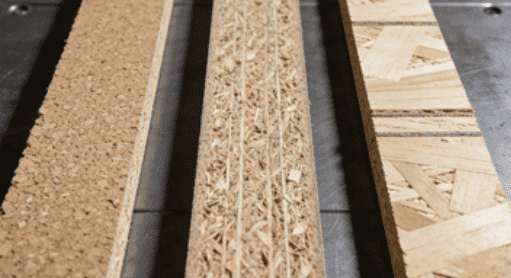
What Are Press Board Sheets?
Press board sheets are engineered wood panels created by compressing wood fibers with adhesives under high pressure.
They are uniform in thickness and density, providing a smooth, stable surface ideal for furniture, cabinets, wall panels, and decorative projects.
Types of Press Board Sheets
High-Density Press Board
High-density boards have compacted fibers, giving excellent strength and durability.
Suitable for shelving, cabinets, and furniture that require load-bearing capacity.
Medium-Density Press Board
Balances strength and ease of cutting.
Common in interior decoration, paneling, and mid-weight furniture.
Low-Density Press Board
Lightweight and easy to work with but less durable.
Used for temporary structures, model making, or decorative elements.
Press Board Sheet Standards
- ISO 9001 Certification: Ensures consistent manufacturing quality.
- EN 312 Standard: Specifies requirements for particleboard performance, density, and formaldehyde emissions.
- Thickness Range: Typically 6–25 mm, with tolerances ±0.5 mm for high-quality boards.
Press Board Sheets Production Line نظرة عامة
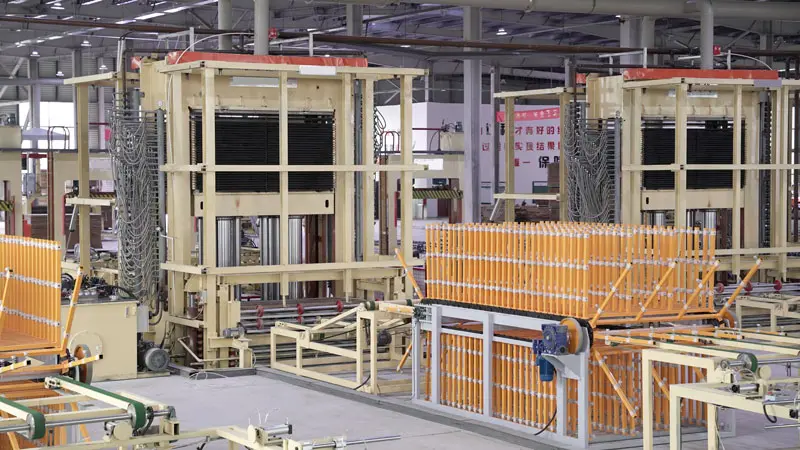
Overview of Production Process
The production of press board sheets is a highly controlled industrial process designed to ensure uniform thickness, density, and surface quality. Modern manufacturing lines integrate raw material preparation, blending, forming, pressing, and finishing stages to produce high-quality boards consistently.
- Raw Material Preparation: Wood chips, sawdust, or recycled fibers are sorted, cleaned, and dried to a moisture content of 2–6% to prevent swelling or warping during pressing.
- Blending and Resin Application: Fibers are mixed with formaldehyde-based or alternative low-emission resins for binding. The mixture ratio is critical for final board density and mechanical strength.
- Forming: Fibers are spread evenly onto a conveyor forming line, creating a continuous mat ready for pressing. Special care ensures uniform fiber distribution.
- الضغط الساخن: The mat is compressed under heat (typically 160–220°C) and pressure (2–4 MPa for medium density, up to 6 MPa for high-density boards). Pressing times vary based on thickness, from 3–15 minutes.
- Cooling and Conditioning: Pressed boards are cooled to room temperature gradually to avoid internal stress and deformation. Humidity control is applied to stabilize the board.
- الصنفرة وتشطيب السطح: Boards are sanded to the desired smoothness (typically Ra 0.5–1.0 μm), and coatings or laminates can be applied for moisture or decorative purposes.
Production Line Machinery
- Chippers and Hammer Mills: Reduce raw wood into uniform fibers.
- Blenders and Resin Mixers: Ensure consistent resin coating across fibers.
- Forming Lines: Create uniform mats with precise weight per unit area (usually 650–750 g/m² for medium density boards).
- آلات الضغط الساخن: Hydraulic or multi-daylight presses with temperature and pressure monitoring.
- Sanders and Calibrating Machines: Adjust thickness tolerance ±0.5 mm and smooth surfaces for finishing.
Quality Control in Production
- Moisture Measurement: Ensures raw material and finished boards are within standard limits.
- Density Control: Target density:
- Low-density: 0.4–0.6 g/cm³
- Medium-density: 0.6–0.8 g/cm³
- High-density: 0.8–1.0 g/cm³
- Mechanical Strength Testing: Boards are sampled for bending strength, internal bond strength, and screw-holding capacity.
- Formaldehyde Emission Testing: EN 13986 E0/E1 compliance ensures indoor safety.
Efficiency and Automation
Modern production lines incorporate automated fiber feeding, mat formation, and continuous pressing systems, increasing throughput to 15,000–20,000 m² per day per line. Automation reduces labor, improves consistency, and minimizes material waste.
Case Study: High-Density Press Board Factory
- الطاقة الإنتاجية: 18,000 m²/day
- Average Board Thickness: 18 mm ±0.5 mm
- Quality Achievements: Internal bond strength >0.7 MPa, screw-holding capacity >120 N
- Efficiency Gain: Switching to continuous pressing reduced energy consumption by 20% and material waste by 12%
Pro Tip: Understanding the production line helps end-users choose boards with consistent density, minimal warp, and superior surface quality—critical for precision cutting and furniture manufacturing.
Tools for Cutting Press Board Sheets
Choosing the right tools affects cut quality, efficiency, and worker safety.
Manual Cutting Tools
- Utility Knives: Ideal for thin sheets under 6 mm. Cuts are precise but require patience.
- Hand Saws: Suitable for small-scale, low-density boards. Easy for workshops without power tools.
Power Tools
- Circular Saws: Fast, precise, and versatile for medium to high-density boards. Blade speed typically ranges 4000–5000 RPM.
- Table Saws: Provide consistent, straight cuts. Often paired with scoring blades to reduce chipping.
- CNC Routers: Best for automated precision, complex designs, or batch production. Feed rates: 10–30 mm/s depending on density.
Comparison Table: Cutting Tools for Press Board Sheets
| Tool Type | الأفضل لـ | المزايا | Limitations |
|---|---|---|---|
| Utility Knife | Thin, low-density sheets | Affordable, precise | Slow for thick boards |
| Hand Saw | Small-scale projects | No electricity needed | Less accurate, labor-intensive |
| Circular Saw | Medium to high-density sheets | Fast, accurate | Requires skill and PPE |
| Table Saw | Straight, repetitive cuts | High precision, consistent | Requires workspace, cost |
| CNC Router | Complex designs, mass production | Automated, extremely precise | High cost, technical skill needed |
نصيحة احترافية: Always use scoring blades or backing boards to reduce surface chipping, especially on medium and high-density boards.
Cutting Techniques and Best Practices
Straight Cuts
- Use table saws or circular saws with proper guides.
- For boards over 18 mm, consider reducing feed speed to 8–10 mm/s to avoid burn marks.
Curved Cuts
- Achieved using jigsaws or CNC routers.
- Maintain slow and steady feed to prevent fiber tear-out.
Edge Finishing
- Sand or apply edge banding to prevent chipping.
- Recommended grit: 120–180 for smoothing before finishing.
Advanced Cutting Tips
- Scoring First: Lightly score the cut line to prevent splintering.
- Support Panels: Always support the sheet close to the blade to reduce vibration.
- Blade Selection: Use carbide-tipped blades with 48–60 teeth for smoother cuts.
Safe Handling Practices
Lifting and Transporting
- Lift from edges, avoid bending sheets.
- Two-person lift recommended for boards >18 mm thickness or 1.2 m² in area.
Storage Guidelines
- Store horizontally on flat racks with spacers to prevent warping.
- Avoid stacking beyond recommended height (max 1.5 m for most press boards).
- Keep sheets dry; moisture >12% can lead to swelling or deformation.
Personal Protective Equipment (PPE)
- Gloves: Protect from splinters.
- Dust Masks: Prevent inhalation of fine wood particles.
- Goggles: Essential when cutting or sanding.
Reducing Waste and Increasing Efficiency
Planning Your Cuts
- Use nesting software or templates to plan cuts for minimal scrap.
- Group similar boards to reduce setup time.
Using Offcuts
- Offcuts can be repurposed for small panels, drawer bottoms, or decorative elements.
- Even small scraps reduce material costs when reused effectively.
Tool Maintenance
- Keep blades sharp; dull blades increase waste by chipping edges.
- Lubricate CNC router beds and guide rails for smooth operation.
Press Board Sheets مقابل MDF مقابل الخشب الرقائقي
| مادة | كثافة | يكلف | Cutting Ease | أفضل حالة استخدام |
|---|---|---|---|---|
| Press Board | Low to High | قليل | Easy | Indoor furniture, panels |
| MDF | واسطة | واسطة | معتدل | Cabinets, decorative projects |
| الخشب الرقائقي | عالي | عالي | Hard | Structural, load-bearing work |
Insight: Press board sheets are cost-effective, easy to cut, and suitable for indoor non-structural applications. For high-strength, load-bearing requirements, plywood remains superior.
Quality Standards and Compliance
- Formaldehyde Emission Standards: EN 13986 E1/E0 ensures low emissions suitable for indoor use.
- ISO 9001 Compliance: Guarantees uniform density, thickness, and board strength.
- Workplace Safety: OSHA 1910 guidelines for material handling and dust exposure.
Industry Update: A 2024 study by the Wood Products Research Center found that using carbide-tipped scoring blades reduces edge chipping by 35% in high-density press board sheets.
Case Study: Industrial Furniture Manufacturer
A furniture factory transitioned from manual cutting to CNC routers for press board sheets:
- Material Savings: 15% reduction in waste due to precision nesting.
- Labor Efficiency: 25% faster production with fewer operators.
- Customer Satisfaction: On-time delivery increased by 30% with consistent panel quality.
Maintenance and Longevity Tips
- Inspect boards for cracks, warping, or water damage before use.
- Keep cutting tools clean and well-aligned to maintain precision.
- Store boards in a temperature-controlled, dry environment to prevent moisture-induced defects.
التعليمات
Q1: Can CNC routers cut all types of press board sheets?
Yes, but ensure density and thickness match the machine’s specifications. Adjust feed rates for thicker boards.
Q2: How can I prevent chipping when cutting high-density boards?
Use sharp blades, score first, and support sheets near the cut line.
Q3: Are press board sheets suitable for outdoor furniture?
Not usually. Unless coated or laminated for moisture resistance, they are best for indoor use.
Q4: How can I handle large press board sheets safely?
Use two-person lifts, edge supports, and mechanical aids for sheets above 1.5 m².
Q5: What is the best way to reduce waste?
Plan cuts in advance, reuse offcuts, and maintain sharp tools for clean, precise cuts.
خاتمة
إتقان press board sheets cutting and handling ensures safer work environments, higher-quality products, and cost-efficient operations. By selecting the right tools, applying precise techniques, following safety standards, and maintaining proper storage, manufacturers can maximize productivity while minimizing waste.
نصيحة احترافية: Integrating CNC technology and nesting software with proper handling protocols provides measurable gains in efficiency, material usage, and product quality.
 Arabic
  English
  Vietnamese