
أخبار
أفضل آلات الخشب الرقائقي بالضغط الساخن في عام 2026
مرحباً بكم في مدونتي!
يسعدني جدًا وجودك هنا. قبل أن نتعمق في المحتوى، يسعدني التواصل معك عبر هذه الصفحة. أشارك بانتظام رؤىً حول الصناعة، وتحديثاتٍ حول المنتجات، ولحظاتٍ من وراء الكواليس على حساباتي على مواقع التواصل الاجتماعي، كما أنها منصةٌ رائعةٌ للتواصل!
تابعونا على الفيسبوك: شركة شاندونغ تشوانغشين لمعدات الأتمتة المحدودة
لننمو معًا ونبقى على تواصل. والآن، لننتقل إلى المدونة - آمل أن تجدوا محتواها غنيًا بالمعلومات، وجذابًا، وقيّمًا حقًا.
جدول المحتويات
أهم النقاط
- Comprehensive overview of hot press plywood machines and their evolution.
- Types: Single-layer, multi-layer, and high-layer hot press machines.
- Specifications, features, and leading brands in 2026.
- Comparison charts and real-world case studies.
- Energy efficiency, maintenance tips, and labor-saving strategies.
- FAQ addressing modern buyer concerns.
مقدمة
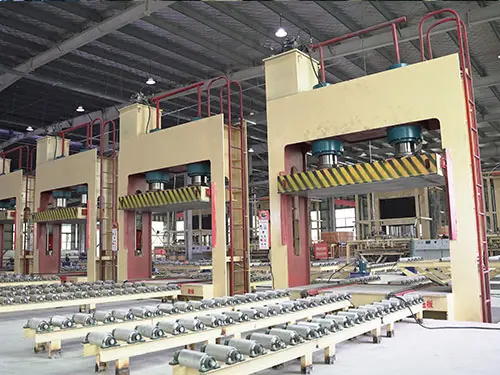
The plywood industry is at a turning point. With global demand for high-quality, durable plywood increasing in construction, furniture, and packaging industries, manufacturers must adopt cutting-edge technology to stay competitive.
Hot press plywood machines have evolved from basic hydraulic presses into multi-layer, PLC-controlled, energy-efficient systems capable of producing thousands of panels per day. Leading factories, from Europe to Asia, report output improvements of 40–50% and labor reductions up to 30% after upgrading to modern hot press systems.
In 2025, Statista reported that the global plywood market reached $60 billion, driven by demand for industrial plywood and customized furniture panels. These trends make investing in advanced hot press machines a key strategic decision for manufacturers.
What is a Hot Press Plywood Machine?
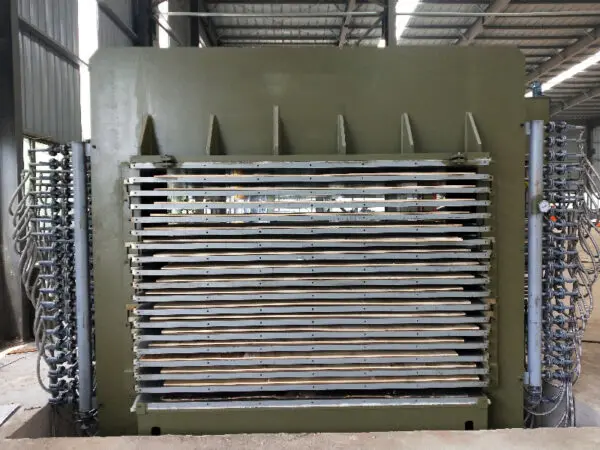
Definition and Function
A hot press plywood machine bonds multiple veneer layers under heat and pressure. It ensures:
- Strong adhesion and smooth surface finish.
- Uniform thickness and minimal warping.
- High production efficiency for small-scale and industrial operations.
Core Components
- النظام الهيدروليكي: Delivers precise, uniform pressure to prevent delamination.
- نظام التدفئة: Thermal oil, steam, or electric heating ensures consistent temperature.
- نظام التحكم: PLC or computer interfaces allow real-time monitoring of temperature, pressure, and pressing duration.
- Frame: Heavy-duty steel or welded frames minimize vibration and extend machine lifespan.
Evolution of Hot Press Machines
From Single-Layer to High-Layer Press
| Year | Innovation | Impact |
|---|---|---|
| 1980s | Single-layer hydraulic presses | Small-scale plywood production, manual loading |
| 1995 | Multi-layer presses | Increased efficiency, reduced labor cost |
| 2010 | PLC automation integration | Real-time monitoring, improved quality |
| 2020s | High-layer, energy-efficient presses | Large-scale continuous production, precision control |
Industry news: IWF Atlanta 2024 highlighted high-layer presses with up to 25 layers, capable of producing 10,000+ panels per day, setting new benchmarks for output and energy efficiency.
Types of Hot Press Plywood Machines
1. Single-Layer Hot Press Machines
- مفهوم: Presses one panel at a time.
- Use Cases: Custom furniture, boutique plywood production.
- Pros: Low cost, easy maintenance.
- Cons: Low output, labor-intensive.
2. Multi-Layer Hot Press Machines
- مفهوم: Presses 10–20 layers simultaneously.
- Use Cases: Medium-scale plywood factories, standard furniture panels.
- Pros: High efficiency, uniform adhesion, labor-saving.
- Cons: Higher initial cost, requires operator expertise.
3. High-Layer Hot Press Machines
- مفهوم: Presses 20+ layers, designed for industrial-scale continuous production.
- Use Cases: Large plywood factories, mass production for furniture and construction panels.
- Pros: Maximum output, reduced cycle times, automated loading/unloading.
- Cons: Expensive, high power and space requirements.
Leading Hot Press Machines in 2026
| Brand / Model | Layer Capacity | Panel Size (mm) | Heating | الميزات الرئيسية |
|---|---|---|---|---|
| شاندونغ تشوانغشين 600T 11-Platen | 10 Layers | 1370 × 2700 | Thermal Oil | PLC control, uniform heat, precise pressure |
| Shandong Chuangxin 500T 20-Layer | 20 Layers | 1370 × 2700 | الزيت الحراري / البخار | Multi-layer, auto loading/unloading, heavy-duty frame |
| Siempelkamp MultiPress 12 | 12 Layers | 1200 × 2400 | Thermal Oil | Compact, mid-sized factory optimized |
| Dieffenbacher HighPress 25 | 25 Layers | 1500 × 3000 | Electric / Steam | High-speed, energy-efficient, fully automated |
| Andritz PlywoodPress 15 | 15 Layers | 1400 × 2800 | Thermal Oil | Balanced performance, European quality |
Fact: Factories in Germany and China adopting these machines report 15–25% lower energy consumption per panel due to optimized heating circuits and precise PLC monitoring.
Technical Features to Consider
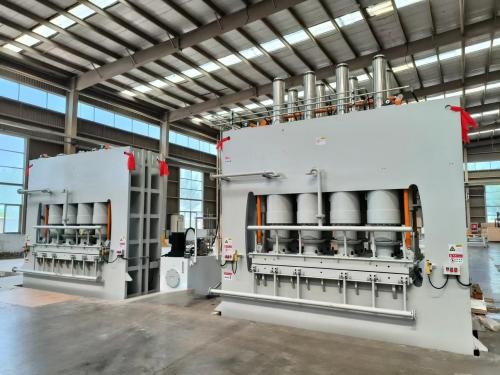
Precision Pressure Control
- Multi-stage pressure systems prevent veneer delamination.
- 26–30 MPa pressure ratings are standard for industrial-grade presses.
Uniform Heating Systems
- Dual inlet/outlet oil circuits reduce temperature variation to <2°C across platen.
- Thermal oil preferred for energy efficiency; steam allows rapid heating of thicker panels.
Robust Frame Design
- Steel plate thickness: 35–40 mm.
- Frames withstand continuous 24/7 operation without vibration-induced defects.
Automation & Safety
- PLC systems control pressing cycles, temperature, and moisture discharge.
- Automatic loading/unloading reduces operator strain and improves factory workflow.
- Safety features: emergency stop, overload protection, anti-slip platens.
Real Case Study: Shandong Chuangxin 500T 20-Layer Press
Factory Location: Tanyi Town, Shandong Province
Investment: $950,000 USD
Implementation: Replaced 10-year-old manual presses
Results After 12 Months:
- Output increased by 50%, reaching 12,000 panels/month.
- Labor costs decreased by 28%, thanks to automation.
- Panel adhesion failure rates reduced to <0.5%.
- Energy consumption reduced by 18% using thermal oil circuits.
Quote from factory manager: “The 500T multi-layer hot press transformed our production efficiency. Automated control allows precise monitoring, reducing human error and increasing product quality.”
Comparison: Multi-Layer vs High-Layer Press
| ميزة | Multi-Layer Press | High-Layer Press |
|---|---|---|
| Layers per Cycle | 10–20 | 20+ |
| الاستخدام المثالي | Medium factories | Large industrial factories |
| Investment | معتدل | عالي |
| متطلبات العمالة | واسطة | Low (automation) |
| كفاءة الإنتاج | عالي | مرتفع جداً |
| صيانة | معتدل | عالي |
Industry Standards & Guidelines
- ISO 12466: Specifies testing methods for plywood quality, including adhesion and thickness tolerance.
- EN 314-2: European standard for bonding quality in plywood.
- JAS / PS 1 (Japan / USA): Governs strength and safety for plywood panels.
Compliance with these standards ensures high-quality, durable plywood suitable for furniture, construction, and marine applications.
أفضل ممارسات الصيانة
Daily Checks
- Inspect hydraulic cylinders and platens for wear.
- Verify oil levels and temperature settings.
Monthly & Quarterly Maintenance
- Lubricate moving parts and hydraulic systems.
- Check PLC sensors and replace any faulty components.
- Flatten platen surfaces as needed to maintain 0.1 mm tolerance.
Energy Efficiency Tips
- Schedule presses to minimize idle time.
- Optimize thermal oil flow and circulation.
- Use automation to reduce manual errors and re-press cycles.
Hot Press Plywood Machine Innovations in 2026
- AI-Based Monitoring: Real-time detection of temperature and pressure fluctuations.
- Predictive Maintenance: Sensors alert operators to wear or potential failures.
- تكامل إنترنت الأشياء: Remote monitoring and optimization across multiple machines.
- Eco-Friendly Designs: Energy recovery systems and optimized thermal circuits reduce energy costs by 15–20%.
التعليمات
Q1: How many layers should I press per cycle?
A1: Depends on your factory scale. Multi-layer presses (10–20 layers) are optimal for medium factories; high-layer presses (>20 layers) suit large industrial production.
Q2: Is thermal oil or steam heating better?
A2: Thermal oil is more energy-efficient and offers stable temperature control. Steam heats faster for thicker panels but can consume more energy.
Q3: How to ensure uniform adhesion across layers?
A3: Use machines with dual inlet/outlet heating circuits and precise hydraulic control. Flatness tolerance should be <0.1 mm.
Q4: Which brands are considered most reliable in 2026?
A4: شاندونغ تشوانغشين, Dieffenbacher, Siempelkamp, Andritz are top performers with proven durability and high output.
Q5: What is the ROI timeframe for a high-layer press?
A5: Typically 18–24 months for high-volume factories, depending on labor savings and production efficiency gains.
خاتمة
Choosing a آلة الخشب الرقائقي بالضغط الساخن is no longer just about pressing panels—it is about maximizing efficiency, reducing labor costs, ensuring uniform quality, and achieving energy savings.
By comparing multi-layer and high-layer presses, considering industry standards, and reviewing real case studies like Shandong Chuangxin’s 500T 20-layer machine, manufacturers can make informed, strategic decisions.
In 2026, the right hot press plywood machine is a cornerstone investment for competitive factories aiming to scale production, improve product quality, and reduce operational costs.
 Arabic
  English
  Vietnamese