
News
Cold Press Machine for Plywood and Laminate: Laminate Plywood Press Machine Cost Guide for Industrial Buyers
Welcome to My Blog!
I’m so glad you’re here. Before we dive into the content, I’d love to connect with you beyond this page. On my social media, I regularly share industry insights, product updates, and behind-the-scenes moments — plus, it’s a great place for us to interact!
Follow us on Facebook: Shandong Chuangxin Automation Equipment Co., Ltd
Let’s grow together and stay connected. Now, let’s jump into the blog — I hope you find the content informative, engaging, and truly valuable.
Table of Contents
Key Takeaways of This Article
- Understand full cost structure of a cold press machine for plywood and laminate
- Learn key pricing drivers in plywood and laminate manufacturing
- Compare manual, hydraulic, and automatic system investments
- Analyze production efficiency impact on total ownership cost
- Explore ROI, maintenance, and energy consumption logic
- Review industrial use cases and buyer selection factors
- Answer common procurement questions based on real factory scenarios
What is a Cold Press Machine for Plywood and Laminate?
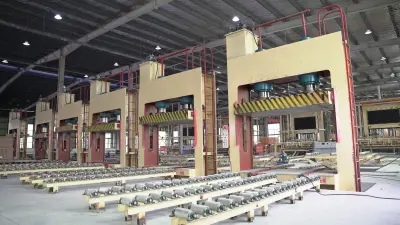
Industrial Definition
A cold press machine for plywood and laminate is a hydraulic compression system used to apply uniform pressure to glued veneer or laminate stacks at room temperature before hot pressing. It stabilizes layers, improves bonding uniformity, and reduces deformation risk during final curing.
This equipment is widely used in:
- Plywood manufacturing plants
- Laminate board production lines
- Furniture panel factories
- Engineered wood processing industries
Core Functional Concept
Pre-Bond Stabilization System
The machine ensures glue layers are evenly distributed before heat activation in hot press systems.
Structural Alignment Control
It maintains precise alignment of multi-layer boards to reduce defects such as shifting and delamination.
Cold Press Machine for Plywood and Laminate Cost Structure
Main Cost Components in Industrial Equipment
Equipment Manufacturing Cost
This includes steel frame fabrication, hydraulic system integration, and pressing platen production.
Hydraulic System Cost
High-pressure pumps, cylinders, and valves significantly affect both performance and total machine price.
Automation Control Cost
PLC systems, sensors, and smart control modules increase upfront cost but improve long-term efficiency.
Installation and Service Cost
Transportation, commissioning, and operator training also contribute to total investment.
Cost Breakdown Table
| Cost Component | Share of Total Cost |
|---|---|
| Steel Structure Frame | 25%–35% |
| Hydraulic System | 20%–30% |
| PLC Control System | 10%–20% |
| Heating & Auxiliary Parts | 10%–15% |
| Installation & Commissioning | 10%–15% |
Key Factors Affecting Cold Press Machine for Plywood and Laminate Cost
Pressure Capacity Level
Low Pressure Systems (100T–300T)
Used in small workshops with limited production demand and lower investment budgets.
Medium Pressure Systems (400T–800T)
Common choice for standard plywood and laminate factories.
High Pressure Systems (1000T+)
Designed for large-scale industrial production lines requiring high throughput.
Higher tonnage directly increases structural strength requirements and overall machine cost.
Automation Level
Manual Operation Systems
Lower cost but higher labor dependency and inconsistent pressure control.
Semi-Automatic Systems
Balanced option for mid-size factories with moderate production demands.
Fully Automatic PLC Systems
Higher investment but significantly improves production efficiency and consistency.
Production Capacity Design
Single-Layer Press Systems
Lower cost and suitable for small-scale production environments.
Multi-Layer Press Systems
Higher cost but significantly increases production output per cycle.
Cold Press Machine for Plywood and Laminate Operating Cost Logic
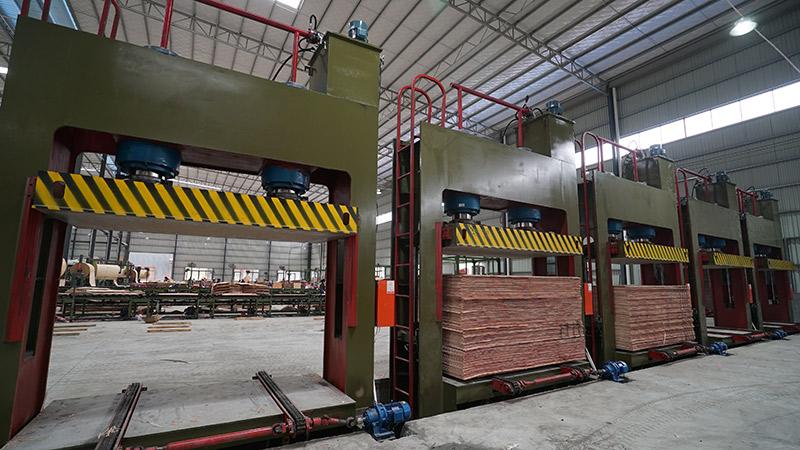
Energy Consumption Structure
Hydraulic System Power Usage
Hydraulic pumps account for the majority of electricity consumption during operation.
Idle Energy Optimization
Modern systems reduce energy waste using pressure-holding and smart standby modes.
Maintenance Cost Factors
Hydraulic Oil Replacement Cycle
Regular oil replacement ensures stable pressure performance and extends system life.
Seal and Cylinder Wear Parts
Seals and hydraulic components are key consumable parts affecting long-term maintenance cost.
Cold Press Machine for Plywood and Laminate Types Comparison
Manual vs Hydraulic vs Automatic Systems
| Type | Cost Level | Efficiency | Application Scenario |
|---|---|---|---|
| Manual System | Low | Low | Small workshops |
| Hydraulic System | Medium | Medium | Standard factories |
| Automatic System | High | High | Industrial mass production |
Concept Comparison
Manual System Characteristics
Simple structure and low investment cost but unstable pressure performance.
Hydraulic System Characteristics
Balanced industrial solution with stable performance and moderate cost.
Automatic System Characteristics
High efficiency, low labor cost, and consistent production quality.
Industrial Applications of Cold Press Machine for Plywood and Laminate
Plywood Manufacturing Industry
Used for stabilizing veneer layers before hot pressing to improve final bonding strength.
Laminate Panel Production
Ensures adhesive uniformity and reduces surface defects in decorative boards.
Furniture Manufacturing Industry
Improves flatness and structural stability of cabinet and table panels.
Construction Material Industry
Used in engineered wood and structural panel production systems.
Performance Impact on Cost Efficiency
Production Yield Improvement
Better pre-pressing reduces defect rates in hot pressing processes.
Material Waste Reduction
Stable pressure control decreases delamination and rework costs.
Labor Cost Optimization
Automation reduces manual handling and improves operational efficiency.
Cold Press Machine for Plywood and Laminate vs Hot Press System
Functional Comparison
| Feature | Cold Press Machine | Hot Press Machine |
|---|---|---|
| Heat Application | No | Yes |
| Function Stage | Pre-stabilization | Final curing |
| Energy Consumption | Lower | Higher |
| Role in Production | Preparation | Completion |
Process Logic Difference
Cold Press Function
Focuses on stabilizing veneer or laminate layers before thermal bonding.
Hot Press Function
Uses heat and pressure to permanently cure adhesive layers.
Technical Specification Example
Industrial Standard Machine Configuration
| Parameter | Specification |
|---|---|
| Pressure Range | 100T–1000T |
| Plate Size | 1220 × 2440 mm |
| Cycle Time | 3–10 minutes |
| Hydraulic Pressure | 16–25 MPa |
| Control System | Manual / PLC |
| Frame Structure | Heavy-duty welded steel |
Buyer Decision Guide for Cold Press Machine for Plywood and Laminate
Key Evaluation Factors
Production Demand Matching
Select machine size based on daily production capacity requirements.
Hydraulic System Quality
High-quality components ensure stable long-term performance.
Automation Requirement Level
Automation reduces labor cost and improves production consistency.
Buyer Search-Oriented Questions
“Is a cold press machine necessary for plywood production?”
Yes, it improves stability and reduces defects in hot pressing.
“What is the average cost of cold press machines?”
It varies widely depending on capacity, automation, and configuration.
“Can one machine handle plywood and laminate?”
Yes, most industrial systems support both applications.
Conclusion
A cold press machine for plywood and laminate is a critical investment in modern wood panel manufacturing. Its cost is influenced by structural design, hydraulic systems, and automation level, but its real value lies in improving production stability, reducing defects, and increasing long-term factory profitability.
For manufacturers targeting scalable production and consistent product quality, selecting the right system is a strategic decision that directly impacts competitiveness in the global market.
FAQ
What is a cold press machine for plywood and laminate used for?
It is used to stabilize glued layers before hot pressing in wood panel manufacturing.
What factors influence machine cost the most?
Pressure capacity, automation level, hydraulic system quality, and frame structure.
Is automation worth the higher cost?
Yes, especially for medium and large factories where efficiency and consistency matter.
How long does one pressing cycle take?
Typically 3–10 minutes depending on material thickness and adhesive type.
Which industries use this machine?
Furniture manufacturing, plywood production, laminate flooring, and construction materials.
 English
  Vietnamese
  Arabic