
News
Edge Bander Trimmer Uses in Modern Woodworking: A Complete Technical Guide
Welcome to My Blog!
I’m so glad you’re here. Before we dive into the content, I’d love to connect with you beyond this page. On my social media, I regularly share industry insights, product updates, and behind-the-scenes moments — plus, it’s a great place for us to interact!
Follow us on Facebook: Shandong Chuangxin Automation Equipment Co., Ltd
Let’s grow together and stay connected. Now, let’s jump into the blog — I hope you find the content informative, engaging, and truly valuable.
Table of Contents
Key Takeaways of This Article
- Industrial definition and engineering role of edge bander trimmer systems
- Full production workflow from edge banding to precision trimming
- Technical parameters, cutting systems, and automation technologies
- Global standards and compliance requirements in furniture manufacturing
- Real industrial case studies with measurable production improvements
- Cost structure, ROI analysis, and efficiency comparison
- Maintenance engineering and failure prevention strategies
- Market trends, smart factory integration, and future development
- FAQ based on real procurement and engineering search behavior
Introduction
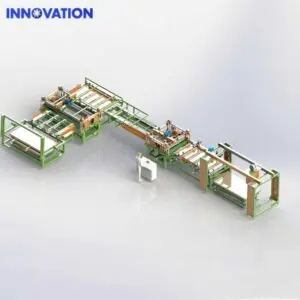
In modern furniture manufacturing, visual quality and structural precision are equally important. While edge banding provides protection and aesthetics, it is the edge bander trimmer that determines the final surface quality of every panel.
Without precision trimming, excess edge material leads to uneven surfaces, weak bonding points, and visible defects. According to a 2025 woodworking automation report, over 65% of furniture surface defects originate from improper edge finishing processes, making trimming technology a critical production stage.
Modern production lines integrate edge bander trimmer systems directly after edge banding machines, forming a continuous automated workflow that ensures:
- Precision finishing within ±0.2 mm tolerance
- Reduction of manual rework by up to 50%
- Production speed increases of 30–70% depending on automation level
This transformation has made edge trimming systems a core element of Industry 4.0 woodworking factories.
Industrial Definition of Edge Bander Trimmer Systems
Engineering Concept of Trimming Technology
An edge bander trimmer is an industrial finishing machine designed to remove excess edge banding material applied to wood panels.
It ensures that the banding material aligns perfectly with the panel surface.
System Integration Role
In modern production lines, trimming is not an independent process.
It is integrated into continuous edge banding systems as a finishing module.
Mechanical Working Logic
The system uses:
- High-speed rotary cutters
- Precision guide rollers
- Pressure-controlled feeding systems
These components ensure accurate trimming without damaging the panel surface.
Complete Industrial Workflow of Edge Bander Trimmer Systems
Step 1: Edge Band Application
PVC, ABS, or veneer strips are applied to raw board edges using hot-melt adhesives.
Adhesive temperature typically ranges from 160°C to 200°C.
Step 2: Pre-Press Stabilization
Pressure rollers ensure bonding stability before trimming begins.
This reduces edge shifting during cutting.
Step 3: Edge Bander Trimmer Cutting Process
Excess material is removed using high-speed cutters operating at 12,000–18,000 RPM.
This ensures smooth and precise edge alignment.
Step 4: Fine Finishing Process
Scraping and polishing units refine surface texture.
This improves tactile quality and visual uniformity.
Edge Bander Trimmer vs Manual Finishing Systems
Performance Comparison Table
| Feature | Manual Trimming | Edge Bander Trimmer |
|---|---|---|
| Precision | ±1 mm | ±0.2 mm |
| Production Speed | Low | High (12–25 m/min) |
| Labor Requirement | High | Low |
| Consistency | Operator-dependent | Stable and repeatable |
| Defect Rate | 5–12% | <2% |
| Industrial Suitability | Small workshops | Mass production |
Engineering Interpretation
Manual System Limitations
Manual trimming depends on operator skill.
This leads to inconsistent results and higher defect rates.
Automated System Advantage
Edge bander trimmer systems ensure repeatable precision.
They are essential for high-volume furniture manufacturing.
Core Components of Edge Bander Trimmer Machines
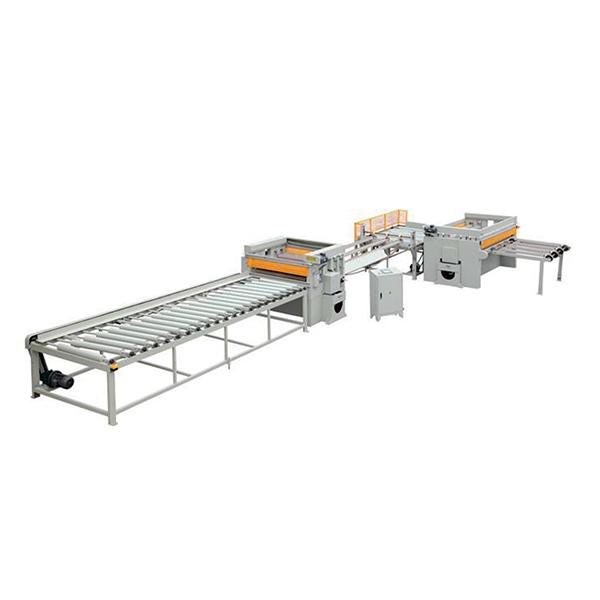
High-Speed Cutter Unit
The cutter system removes excess edge material with precision.
Industrial blades are often carbide-tipped for durability.
Feeding Conveyor System
Rollers control panel movement through the trimming zone.
This ensures stability and prevents misalignment.
PLC Control System
Modern machines use PLC + touchscreen interfaces.
Operators can adjust speed, pressure, and trimming depth digitally.
Pneumatic Pressure System
Air pressure systems stabilize cutting force.
This ensures consistent trimming results across different materials.
Industrial Specification Table of Edge Bander Trimmer
| Parameter | Industrial Range | Function |
|---|---|---|
| Cutting Speed | 12–25 m/min | Production efficiency |
| Motor Power | 1.5–6 kW | Cutting force |
| Blade Speed | 10,000–18,000 RPM | Precision trimming |
| Panel Thickness | 10–60 mm | Material compatibility |
| Edge Material | PVC / ABS / Veneer | Application range |
| Control System | PLC + HMI | Automation control |
| Precision Tolerance | ±0.2 mm | Finishing accuracy |
Industrial Applications of Edge Bander Trimmer
Furniture Manufacturing Industry
Used in cabinets, wardrobes, office desks, and modular furniture systems.
Ensures smooth and durable edge finishing.
Kitchen Cabinet Production
Provides waterproof and heat-resistant edge finishing.
Essential for modern modular kitchen systems.
Office Furniture Industry
Ensures consistent appearance across large production batches.
Improves product branding quality.
Custom Woodworking Workshops
Used for small-batch production with high precision requirements.
Helps maintain professional finishing standards.
Global Industry Standards and Compliance
EN 14322 Standard (Europe)
Defines decorative laminate requirements for furniture panels.
Edge finishing must meet dimensional stability standards.
ISO 2813 Surface Gloss Measurement
Ensures consistent surface finish quality after trimming.
CARB Phase 2 Compliance
Controls formaldehyde emissions in furniture materials.
Edge sealing helps reduce emission leakage.
ANSI/BIFMA Standards
Applies to office furniture durability and safety requirements.
Real Industrial Case Studies
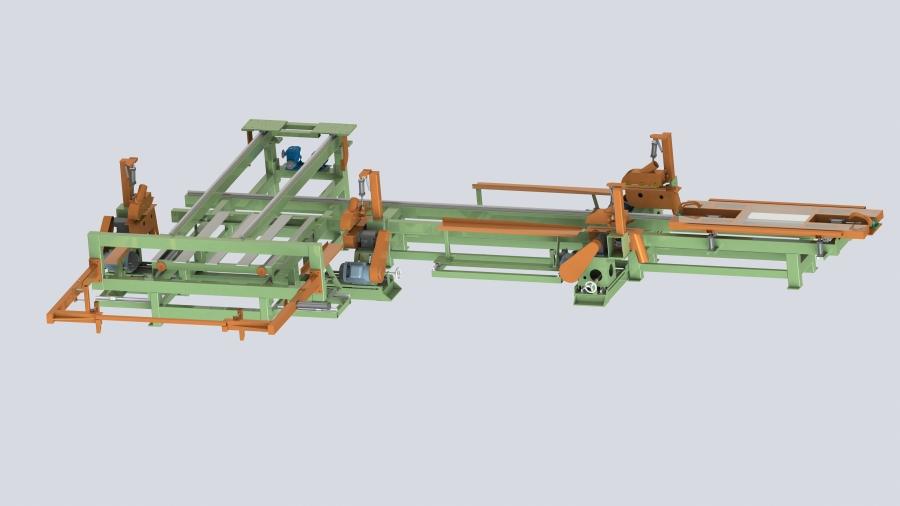
Case Study 1: European Furniture Manufacturer
- Location: Germany
- Equipment: Fully automated edge banding + trimming line
- Output: 18,000 panels/day
- Result: 42% reduction in defect rate
- Labor cost reduction: 35%
Case Study 2: Asian Mass Production Factory
- Location: Vietnam
- Product: MDF kitchen cabinets
- Result: Production speed increased by 55%
- Rework rate reduced below 1.8%
Case Study 3: North American Custom Furniture Brand
- Focus: High-end office furniture
- Result: Surface consistency improved by 60%
- Customer complaint rate reduced by 40%
Cost Structure and ROI Analysis
Investment Breakdown
| Cost Element | Percentage |
|---|---|
| Machine Purchase | 50–65% |
| Installation | 10–15% |
| Maintenance | 5–10% |
| Energy Consumption | 10–20% |
| Labor | Reduced significantly |
ROI Performance Insight
Industrial users typically recover investment within:
- 10–18 months in high-volume factories
- 18–30 months in medium-scale operations
Engineering Concepts Behind Edge Bander Trimmer Technology
Precision Alignment Engineering
Sensors ensure blade alignment with panel edges.
This prevents uneven trimming.
Continuous Flow Production Concept
Machines are integrated into inline production systems.
This eliminates downtime between processes.
Material Stress Reduction Principle
Controlled cutting reduces pressure on panel edges.
This prevents cracking and delamination.
Maintenance and Reliability Engineering
Blade Maintenance System
Blades must be sharpened every 200–400 operating hours.
Dull blades increase defect rates significantly.
Roller System Calibration
Rollers must maintain consistent pressure.
Misalignment causes edge deviation.
Dust Extraction Maintenance
Wood dust accumulation reduces efficiency.
Regular cleaning ensures stable operation.
Electrical System Inspection
PLC and sensors require periodic calibration.
This prevents automation errors.
Industry Trends and Market Development
Recent woodworking machinery reports highlight:
- Global demand growth for edge finishing systems: 6.5–8% CAGR
- Increasing adoption of fully automated furniture production lines
- Integration of AI-based defect detection systems
- Energy-efficient motor systems reducing consumption by up to 20%
- Rising demand in Asia-Pacific furniture manufacturing hubs
The edge bander trimmer is now considered a standard component in smart factory design.
Conclusion
The edge bander trimmer is a critical finishing technology in modern woodworking and furniture manufacturing. It ensures precision, consistency, and high surface quality in mass production environments.
As automation, AI monitoring, and smart manufacturing systems continue to evolve, edge trimming technology is becoming increasingly essential for competitive production lines. Manufacturers who invest in advanced trimming systems achieve higher efficiency, lower defect rates, and stronger global competitiveness in the furniture industry.
FAQ
What is an edge bander trimmer used for?
It removes excess edge banding material and creates smooth, precise panel edges in furniture manufacturing.
Can it work with PVC, ABS, and veneer materials?
Yes, industrial machines support multiple edge materials including PVC, ABS, and natural veneer.
Is an edge bander trimmer necessary for small workshops?
Not mandatory, but it significantly improves quality consistency and production efficiency.
What is the difference between trimming and edge banding?
Edge banding applies material to panel edges, while trimming removes excess material for finishing.
How often should maintenance be done?
Blade inspection weekly, lubrication monthly, and full system maintenance every 3–6 months.
What industries use edge bander trimmers?
Furniture manufacturing, cabinetry production, office furniture, and panel processing industries.
 English
  Vietnamese
  Arabic