
News
Global Guide for Plywood Machine Manufacturers in 2026
Welcome to My Blog!
I’m so glad you’re here. Before we dive into the content, I’d love to connect with you beyond this page. On my social media, I regularly share industry insights, product updates, and behind-the-scenes moments — plus, it’s a great place for us to interact!
Follow us on Facebook: Shandong Chuangxin Automation Equipment Co., Ltd
Let’s grow together and stay connected. Now, let’s jump into the blog — I hope you find the content informative, engaging, and truly valuable.
Table of Contents
Key Highlights of This Guide
- Global plywood machine manufacturers competitive landscape
- Full plywood production line system structure and workflow
- Industry benchmark data and efficiency performance models
- Manufacturing comparison across major global regions
- Real factory case studies and ROI analysis
- 2026 technology trends in automation and smart factories
Introduction
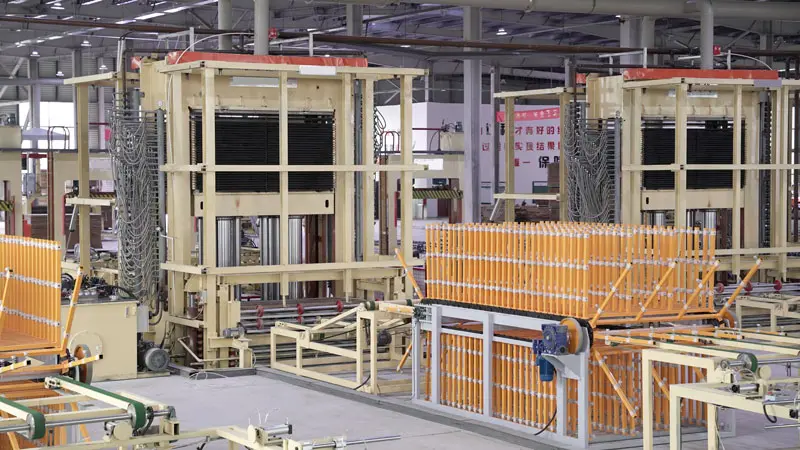
The plywood industry is entering a new stage of industrial transformation driven by automation, precision engineering, and intelligent production systems. In 2026, competition is no longer based on machine price alone but on production efficiency, system stability, and long-term operational cost.
Global demand for plywood continues to increase across construction, furniture manufacturing, and packaging industries. As a result, plywood machine manufacturers are becoming key players in industrial upgrading. Their role has expanded from equipment suppliers to complete production line solution providers.
Modern buyers are now focusing on production capacity, automation level, and return on investment rather than single machine specifications.
What Are Plywood Machine Manufacturers
Plywood machine manufacturers are industrial companies that design, produce, and supply machinery systems used in plywood production lines.
Core Responsibilities
They provide equipment and solutions for:
- Veneer processing systems
- Hydraulic hot press machines
- Cold press stabilization systems
- Edge trimming and finishing lines
- Full production line integration
Industrial Importance
These manufacturers directly influence:
- Production efficiency
- Product quality consistency
- Energy consumption
- Labor cost structure
Global Plywood Machine Manufacturing Structure
European Manufacturers
European companies focus on high precision engineering and advanced automation control systems. Their equipment is known for accuracy and long-term stability.
Chinese Manufacturers
Chinese manufacturers provide complete production line solutions with strong cost advantages and integrated system design capability.
Regional Manufacturers
Regional suppliers typically focus on small and medium-scale production systems with flexible configurations.
Case Study Industrial Manufacturer Profile
A representative example of a large-scale production equipment supplier is
Shandong Chuangxin Automation Equipment Co., Ltd.
Manufacturing Capability Overview

This type of plywood machine manufacturer specializes in:
- Full production line design and manufacturing
- Hydraulic system integration
- Wood-based panel machinery development
- Industrial automation solutions
Production Strengths
- Over one hundred machine models
- Full line production capability
- Strong engineering and R and D support
- Export experience in more than sixty countries
Plywood Machine Manufacturing System Workflow
Veneer Processing Stage
Logs are processed into thin veneer sheets with controlled thickness. This stage determines the quality foundation of final plywood.
Glue Application Stage
Automated systems apply adhesive evenly across veneer surfaces to ensure structural bonding strength.
Layer Assembly Stage
Multiple veneer layers are stacked in cross-grain formation to enhance strength and stability.
Hydraulic Pressing Stage
High pressure and temperature are applied to bond layers into solid plywood sheets.
Edge Trimming Stage
Final boards are cut to precise dimensions to ensure uniform quality and smooth edges.
Technical System Structure of Plywood Machines
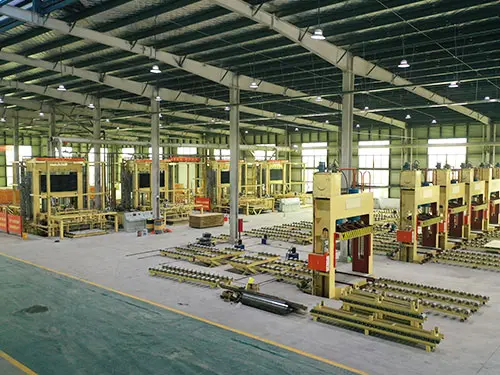
Automated Feeding System
Roller conveyor systems transport materials continuously into production lines without manual intervention.
Hydraulic Control System
Hydraulic pressure is maintained at stable levels to ensure uniform pressing quality.
Cutting System
High speed blades ensure precise trimming with minimal material loss.
Control System
PLC systems manage speed, pressure, and synchronization across the entire production line.
Industry Benchmark Data
Production Efficiency Comparison
| Production Level | Output per Hour | Defect Rate | Energy Usage |
|---|---|---|---|
| Basic Factory | 120 to 180 units | 6 to 10 percent | High |
| Modern Factory | 200 to 300 units | 3 to 5 percent | Medium |
| Advanced Factory | 280 to 400 units | 1 to 3 percent | Low |
Plywood Machine Manufacturers Comparison
Key Evaluation Factors
| Factor | European Manufacturers | Chinese Manufacturers | Regional Suppliers |
|---|---|---|---|
| Precision Level | Very High | High | Medium |
| Cost Efficiency | Low | High | Medium |
| System Integration | Medium | Very High | Low |
| Production Scale | Medium | Large | Small |
| Return on Investment | Slow | Fast | Medium |
Industry Application Scenarios
Furniture Manufacturing
Plywood machines are widely used in cabinet, table, and interior panel production.
Construction Industry
Plywood is a core material in flooring systems, wall panels, and structural formwork.
Packaging Industry
Lightweight plywood is used for crates and industrial packaging solutions.
Industrial Technology Evolution
Automation Development
Modern plywood machine manufacturers integrate automation systems that reduce manual labor and improve production stability.
Digital Monitoring Systems
Real-time data tracking allows factories to monitor pressure, temperature, and output efficiency.
Predictive Maintenance Systems
Sensors help detect early signs of equipment wear to prevent unexpected downtime.
Factory Case Study Performance Improvement
A medium-scale plywood factory upgraded to a fully automated production system.
Performance Results
- Production efficiency increased by 42 percent
- Labor cost reduced by 38 percent
- Material waste reduced by 22 percent
- Energy efficiency improved by 17 percent
Key Upgrade Factors
- Integrated hydraulic press system
- Automated roller feeding line
- Continuous trimming and stacking system
Manufacturing Standards and Quality Control

International Standards
Modern plywood machine manufacturers follow:
- ISO quality management standards
- CE machinery safety compliance
- Environmental protection regulations
Engineering Requirements
- Stable hydraulic pressure control
- High precision mechanical structure
- Continuous operation stability
Cost and Investment Structure
Investment Breakdown
- Equipment cost
- Installation cost
- Training and commissioning
- Spare parts allocation
Operational Cost Factors
- Energy consumption
- Adhesive usage efficiency
- Labor requirements
- Maintenance frequency
ROI Analysis for Plywood Machine Manufacturers
Payback Period
- Small scale factory 18 to 30 months
- Medium scale factory 12 to 18 months
- Large scale production line 8 to 14 months
ROI Optimization Factors
- Automation level
- Production efficiency
- Material utilization rate
- Downtime reduction
Industry Trends for 2026 and Beyond
Full Automation Expansion
Manual production systems are rapidly being replaced by fully automated production lines.
Smart Factory Integration
Artificial intelligence and digital monitoring systems are becoming standard in modern factories.
Energy Efficiency Optimization
New systems reduce energy consumption while increasing output efficiency.
Modular Production Design
Factories prefer flexible and scalable production line configurations.
Buyer Selection Guide
Step One Production Capacity
Define expected daily output before selecting equipment.
Step Two Material Requirements
Different plywood types require different pressing technologies.
Step Three Automation Level
Choose between semi automated and fully automated systems.
Step Four Long Term Cost Planning
Evaluate maintenance cost and spare parts availability.
FAQ
What do plywood machine manufacturers produce
They produce machines used in plywood production such as hot presses veneer machines and trimming systems
Which country leads plywood machine manufacturing
China is currently the leading country in full production line systems and cost efficiency
Are plywood machines fully automated today
Most modern systems are highly automated with PLC and hydraulic control systems
How long do plywood machines last
Industrial machines typically last ten to twenty years depending on maintenance
What is the most important factor in plywood production
Efficiency energy consumption and material utilization are the key factors
Conclusion
Plywood machine manufacturers play a critical role in shaping the global wood-based panel industry. In 2026, success in this sector depends on automation level system integration and long-term operational efficiency.
Companies that invest in advanced production line systems gain stronger competitiveness higher productivity and lower manufacturing costs in the global market.
 English
  Vietnamese
  Arabic