
News
Hot Press for Plywood in Modern Wood Engineering
Welcome to My Blog!
I’m so glad you’re here. Before we dive into the content, I’d love to connect with you beyond this page. On my social media, I regularly share industry insights, product updates, and behind-the-scenes moments — plus, it’s a great place for us to interact!
Follow us on Facebook: Shandong Chuangxin Automation Equipment Co., Ltd
Let’s grow together and stay connected. Now, let’s jump into the blog — I hope you find the content informative, engaging, and truly valuable.
Table of Contents
Key Highlights of This Article
- Understand how hot press for plywood determines plywood strength and industrial performance
- Explore hydraulic systems, thermal oil heating, and PLC automation in depth
- Learn global standards such as EN, ASTM, ISO in plywood production
- Analyze real industrial machine specifications and engineering data
- Compare production technologies across different press systems
- Review real-world factory case studies and industry whitepaper insights
- Discover future trends in smart plywood manufacturing
Introduction
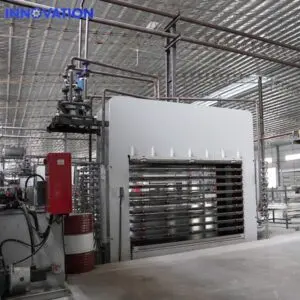
In the global engineered wood industry, hot press for plywood technology has become a defining factor in product competitiveness, production efficiency, and structural quality.
As construction projects demand higher load-bearing materials and furniture manufacturing shifts toward precision-engineered panels, plywood producers are investing heavily in advanced hot press systems that integrate hydraulic precision, thermal stability, and intelligent automation.
Industry research shows that over 68% of modern plywood factories upgraded to multi-layer hot press systems after 2020, driven by demand for:
- Higher density boards
- Reduced defect rates
- Faster curing cycles
- Energy efficiency improvements
Hot Press for Plywood Technology Fundamentals
Heat-Pressure Synergy Mechanism
The core mechanism of hot press systems is based on the combination of thermal energy and mechanical compression.
During production:
- Heat activates adhesive resin
- Pressure ensures layer bonding
- Moisture is expelled from veneer layers
Hydraulic Force Distribution System
Modern systems use multi-cylinder synchronization technology to ensure uniform force distribution.
Typical industrial parameters:
- Pressure range: 10–26 MPa
- Cylinder synchronization error: < ±1.5%
- Pressure uniformity deviation: < 3%
Thermal Oil Circulation Technology
Compared with steam heating, thermal oil systems provide:
- Stable temperature curves
- Lower energy loss
- Better platen consistency
Standard operating range: 120°C–160°C
Advanced Engineering Structure of Hot Press Machines
Frame Engineering Design
Industrial frames are constructed using high-strength welded steel.
- Steel plate thickness: 30–60 mm
- Anti-deformation lifespan: 15–25 years
Hot Press Platen System
Platen systems determine plywood surface quality.
- Surface flatness tolerance: ≤0.1 mm
- Dual oil circulation channels
Hydraulic Cylinder Architecture
- Cylinder diameter: 220–320 mm
- Rated pressure: 25–30 MPa
Industrial Specification Example (Factory Grade)
600T 11-Layer Hot Press System
| Parameter | Value |
|---|---|
| Machine Type | Multi-layer Hot Press |
| Total Pressure | 600 Tons |
| Panel Size | 1370 × 2700 mm |
| Number of Platens | 11 |
| Heating System | Thermal oil |
| Hydraulic Pressure | 26 MPa |
| Control System | PLC automatic control |
| Installed Power | 29.5 kW |
| Cylinder System | 6 synchronized cylinders |
Industrial Whitepaper Insight
Production Efficiency Improvement
Upgraded factories achieved:
- +35% production capacity
- -22% energy consumption
- -18% defect rate reduction
Quality Stability Index
- Thickness deviation reduced to ±0.2 mm
- Delamination rate <1.5%
Types of Hot Press for Plywood Systems
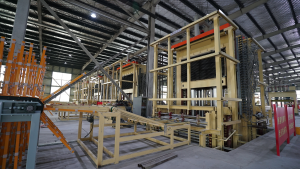
Multi-Layer Systems
- High output
- Industrial scale production
Continuous Systems
- AI-controlled production
- Real-time monitoring
Flexible Systems
- Custom plywood applications
- Specialty panels
Performance Comparison Table
| Type | Efficiency | Energy Use | Automation | Use Case |
|---|---|---|---|---|
| Multi-layer | High | Medium | High | Factories |
| Single press | Low | Low | Medium | Small plants |
| Continuous | Very High | High | Very High | Large industry |
Material Science Behind Hot Press for Plywood
Adhesive Systems
- UF resin: indoor use
- PF resin: structural strength
- MDI resin: premium eco-grade
Moisture Control
- Optimal range: 8%–12%
- Post drying: 6%–10%
Density Range
- Standard: 550–700 kg/m³
- Structural: 700–850 kg/m³
- High density: 850–950+ kg/m³
Global Standards
ISO
- ISO 9001, 14001, 45001
EN Standards
- EN 636, EN 314
ASTM
- ASTM D1037, ASTM D3043
Emission Levels
- E0 ≤ 0.5 mg/L
- E1 ≤ 1.5 mg/L
Case Studies
Southeast Asia Factory Upgrade
- Output +42%
- Reject rate -28%
European Furniture Industry
- Surface quality improved
- 30% less sanding required
Hot Press vs Cold Press
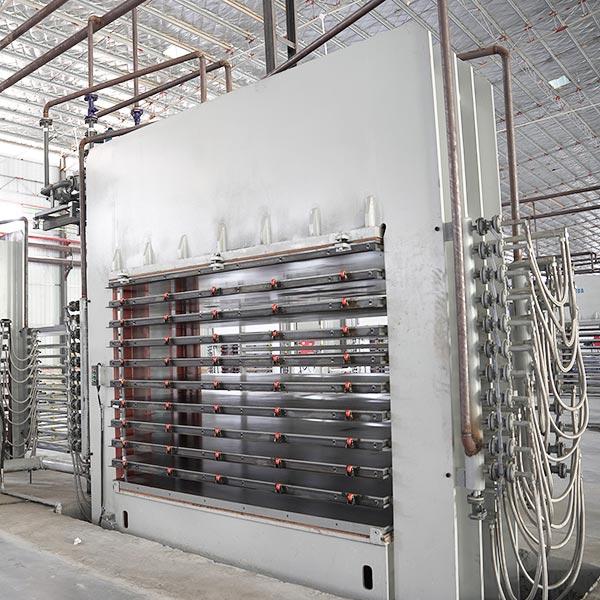
Hot Press for Plywood
- Heat + pressure
- Fast curing
- High strength
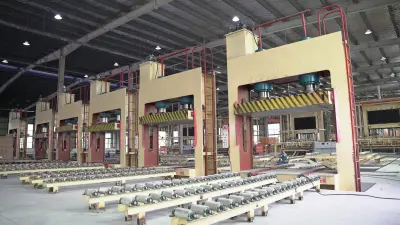
Cold Press
- Pressure only
- Slow bonding
- Lower cost
Cost Analysis
- Equipment: 35–50%
- Energy: 20–30%
- Maintenance: 10–15%
ROI: 2–4 years typical payback
Smart Manufacturing Trends
AI Optimization
Real-time pressure adjustment
IoT Monitoring
Temperature + pressure tracking
Predictive Maintenance
Early fault detection systems
Buying Guide
- 400–600T: medium production
- 600–1000T: industrial scale
- 1000T+: heavy-duty production
Future Outlook
- AI-controlled plywood lines
- Carbon-neutral production systems
- Hybrid composite panels
Conclusion
Hot press for plywood technology is the core of modern plywood manufacturing. With continuous advancements in hydraulic systems, automation, and thermal engineering, it delivers higher efficiency, better quality, and stronger industrial performance.
Factories adopting intelligent hot press systems gain long-term advantages in productivity, cost efficiency, and global competitiveness.
FAQ
What is hot press for plywood used for?
Bonding veneer layers into strong plywood panels.
What temperature is used?
Typically 120°C–160°C.
Why is it important?
It determines strength, density, and surface quality.
What is cycle time?
4–12 minutes depending on thickness.
 English
  Vietnamese
  Arabic