
News
Increase Efficiency with a Modern Hydraulic Press System
Introduction
In today’s manufacturing landscape, efficiency is everything. Whether you produce plywood panels, automotive components, or metal parts, every minute counts — and every detail in your production line can influence profitability. One of the most effective ways to enhance productivity and product consistency is by upgrading to a modern hydraulic press system. Unlike older mechanical presses, today’s hydraulic presses are smarter, safer, and more energy-efficient, offering precision control and long-term reliability.
In this blog, we’ll explore how modern hydraulic press systems improve performance, reduce costs, and help your business stay competitive.
Welcome to My Blog!
Before we dive into the content, if you’re interested in our products or have any questions, please feel free to visit our Contact Us page on the website. Our team is ready to assist you with inquiries, orders, or any support you may need.
Now, let’s get started on our journey together. I hope you find the content here insightful, engaging, and valuable.
1. Key Components of a Modern Hydraulic Press System
A modern hydraulic press consists of a hydraulic cylinder, pump, control unit, and robust frame designed for heavy pressure operations. Newer systems often integrate servo-hydraulic technology, which provides more consistent pressure control and reduces energy waste compared to conventional systems. This precision directly translates into smoother pressing cycles and improved product quality.
2. Precision Pressure Control for Consistent Results
Traditional presses often suffer from fluctuating pressure output, leading to inconsistent results. A hydraulic system, on the other hand, allows for precise control over pressure and speed, ensuring uniform pressure distribution across all surfaces. This feature is particularly valuable in plywood manufacturing, where even pressure guarantees smooth, defect-free boards.
3. Automation and Smart Control Systems
Automation has become a standard feature in advanced hydraulic presses. Modern systems come equipped with programmable logic controllers (PLCs) and touch-screen interfaces, allowing operators to set exact parameters for pressure, temperature, and timing. This not only boosts accuracy but also reduces human error and training time.
| Feature | Traditional Press | Modern Hydraulic Press |
|---|---|---|
| Pressure Control | Manual adjustment | Computer-controlled precision |
| Energy Use | Continuous, high consumption | Optimized, energy-saving cycles |
| Operation | Skilled labor required | User-friendly automation |
| Maintenance | Frequent and manual | Predictive and minimal |
| Output Consistency | Variable | Highly uniform |
4. Energy Efficiency and Sustainability
Hydraulic press manufacturers are now prioritizing energy-efficient designs that use variable-speed pumps and smart energy recovery systems. These innovations can reduce power consumption by up to 30%, making them an environmentally responsible investment. For factories under sustainability pressure, this means lower carbon emissions without sacrificing performance.
5. Maintenance-Friendly Design
Downtime costs money. Modern hydraulic presses are built with maintenance in mind — featuring easy-to-access components, real-time monitoring sensors, and predictive maintenance alerts. This ensures that minor issues can be addressed before they become major breakdowns, keeping production running smoothly.
6. Cold Press vs. Hot Press in Plywood Production
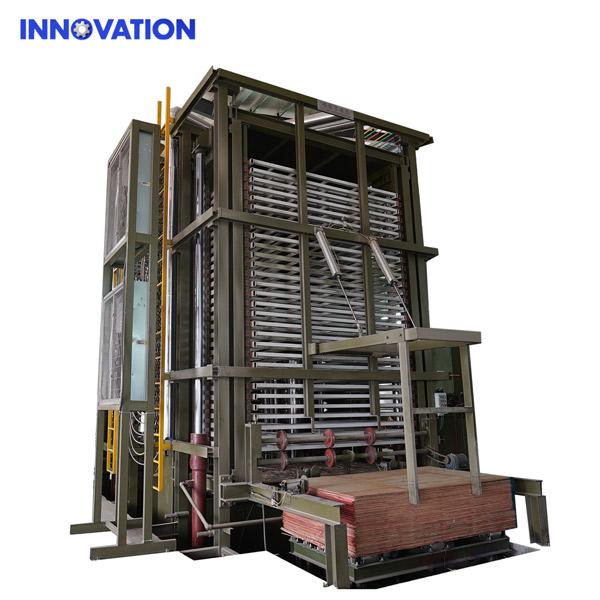
For plywood and panel manufacturing, hydraulic presses are used in both cold and hot pressing stages.
- Cold Press: Used for pre-pressing and ensuring initial adhesion of veneers.
- Hot Press: Applies uniform heat and pressure for final bonding.
A well-integrated system balances both stages, optimizing adhesive curing time and improving final surface quality.
7. Reducing Labor Costs Through Automation
By automating the press cycle, factories can significantly reduce manual labor requirements. Operators can monitor multiple presses simultaneously, improving overall plant productivity. Automation also ensures consistent pressing cycles, minimizing waste due to human errors.
8. Predictive Maintenance and Remote Monitoring
One major advancement in recent years is IoT-enabled monitoring. Sensors can detect changes in pressure, oil temperature, and vibration — sending alerts to maintenance teams before a failure occurs. Some systems even support remote diagnostics, allowing manufacturers like Chuangxin to provide real-time technical support to clients worldwide.
9. ROI and Long-Term Value
Although the initial cost of a modern hydraulic press may be higher, the return on investment (ROI) becomes evident over time. Reduced energy consumption, lower downtime, longer service life, and improved product quality all contribute to long-term savings. For example, many factories report productivity gains of 15–25% within the first year of upgrading.
10. Future Trends: Smart Manufacturing and AI Integration
Hydraulic press systems are evolving toward full integration with Industry 4.0. Predictive analytics, AI-driven optimization, and fully automated lines are redefining how manufacturing efficiency is achieved. The future of hydraulic press systems lies in intelligent adaptability — machines that learn and self-adjust for maximum output.
Conclusion
Upgrading to a modern hydraulic press system isn’t just about new machinery — it’s about transforming how your factory operates. With advanced control systems, automation, and energy-efficient technology, a hydraulic press from a trusted manufacturer like Chuangxin can help your business increase output, reduce costs, and maintain consistent product quality.
In the competitive plywood and manufacturing industries, efficiency is the key to long-term success — and a modern hydraulic press is your best tool to achieve it.
FAQ
1. What is the main advantage of a hydraulic press over a mechanical press?
A hydraulic press offers better control over pressure, speed, and uniformity, making it ideal for precision applications like plywood pressing.
2. How often should a hydraulic press be serviced?
Routine maintenance every 6–12 months is recommended, but predictive monitoring can extend service intervals and prevent downtime.
3. Can a hydraulic press system be customized?
Yes. Modern manufacturers like Chuangxin offer fully customized systems to match your production capacity, material type, and automation needs.
4. How does a hydraulic press save energy?
Through variable-speed drives and smart pump systems that only use energy when pressure is required, reducing overall consumption.
5. Is it worth upgrading an old press to a modern system?
Absolutely. The efficiency gains, safety improvements, and long-term cost savings justify the investment.
 English
  Vietnamese
  Arabic