
News
Hydraulic Press Automatic: Reduce Labor & Boost Output
Welcome to My Blog!
Before we dive into the content, if you’re interested in our products or have any questions, please feel free to visit our Contact Us page on the website. Our team is ready to assist you with inquiries, orders, or any support you may need.
Now, let’s get started on our journey together. I hope you find the content here insightful, engaging, and valuable.
Introduction
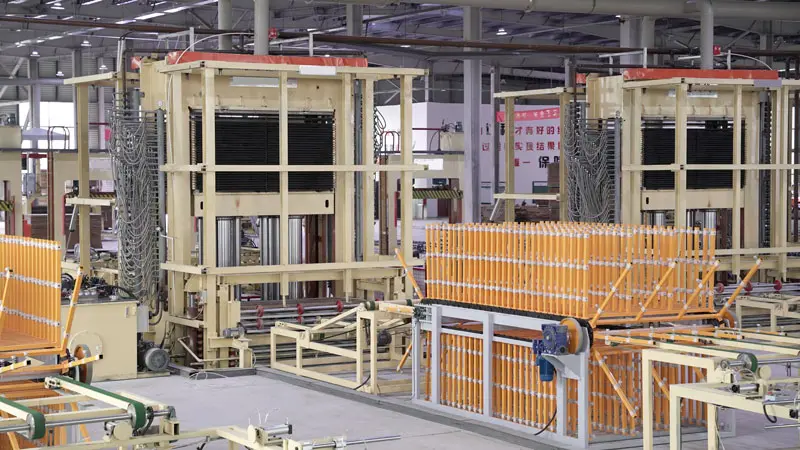
In today’s plywood and panel manufacturing, efficiency and consistency decide competitiveness. Manual presses require heavy labor and often lead to variable results. A hydraulic press automatic system changes this by combining reliable hydraulic power with automation. The result is lower labor needs, faster cycles, and consistently better output.
Why Choose an Automatic Hydraulic Press?
Unlike manual or semi-automatic systems, a hydraulic press automatic setup integrates precise pressure control with automated feeding, pressing, and unloading. This reduces operator dependency while ensuring each panel meets quality standards. For plywood factories, the benefits include fewer defects, shorter production time, and lower cost per board.
Key Features That Make the Difference
1. PLC Control Systems
Automated presses use PLCs to manage pressure, temperature, and timing. Every cycle is identical, which prevents uneven bonding or weak spots.
2. Automatic Loading and Unloading
Conveyor systems or robotic arms handle panels instead of workers. This saves labor and minimizes handling damage.
3. Consistent Pressure and Heat
Uniform pressure across the platen ensures each layer bonds evenly, which is crucial for structural strength and surface smoothness.
4. Built-in Safety
Automatic hydraulic presses include sensors, emergency shut-offs, and interlocks, reducing risks for operators.
How Automation Cuts Labor Costs
Labor is one of the largest recurring expenses in production. With a hydraulic press automatic system:
- Workers no longer perform repetitive loading tasks.
- Digital monitoring replaces manual supervision.
- Operators focus on oversight instead of heavy handling.
Factories that adopt automatic presses often see labor needs reduced by 30–40%, while maintaining higher throughput.
Shorter Cycle Times, Higher Output
Automatic presses complete cycles in as little as 3–5 minutes, compared to 7–10 minutes with manual systems. Over months of production, this means thousands more panels without adding machines or staff.
Energy Efficiency in Daily Operations
Modern hydraulic press automatic systems feature insulated platens, standby modes, and optimized heating. These improvements lower electricity use and reduce overall production costs.
Comparing Press Options
| Feature | Semi-Automatic Press | Fully Automatic Press |
|---|---|---|
| Loading & Unloading | Manual assistance | Conveyor/robotic arms |
| Cycle Time | 6–8 minutes | 3–5 minutes |
| Pressure Control | Limited adjustment | PLC precision control |
| Labor Requirement | High | Low |
| Energy Efficiency | Medium | High |
| Best For | Small workshops | Large-scale factories |
ROI: Looking Beyond Upfront Cost
While the purchase price of a hydraulic press automatic is higher than manual models, the savings in labor, energy, and reduced defects quickly outweigh the difference. Many factories achieve full return on investment within 1–3 years.
Conclusion
A hydraulic press automatic is more than an equipment upgrade—it is a production strategy. By reducing labor, shortening cycles, and improving product quality, it enables manufacturers to stay competitive and profitable. For plywood producers aiming at consistent growth, automation has become a necessity.
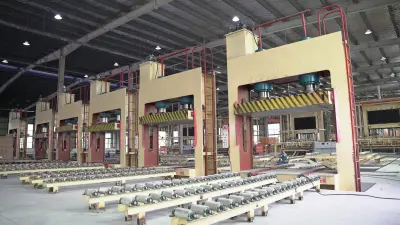
FAQ
Q1: How does a hydraulic press automatic improve quality?
It ensures precise pressure and heating, producing stronger bonding and fewer defects compared to manual pressing.
Q2: What type of factory benefits most from this system?
Medium to large-scale plywood plants gain the fastest returns, but even smaller facilities see efficiency improvements.
Q3: How much labor can be saved?
Many factories report a 30–40% reduction in manual labor after moving to an automatic press.
Q4: Is maintenance difficult?
Most models include automatic lubrication, sensor monitoring, and diagnostic functions, making upkeep straightforward.
 English
  Vietnamese
  Arabic