
News
Large Heat Press Machine Troubleshooting Guide: Common Problems and Practical Solutions
Welcome to My Blog!
I’m so glad you’re here. Before we dive into the content, I’d love to connect with you beyond this page. On my social media, I regularly share industry insights, product updates, and behind-the-scenes moments — plus, it’s a great place for us to interact!
Follow us on Facebook: Shandong Chuangxin Automation Equipment Co., Ltd
Let’s grow together and stay connected. Now, let’s jump into the blog — I hope you find the content informative, engaging, and truly valuable.
Table of Contents
Key Takeaways for Using a Large Heat Press
- Identifies the most frequent operational issues in industrial pressing systems
- Explains temperature, pressure, and alignment problems in detail
- Provides comparison between hydraulic and mechanical performance issues
- Includes maintenance strategies to extend machine lifespan
- Offers practical troubleshooting steps for production stability
Introduction
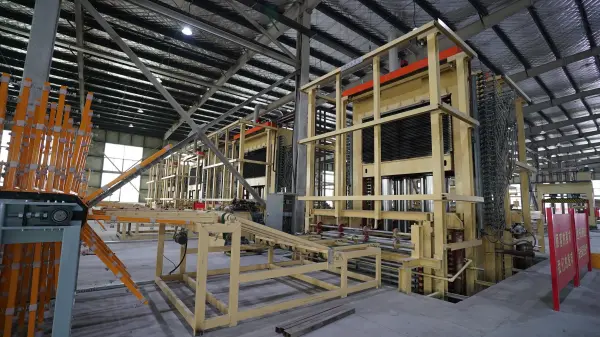
In modern plywood, furniture, and composite manufacturing, a large heat press machine plays a central role in ensuring product strength, surface quality, and production efficiency. With multi-layer pressing capability and hydraulic precision systems, these machines are designed for continuous industrial operation.
However, even advanced systems can face issues related to temperature inconsistency, uneven pressure, or mechanical wear. Understanding these problems early helps prevent downtime and production losses while improving long-term efficiency.
Large Heat Press Temperature Problems and Solutions
Uneven Heating Across Platen Surfaces
Uneven heating is one of the most common challenges in industrial pressing systems. It can lead to weak bonding, surface deformation, and inconsistent product quality.
This usually happens due to oil circuit imbalance, aging heating plates, or poor thermal fluid circulation.
Practical Fix
Regularly inspect thermal oil pipelines and ensure uniform flow distribution across all platens. Cleaning internal channels improves heat transfer efficiency.
Overheating or Temperature Fluctuation
A large heat press machine may experience overheating due to sensor failure or PLC control delay.
This affects adhesive curing and may damage veneer layers.
Recommended Action
- Calibrate temperature sensors monthly
- Check PLC control signals
- Replace worn heating relays when needed
Large Heat Press Pressure System Issues
Uneven Hydraulic Pressure Distribution
Hydraulic imbalance can cause inconsistent layer bonding and structural weakness in pressed panels.
This is often linked to cylinder wear or hydraulic valve blockage.
Solution Approach
A balanced hydraulic system requires:
- Regular valve cleaning
- Hydraulic oil replacement every 2000–3000 hours
- Cylinder sealing inspection
Low Pressing Force Output
Reduced pressure affects bonding strength and overall product durability.
This issue is common in high-cycle production environments.
Technical Fix
Check pump efficiency and verify rated pressure (commonly around 26 MPa in industrial systems). Replace low-pressure pumps if output drops significantly.
Mechanical Structure Issues in Large Heat Press Machines
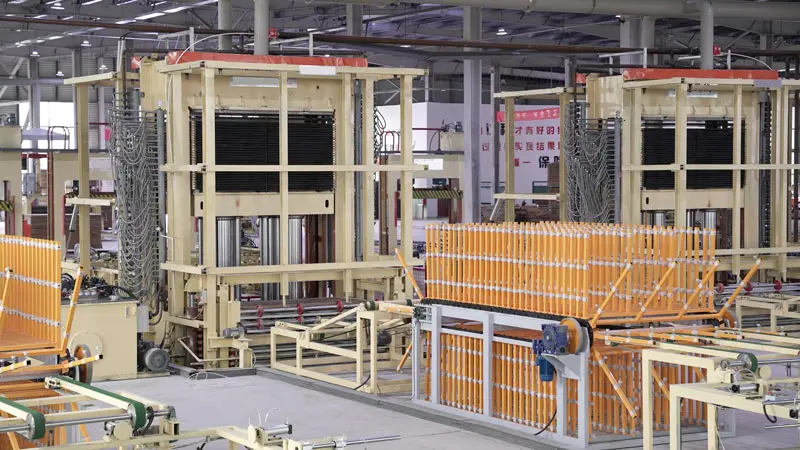
Frame Deformation and Misalignment
Heavy-duty operation may cause slight frame distortion over time.
This leads to uneven pressing gaps and inconsistent panel thickness.
Maintenance Insight
High-quality machines use thick steel frames (often 40 mm plates). Periodic alignment calibration ensures structural accuracy remains within 0.1 mm tolerance.
Plate Wear and Surface Damage
Hot press plates are critical for uniform heat distribution. Surface wear reduces efficiency and product quality.
Preventive Action
Polish and re-machine platen surfaces when roughness exceeds acceptable thresholds.
Comparison of Common Large Heat Press System Problems
| Issue Type | Cause | Impact | Recommended Solution |
|---|---|---|---|
| Temperature imbalance | Oil flow irregularity | Weak bonding | Clean heating channels |
| Pressure loss | Hydraulic wear | Delamination | Replace seals/pumps |
| Frame misalignment | Structural fatigue | Thickness variation | Recalibration |
| Plate surface wear | Long-term friction | Poor finish quality | Surface resurfacing |
| Control system delay | PLC signal issues | Production inconsistency | System reset & upgrade |
Concept Breakdown: Key Operating Systems in a Large Heat Press
Hydraulic System Stability
Hydraulic systems are responsible for generating uniform pressing force. A stable system ensures consistent bonding across all layers.
High-quality systems maintain constant pressure even during long production cycles.
PLC Control Intelligence
Modern systems rely on PLC automation for temperature, pressure, and timing control.
This reduces human error and improves production repeatability
Multi-Layer Pressing Concept
Multi-layer pressing allows simultaneous processing of multiple boards, increasing output efficiency significantly.
This is widely used in plywood manufacturing where productivity is a key performance metric.
Large Heat Press vs Traditional Press Systems
Hydraulic Multi-Layer Press
- High output capacity
- Uniform pressure distribution
- Suitable for mass production
Single-Layer Mechanical Press
- Lower investment cost
- Slower production cycle
- More manual intervention required
Selection Insight
Factories with large-scale production demands typically prefer hydraulic multi-layer systems due to efficiency advantages.
Maintenance Strategy for Long-Term Stability
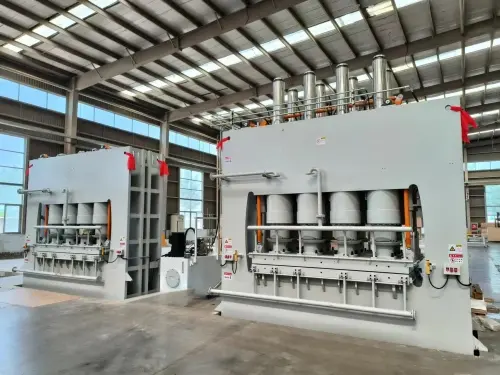
Daily Inspection Routine
Regular checks help prevent sudden breakdowns:
- Hydraulic oil level monitoring
- Temperature sensor verification
- Plate surface cleaning
Long-Term Preventive Maintenance
A structured maintenance cycle improves machine lifespan:
- Replace hydraulic oil every 3–6 months
- Inspect cylinders every 1000 operating hours
- Calibrate PLC system quarterly
Industry Application Scenarios
A large heat press machine is widely used in:
- Plywood manufacturing lines
- Furniture panel production
- Laminated flooring processing
- Composite board industries
Its ability to handle multi-layer pressing makes it essential for high-volume production environments.
Conclusion
A large heat press machine is a high-precision industrial system where temperature, pressure, and mechanical alignment must work in perfect synchronization. Most common problems originate from hydraulic imbalance, thermal inconsistency, or structural wear.
With proper maintenance, calibration, and system monitoring, manufacturers can achieve stable production, higher output efficiency, and long-term operational reliability.
FAQ
Why does my large heat press produce uneven panels?
This usually results from inconsistent pressure distribution or platen misalignment.
How often should hydraulic oil be replaced?
Typically every 2000–3000 working hours depending on production intensity.
What causes temperature instability?
Sensor failure, PLC delay, or uneven thermal oil circulation.
Can multi-layer pressing affect product quality?
Yes, but only if pressure or temperature is not evenly controlled across all layers.
What is the ideal operating pressure?
Most industrial systems operate around 26 MPa for stable performance.
 English
  Vietnamese
  Arabic