
News
Plywood Coating Machine for Mass Production
Welcome to My Blog!
I’m so glad you’re here. Before we dive into the content, I’d love to connect with you beyond this page. On my social media, I regularly share industry insights, product updates, and behind-the-scenes moments — plus, it’s a great place for us to interact!
Follow us on Facebook: Shandong Chuangxin Automation Equipment Co., Ltd
Let’s grow together and stay connected. Now, let’s jump into the blog — I hope you find the content informative, engaging, and truly valuable.
Table of Contents
Key Takeaways
- Understand how a plywood coating machine improves bonding, surface quality, and production efficiency
- Learn advanced technical parameters used in industrial-scale coating lines
- Compare roller coating, spray coating, and hybrid systems
- Explore global standards, compliance frameworks, and quality control methods
- Review real factory case studies and performance benchmarks
- Analyze ROI, cost structure, and energy efficiency models
- Identify procurement risks and optimization strategies for factories
Introduction
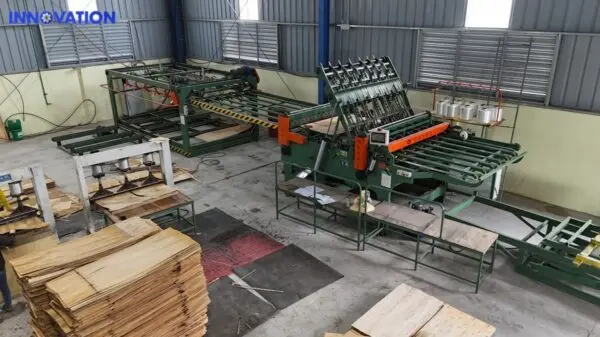
In today’s plywood and engineered wood industry, surface coating is no longer a secondary finishing step—it is a core production determinant that directly affects durability, export compliance, and product classification.
A plywood coating machine ensures precise adhesive or resin distribution across veneer surfaces, forming the foundation for high-strength bonding in hot pressing and lamination processes. Without uniform coating, even high-quality veneers will result in delamination, weak shear strength, and inconsistent surface finish.
According to the Global Wood Processing Equipment Report (2024, International Forestry Industry Council):
- 82% of plywood defects are linked to improper adhesive distribution
- Automated coating systems improve material utilization by 18–32%
- Industrial coating machines increase production throughput by up to 40%
These statistics confirm that coating technology is a key leverage point in modern plywood manufacturing systems.
Industrial Role of Plywood Coating Machine in Mass Production
Position in the Production Line
A plywood coating machine is typically positioned between veneer preparation and pressing systems.
Its workflow function includes:
- Stabilizing adhesive layer before hot pressing
- Ensuring consistent glue penetration
- Reducing defects in final panel bonding
Production Impact Overview
| Production Factor | Without Machine | With Coating Machine |
|---|---|---|
| Glue Uniformity | Low | High |
| Production Speed | Medium | High |
| Waste Rate | 8–15% | 2–5% |
| Labor Dependency | High | Low |
| Product Grade Stability | Variable | Stable |
Advanced Technology Inside Plywood Coating Machine
Roller-Based Coating Technology
The most widely used industrial system relies on precision steel and rubber roller assemblies.
Working process:
- Veneer is fed through conveyor system
- Glue roller applies adhesive layer
- Metering roller controls thickness
- Squeezing roller stabilizes coating consistency
This system ensures deviation of glue thickness is controlled within ±0.02 mm in high-end machines.
Spray Coating Technology
Spray systems are used in flexible production environments.
Advantages include:
- Adjustable coating density
- Suitable for irregular or recycled veneer surfaces
- Lower mechanical contact pressure
However, spray systems generally consume 12–18% more adhesive than roller systems.
Hybrid Coating Systems
Modern factories increasingly adopt hybrid systems combining:
- Roller precision coating
- Spray surface finishing
This improves adaptability across multiple product grades.
PLC Smart Control System
Modern plywood coating machine systems integrate PLC-based automation:
Functions include:
- Glue flow regulation
- Speed synchronization with conveyor lines
- Fault detection and alarm system
- Temperature and humidity compensation
Technical Specification Benchmark (Industrial Standard)
Standard Machine Configuration
| Parameter | Specification Range |
|---|---|
| Veneer Thickness | 1.2 – 5.0 mm |
| Veneer Width | 50 – 300 mm |
| Feeding Speed | 30 – 60 m/min |
| Coating Accuracy | ±0.02–0.05 mm |
| Motor Power | 3 – 7.5 kW |
| Roller Diameter | 200 – 260 mm |
| Control System | PLC Touchscreen |
| Frame Material | Heavy-duty welded steel |
Integration with Veneer Composer Systems
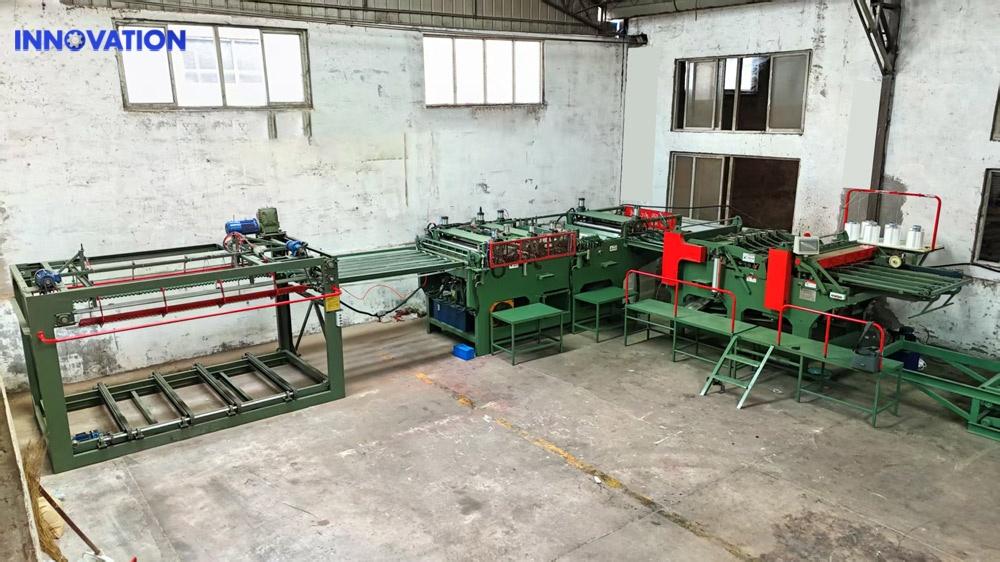
Why Integration Matters
In modern plywood factories, coating systems are rarely standalone. They are integrated with veneer composing systems to ensure continuous production.
A typical upstream setup includes:
- Core veneer composer
- Finger joint veneer machine
- Alignment conveyors
- Drying and trimming units
Veneer Composer System Role (Industrial Context)
A veneer composer system:
- Joins narrow veneer strips into full-size sheets
- Maximizes raw material utilization
- Reduces wood waste by up to 25–35%
When combined with a plywood coating machine, it ensures:
- Stable adhesive surface preparation
- Reduced coating irregularities
- Higher bonding efficiency in pressing stage
Global Industry Standards and Compliance
Key International Standards
- EN 314-2: Bond strength testing for plywood panels
- ISO 12460-3: Formaldehyde emission classification
- CARB Phase 2: U.S. emission control standard
- FSC Certification: Sustainable forestry material sourcing
Quality Control Metrics
Factories using industrial coating systems monitor:
- Glue spread rate (g/m²)
- Surface penetration consistency
- Shear strength after pressing
- Moisture retention levels
Real Industrial Case Studies
Case Study 1: Southeast Asia Plywood Factory Upgrade
- Installed: Fully automatic roller plywood coating machine
- Output increase: 38%
- Glue consumption reduction: 26%
- Defect rate reduction: 19%
Case Study 2: European Export Furniture Plant
- Focus: High-grade laminated plywood
- Result: Improved surface uniformity by 23%
- Export rejection rate reduced by 41%
Case Study 3: MDF Production Line Optimization
- Transition from manual coating to automated system
- Cycle time reduced from 10 min → 6.5 min
- Annual savings: $52,000 in adhesive material
Market Trends and Industry Insights
Automation Expansion
The global plywood machinery market is projected to grow at 5.5–6.2% CAGR (2024–2030) driven by:
- Smart manufacturing adoption
- Labor cost increases
- Export quality requirements
Smart Manufacturing Evolution
New generation plywood coating machines include:
- IoT real-time monitoring
- AI-based glue consumption prediction
- Predictive maintenance systems
Sustainability Shift
Industry is moving toward:
- Low-VOC adhesive systems
- Energy-efficient motors
- Waste reduction production lines
Cost Structure and ROI Analysis
Investment Breakdown
| Cost Factor | Description |
|---|---|
| Machine Investment | Initial equipment cost |
| Adhesive Consumption | Major operational expense |
| Labor Cost | Reduced in automation |
| Maintenance | Long-term operational factor |
ROI Performance Model
Typical industrial results:
- 20–30% adhesive savings
- 25–40% productivity increase
- Payback period: 12–24 months
Common Purchasing Mistakes
1. Ignoring Production Scale
Undersized machines cause bottlenecks and reduce efficiency.
2. Misunderstanding Adhesive Compatibility
Not all machines support all resin types or viscosities.
3. Overlooking Long-Term Maintenance Cost
Cheap systems often result in higher downtime costs.
Operational Best Practices
Daily Maintenance
- Clean roller surfaces immediately after operation
- Prevent adhesive curing on mechanical parts
Weekly Maintenance
- Check roller alignment and pressure calibration
- Inspect conveyor synchronization
Monthly Maintenance
- Lubricate bearings and drive systems
- Calibrate PLC control system
Conclusion
A modern plywood coating machine is a core component of industrial plywood manufacturing systems. It directly determines:
- Bonding strength and structural durability
- Surface quality and export compliance
- Material utilization efficiency
- Overall production cost and profitability
When integrated with veneer composing systems and pressing lines, it forms a complete automated production ecosystem that ensures stability, scalability, and long-term competitiveness.
For manufacturers aiming to improve efficiency and reduce operational costs, investing in a high-performance coating system is a strategic necessity—not an optional upgrade.
FAQ
What is a plywood coating machine used for?
It applies controlled adhesive layers on plywood or veneer surfaces for industrial production.
Which is better: roller or spray coating?
Roller systems are better for mass production; spray systems are more flexible.
How much glue can be saved?
Typically 18–32% depending on system precision.
Can it integrate into full production lines?
Yes, it is commonly integrated with veneer composers and pressing systems.
What is the ideal operating speed?
Industrial systems operate between 30–60 m/min.
What affects coating quality the most?
Glue viscosity, roller pressure, and feeding stability.
 English
  Vietnamese
  Arabic