
News
Pressed Wood Board Manufacturing
Welcome to My Blog!
I’m so glad you’re here. Before we dive into the content, I’d love to connect with you beyond this page. On my social media, I regularly share industry insights, product updates, and behind-the-scenes moments — plus, it’s a great place for us to interact!
Follow us on Facebook: Shandong Chuangxin Automation Equipment Co., Ltd
Let’s grow together and stay connected. Now, let’s jump into the blog — I hope you find the content informative, engaging, and truly valuable.
Table of Contents
Key Takeaways
- Complete industrial manufacturing process of pressed wood board
- Raw materials, resins, and additive system design
- Hot press, cold press, and multi-layer pressing technologies
- Global certification standards (ISO, ASTM, EN, CARB)
- Mechanical testing and quality control systems
- Cost efficiency, sustainability, and performance comparison
- Real-world production case studies
- Industry trends: automation, eco-resin, and smart factories
Introduction
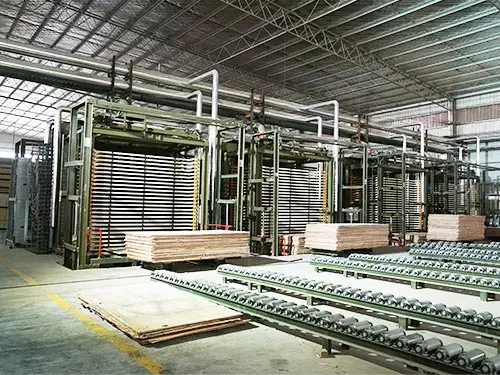
Pressed wood board has become a core engineered material in global construction, furniture manufacturing, flooring systems, and interior decoration. Unlike natural timber, it is engineered through controlled compression, heat, and adhesive bonding, ensuring consistent density, predictable strength, and scalable production.
According to global wood panel industry reports, engineered wood—including pressed wood board—accounts for over 65% of furniture-grade material consumption worldwide, driven by cost efficiency, sustainability policies, and urbanization demand.
Modern production lines now integrate PLC-controlled hydraulic presses, automated mat-forming systems, and real-time moisture monitoring to ensure industrial-grade consistency.
Raw Materials in Pressed Wood Board Manufacturing
Wood Fiber and Veneer Sources
Pressed wood board production uses a combination of hardwood and softwood species. Common raw inputs include pine, eucalyptus, birch, and poplar.
Wood selection directly affects:
- Density uniformity
- Surface smoothness
- Load-bearing capacity
High-grade boards require defect-controlled veneers with moisture levels between 6% and 12%.
Resin and Adhesive Systems
Adhesives are the core bonding element in pressed wood board manufacturing.
Common resin systems include:
- Urea-Formaldehyde (UF): Low cost, interior-grade applications
- Phenol-Formaldehyde (PF): High water resistance, exterior-grade use
- Melamine-Urea-Formaldehyde (MUF): Balanced performance for laminated boards
Industry whitepapers indicate that resin composition can influence up to 40% of final board mechanical strength.
Functional Additives
Additives enhance durability and environmental resistance:
- Wax emulsions (moisture resistance)
- Borate compounds (anti-termite protection)
- Fire-retardant chemicals (building compliance)
- UV stabilizers (surface longevity)
Manufacturing Technologies of Pressed Wood Board
Cold Pressing Technology
Cold pressing applies mechanical pressure without heat. It is mainly used for pre-bonding or small-scale production.
Advantages:
- Low energy consumption
- Simple operation
- Suitable for manual production lines
Limitation:
- Longer curing time
- Lower production efficiency
Hot Pressing Technology
Hot pressing combines heat (120–200°C) and hydraulic pressure (2–5 MPa).
Key benefits:
- Rapid resin curing
- High-density board formation
- Multi-layer bonding capability
This is the most widely used method in pressed wood board manufacturing globally.
Continuous Press Systems
Continuous pressing is used in MDF and particle board industries.
Features:
- Continuous feeding system
- Stable thickness control
- High-speed output (up to 120 m/min in advanced systems)
Multi-Layer Hydraulic Press Systems
Multi-layer pressing allows 10–20 layers to be processed simultaneously.
Industrial advantages:
- High throughput efficiency
- Reduced labor requirement
- Consistent density across layers
Manufacturing Workflow of Pressed Wood Board
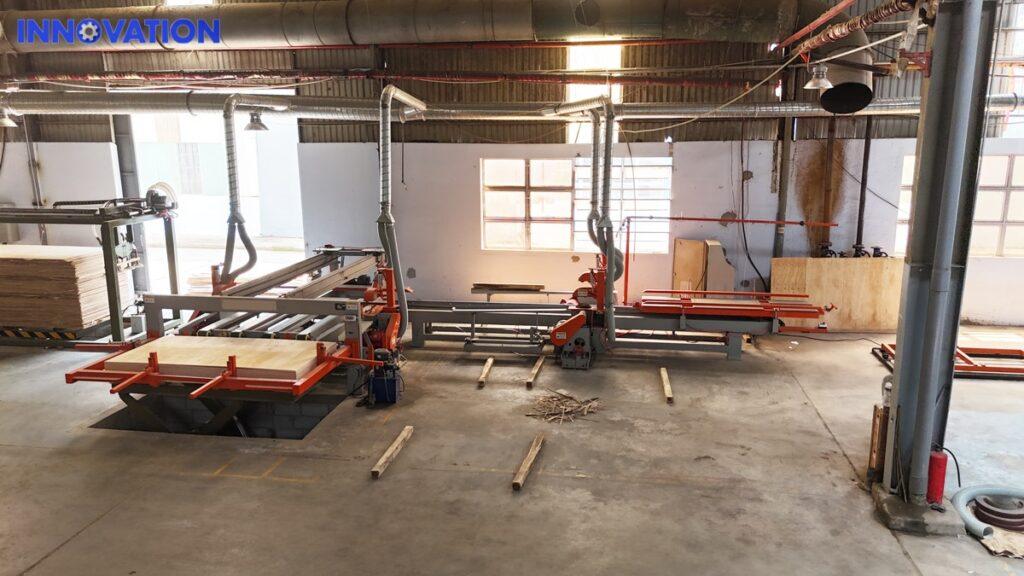
Fiber Preparation Stage
Raw logs are debarked, chipped, and refined into fibers or veneers. Moisture conditioning ensures stable bonding behavior during pressing.
Adhesive Mixing and Application
Resins are mixed with catalysts and additives, then sprayed or roller-coated onto wood particles with precision control systems.
Mat Formation
Layered mats are arranged according to structural requirements. Orientation and density distribution are critical for mechanical performance.
Pressing Stage
Hydraulic systems apply controlled temperature and pressure cycles. Typical pressing time ranges from 3 to 15 minutes depending on board thickness.
Cooling and Stabilization
After pressing, boards are cooled gradually to prevent internal stress deformation.
Surface Finishing
Processes include sanding, coating, lamination, or edge trimming for final usability.
Global Standards and Industrial Compliance
Pressed wood board manufacturing must comply with international standards:
- ISO 9001: Quality management systems
- ISO 14001: Environmental compliance
- ASTM D1037: Mechanical property testing
- EN 312 / EN 319: European structural board standards
- CARB Phase II: Formaldehyde emission regulation (USA)
Formaldehyde Emission Classification
- E0 Grade: ≤0.5 mg/L (ultra-low emission)
- E1 Grade: ≤1.5 mg/L (standard export requirement)
- E2 Grade: ≤5.0 mg/L (basic industrial use)
Low-emission pressed wood board is now mandatory in EU and North American residential construction markets.
Quality Control System in Pressed Wood Board Production
Mechanical Testing
Boards undergo bending strength, tensile strength, and screw-holding resistance tests.
Typical industrial benchmarks:
- Bending strength ≥ 18 MPa
- Internal bonding ≥ 0.6 MPa
- Screw retention ≥ 350 N
Moisture Content Control
Ideal moisture content range: 6%–12%.
Deviations may cause warping, cracking, or delamination.
Digital Inspection Systems
AI-based optical inspection detects:
- Surface cracks
- Density inconsistencies
- Lamination defects
Advantages of Pressed Wood Board
- Lower production cost than solid wood
- Stable mechanical performance
- High scalability for industrial manufacturing
- Environmentally friendly material utilization
- Suitable for mass furniture production
Industry studies show pressed wood board reduces raw timber consumption by up to 40% compared to solid wood manufacturing.
Comparative Analysis: Pressed Wood Board vs Alternatives
| Feature | Pressed Wood Board | Solid Wood | MDF |
|---|---|---|---|
| Cost | Medium | High | Low |
| Strength | Uniform | Natural variation | Medium |
| Moisture Resistance | Moderate | Natural | Low |
| Surface Finish | Smooth | Natural grain | Very smooth |
| Sustainability | High | Medium | High |
Pressed wood board provides the most balanced performance for industrial-scale furniture production.
Industrial Case Studies
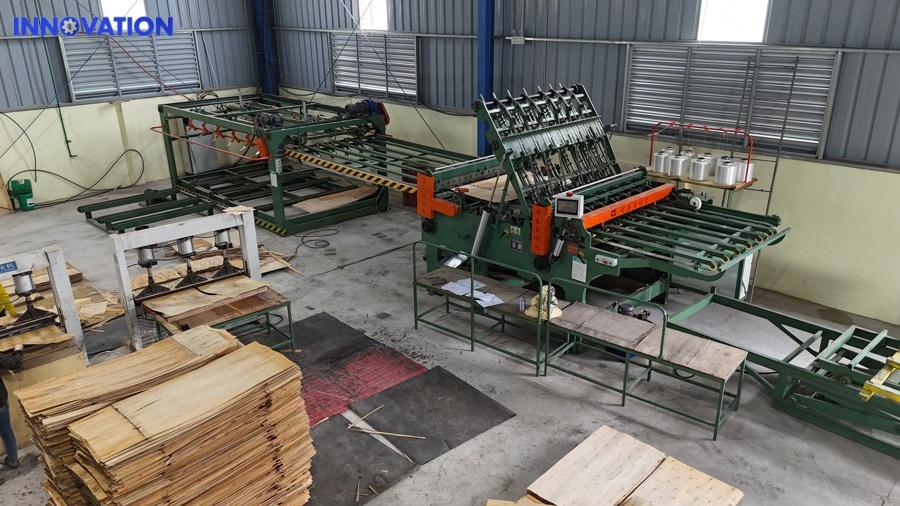
Case Study: High-Layer Press Factory (Asia)
- Production capacity: 500 sheets/hour
- Technology: 20-layer hydraulic press system
- Efficiency improvement: +35% automation integration
- Compliance: E0 formaldehyde emission standard
Case Study: European MDF Plant
- Output: 350 sheets/hour
- Certification: ISO 9001 + CE
- Technology: real-time PLC moisture control
- Energy savings: 18% via heat recycling system
Emerging Industry Trends
Smart Manufacturing Systems
IoT sensors now monitor pressure, temperature, and curing cycles in real time.
Eco-Friendly Adhesives
Bio-based resins are reducing formaldehyde emissions by up to 70% in next-generation pressed wood board production.
Automated Production Lines
Robotic loading/unloading systems reduce labor costs by 30–50%.
Recycled Raw Materials
Agricultural waste fibers (rice husk, straw, bamboo) are increasingly used as sustainable inputs.
Maintenance and Operational Optimization
Press System Maintenance
- Hydraulic oil replacement every 2000 operating hours
- Plate surface cleaning weekly
- Pressure calibration monthly
Adhesive System Maintenance
- Nozzle inspection to prevent clogging
- Mixing ratio verification for resin consistency
Production Line Optimization
- Real-time sensor calibration
- AI predictive maintenance systems
- Energy consumption monitoring dashboards
Conclusion
Pressed wood board manufacturing is a highly engineered industrial process combining material science, mechanical engineering, and environmental compliance. With increasing global demand for sustainable materials, pressed wood board continues to dominate furniture, construction, and interior design industries.
Advanced automation, eco-resin development, and strict quality standards are shaping the future of this industry, making it more efficient, sustainable, and globally competitive.
FAQ
What is pressed wood board made of?
It is made from wood fibers, veneers, or particles bonded with resin under heat and pressure.
Is pressed wood board stronger than solid wood?
It is more uniform but not always stronger; performance depends on density and resin type.
Can pressed wood board be used outdoors?
Yes, if PF resin and waterproof coatings are applied.
What is the lifespan of pressed wood board furniture?
Typically 10–20 years depending on environmental conditions.
Why is pressed wood board widely used?
Because it is cost-efficient, scalable, and environmentally sustainable.
 English
  Vietnamese
  Arabic