
News
Upgrade Your Workshop with Hot Press Plywood Machines
Welcome to My Blog!
I’m so glad you’re here. Before we dive into the content, I’d love to connect with you beyond this page. On my social media, I regularly share industry insights, product updates, and behind-the-scenes moments — plus, it’s a great place for us to interact!
Follow us on Facebook: Shandong Chuangxin Automation Equipment Co., Ltd
Let’s grow together and stay connected. Now, let’s jump into the blog — I hope you find the content informative, engaging, and truly valuable.
Table of Contents
In the fast-evolving plywood industry, workshops that fail to modernize risk falling behind in efficiency, product quality, and profitability. Upgrading your workshop with a hot press plywood machine is no longer a luxury—it’s a necessity. These machines transform production by combining advanced hydraulic systems, precise temperature control, and robust construction, ensuring smooth surfaces, strong adhesion, and high output. In this guide, we will explore the key benefits, technical specifications, industry insights, and practical tips to help you make informed decisions when selecting a hot press plywood machine for your workshop.
Key Points of This Article
- Why investing in a hot press plywood machine boosts efficiency and quality
- Technical components and specifications of modern hot press machines
- Comparison between standard and high-layer hot press machines
- Maintenance practices to extend machine lifespan
- Real-world applications across furniture, flooring, and construction
- Frequently asked questions based on current buyer concerns
- Tips from industry experts to improve workflow and reduce costs
Why Invest in a Hot Press Plywood Machine
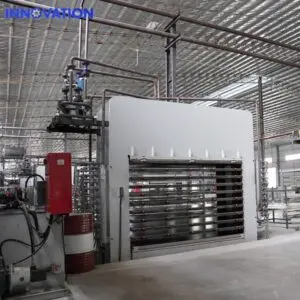
Upgrading to a modern hot press plywood machine brings multiple advantages that directly impact production efficiency, product quality, and operational costs.
Enhance Production Efficiency
A high-layer hot press can press up to 20+ veneer layers simultaneously, significantly reducing cycle times. According to a report by the International Wood Products Association (IWPA), workshops adopting high-layer hot presses increase output by up to 40% compared to traditional machines. This capacity is critical for workshops scaling production or entering new markets.
Ensure Uniform Bonding Quality
Uniform heat and pressure distribution ensures consistent bonding strength and smooth panel surfaces. A study published in the Journal of Wood Science (2023) indicates that evenly pressed plywood exhibits up to 25% higher shear strength and 15% less surface warping compared to panels processed with older, single-layer presses.
Reduce Labor Costs
Automated loading and unloading systems reduce manual handling, lowering labor costs by 20–30% for medium to large workshops. By integrating PLC-controlled hot press systems, operators can monitor multiple machines simultaneously, freeing staff for other value-added tasks.
Key Components of Modern Hot Press Plywood Machines
Heavy-Duty Frame Structure
The frame is built with reinforced steel plates, with thicknesses ranging from 40 mm to 50 mm depending on machine capacity. Precision machining ensures stability under high pressure. The upper beam is typically 950–1000 mm, while the middle beam ranges from 400–450 mm.
Practical Insight: A robust frame minimizes vibration, reduces alignment errors, and ensures long-term operational reliability. According to Dr. Li Wei, a mechanical engineer specializing in wood processing equipment, “Frame rigidity is the single most important factor in consistent pressing quality and machine longevity.”
Advanced Hydraulic System
Modern machines utilize high-performance hydraulic cylinders with rated working pressures up to 26 MPa. Dual-inlet, dual-outlet platen designs guarantee even pressure distribution. Rapid low-pressure pumps and high-pressure pumps ensure smooth operation.
Example: The 500T 20-layer high-layer hot press uses four 260×1400 mm cylinders, ensuring uniform pressure across 21 pressing plates.
Digital Temperature and Pressure Control
Fully automated PLC systems allow precise control of platen temperature and pressing pressure. Multi-stage pressure reduction and moisture discharge systems prevent panel warping and improve bonding. Real-time monitoring ensures consistent quality across large production runs.
Expert Tip: Digital control reduces human error, and advanced logging allows workshops to analyze production trends for process optimization.
Flexible Heating Options
Hot press machines support thermal oil, steam, or electric heating. Thermal oil provides stable heat distribution for long cycles, steam allows rapid heat transfer for medium-scale production, and electric systems are ideal for smaller workshops seeking energy efficiency.
Comparing Standard vs High-Layer Hot Press Machines
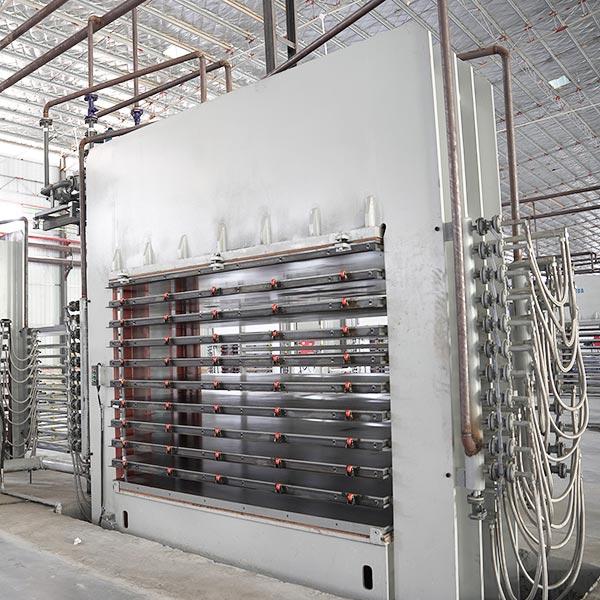
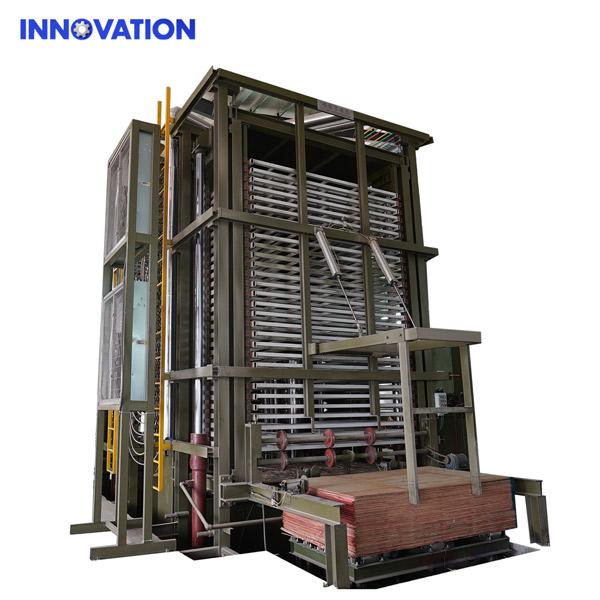
| Feature | Standard Hot Press | High-Layer Hot Press |
|---|---|---|
| Number of Layers | 10–11 | 20+ |
| Panel Size | 1370×2700 mm | 1370×2700 mm |
| Hydraulic Cylinders | 4–6 units | 4–6 units |
| Production Capacity | Medium | High |
| Automation | Basic | Advanced loading/unloading |
| Best For | Small/medium workshops | Large-scale plywood production |
Key Insight: High-layer presses are suitable for mass production and large-scale operations, while standard machines fit smaller workshops or specialty plywood products.
Tips for Choosing the Right Hot Press Plywood Machine
Assess Production Volume
Identify your daily panel output goals. A workshop producing 500–1000 panels/day may benefit from a 10–12 layer machine, while 1500+ panels/day requires a 20-layer high press.
Evaluate Automation Features
Automated systems reduce labor costs, improve workflow, and minimize human error. Look for PLC monitoring, automated loading/unloading, and multi-stage pressure control.
Consider Energy Efficiency
Thermal oil and steam systems can save 10–15% of energy compared to traditional electric systems. Investing in energy-efficient presses reduces operational costs in the long term.
Check Maintenance Accessibility
Machines with easy-to-access hydraulic components, digital control panels, and modular platen systems simplify maintenance and reduce downtime.
Maintenance Practices for Longevity
Frame Inspection
Regularly inspect steel plates and beam joints for cracks, wear, or misalignment. Proper maintenance can extend machine life to 15–20 years.
Hydraulic System Care
Lubricate moving parts, monitor pressure gauges, and check cylinder seals every 3–6 months.
Electrical and Control System Check
Test PLC functionality, safety devices, and emergency stops monthly to ensure uninterrupted operation.
Industry Insight: According to Wang Hui, senior engineer at a leading Chinese plywood machinery manufacturer, “Regular preventive maintenance is more cost-effective than emergency repairs and ensures production quality remains high.”
Real-World Applications
Furniture Manufacturing
Consistent pressing ensures smooth surfaces for cabinets, chairs, and tables.
Flooring Production
Uniform bonding prevents warping in multi-layer laminate flooring.
Construction Materials
High-layer presses efficiently produce wall panels, doors, and plywood sheets used in large-scale construction projects.
Case Study: A Vietnamese workshop upgraded to a 20-layer high press, increasing daily output from 600 panels to 900 panels while reducing labor by 25%.
Advanced Workflow Optimization
Integrated Production Lines
Modern workshops integrate hot press machines with veneer feeders, panel stackers, and conveyors for streamlined operations. This reduces manual handling and improves production speed.
Data-Driven Process Improvements
Logging production parameters allows managers to identify bottlenecks, optimize press cycles, and predict maintenance needs, enhancing productivity and reducing downtime.
Sustainability Practices
Energy-efficient heating systems, optimized cycle times, and proper material handling minimize waste and lower the environmental footprint of plywood production.
Conclusion
Upgrading your workshop with a hot press plywood machine enhances production efficiency, ensures uniform bonding quality, and reduces labor costs. From heavy-duty frame structures and advanced hydraulic systems to digital temperature and pressure controls, modern presses deliver reliable, long-term performance for furniture, flooring, and construction applications.
For more product information or customized solutions, contact our professional team today. We provide expert consultation, technical support, and guidance to optimize your plywood production workflow.
FAQ
Q1: How do I choose the right machine for my workshop?
A1: Consider daily output, layer capacity, panel sizes, and automation features. Compare standard vs high-layer machines for efficiency needs.
Q2: How often should the hydraulic system be maintained?
A2: Every 3–6 months, or more frequently for high-volume operations.
Q3: Can the machine handle different veneer thicknesses?
A3: Yes, adjustable pressure and temperature settings allow for varying thicknesses.
Q4: Are automated machines worth the investment?
A4: Yes, especially for high-volume production. Automation reduces labor costs and improves workflow consistency.
Q5: How long do hot press plywood machines last?
A5: With proper maintenance, heavy-duty presses last 10–20+ years.
 English
  Vietnamese
  Arabic