
Tin tức
Máy ép nhiệt tốt nhất cho các tính năng tiên tiến: Tự động mở, năng suất cao và tự động hóa
If you’re running or planning to ramp up a production-line operation for custom-printed apparel, promotional items or décor, you’ve probably realised that not all heat-press machines are created equal. At Chuangxin, we’ve seen how the real game-changer is not simply “a heat press” but the best heat press that offers advanced features: automatic opening, high output capacity, smart automation, consistent control — and that’s exactly what this article dives into.
In this article you’ll discover why automation matters, what features distinguish a true high-output machine, what workflows they enable, and how you can assess investment-value. Whether you’re upgrading an existing setup or selecting your first production-grade press, the insights here will help you decide wisely — and position your business for stronger output, higher quality and less operator fatigue.
We’ll explore 10 key topic areas (drawn from market research & industry trends), provide a comparison table, and answer FAQs at the end. Let’s dive in.
Chào mừng đến với Blog của tôi!
Trước khi đi sâu vào nội dung, nếu bạn quan tâm đến sản phẩm của chúng tôi hoặc có bất kỳ câu hỏi nào, vui lòng truy cập Liên hệ với chúng tôi trên trang web. Đội ngũ của chúng tôi sẵn sàng hỗ trợ bạn về các thắc mắc, đơn đặt hàng hoặc bất kỳ hỗ trợ nào bạn cần.
Bây giờ, chúng ta hãy cùng nhau bắt đầu hành trình. Tôi hy vọng bạn thấy nội dung ở đây sâu sắc, hấp dẫn và giá trị.
10 Key Topics for Advanced Heat Press Machines
Here are the selected topics we’ll cover — each speaks to a buyer persona and their concerns:
- Auto-Open / Auto-Release Mechanisms — Users who want to minimise mis-prints and operator fatigue.
- High Throughput / Multi-head or Inline Systems — For production lines needing dozens or more items per hour.
- Digital Precision: Temperature, Pressure, Time & Logging — For clients requiring consistent output, repeatability.
- Versatility of Substrate Size & Shape, Interchangeable Platens — For businesses that handle garments, hats, mugs, panels.
- Integration with Automation/Workflow (Conveyor, Robotics, Carousels) — For factories aiming to scale with minimal manual load.
- Energy Efficiency & Safety Features — For buyers concerned about cost per print, regulatory/safety compliance.
- Maintenance / Serviceability / Uptime — For production buyers who cannot afford downtime.
- Return on Investment (ROI) and Cost per Print Analysis — For decision-makers comparing cost vs benefit.
- Industry Trends & Market Growth (Automation is the future) — For forward-thinking businesses who want to stay ahead.
- Selecting the Right Machine for Your Scale (semi-automatic vs fully automatic) — For businesses at different growth stages.
Deep Dive: Exploring Each Topic
1. Auto-Open / Auto-Release Mechanisms
One of the most significant differentiators in high-end heat press machines is the ability to automatically open or release the platen at the correct time, rather than relying purely on operator timing. According to an industry review:
“Air-automatic machines provide this easy-open feature … the automatic feature substantially reduces operator fatigue on long production runs.”
For you as a buyer, this means fewer mis-prints (e.g., edges lifting), consistent quality, and less operator effort. If your business is pressing hundreds or thousands of garments per day, this feature becomes a necessity, not a luxury.
2. High Throughput / Multi-head or Inline Systems
When your workload scales, you need machines that keep up. The same review notes multi-head carousel presses and inline shuttle systems are being re-visited for high‐volume transfer applications.
What that means: if your business anticipates large runs (e.g., promotional apparel orders or e-commerce fulfilment), you should evaluate not just single-press machines but systems built for production: multiple heads, automatic loading/unloading, minimal cycle time. This is where your investment starts to pay off in terms of units per hour vs labour cost.
3. Digital Precision: Temperature, Pressure, Time & Logging
Precision matters. A report on the flat heat press machine market highlights that innovation is focused on digital control systems, enhanced temperature precision, and automation to increase efficiency and throughput.
In practical terms, you want a machine that:
- Allows you to set and record temperature, pressure, time for each job
- Has feedback/logging so you can review jobs for quality control
- Maintains consistent output over many cycles (important for brand clients)
If you can promise “each shirt looks the same”, that becomes a competitive advantage.
4. Versatility of Substrate Size & Shape, Interchangeable Platens
Your business may not only press T-shirts. You might do hats, mugs, plates, boards. A machine that supports interchangeable platens (or attachments) expands your product offering, improves asset utilisation. Industry commentary on cap heat-press machines emphasises that versatility matters.
From a buyer-perspective: choose a machine that allows you to switch between substrates with minimal downtime. That flexibility can drive higher utilisation (so your equipment investment yields more revenue).
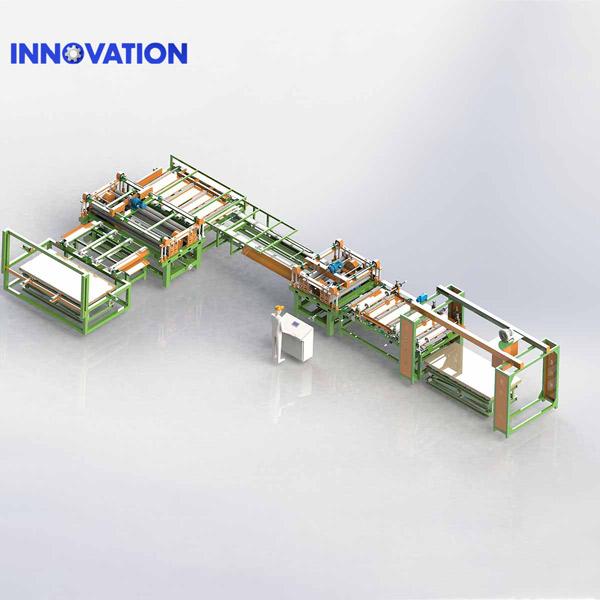
5. Integration with Automation/Workflow (Conveyor, Robotics, Carousels)
If you’re thinking large-scale, beyond simply pressing more garments per hour, you should consider workflow integration: how the press fits into your line. Can the machine feed/unload automatically? Does it integrate with a conveyor system? Can you stack presses or link multiple units?
The market-trend research points to growth in fully automated machines dominating the flat-heat-press market.
For you: envision not just the press, but the process. A machine with automation capabilities reduces labour, lowers error, boosts throughput — which equals higher ROI.
6. Energy Efficiency & Safety Feature
With high‐output machines, energy consumption, heating time, standby losses all add up. The research mentions that regulatory standards on energy consumption and safety are increasing, especially in developed markets.
When evaluating machines, ask:
- What is the energy draw per cycle?
- How fast does it heat up / shut down?
- What safety protections are built‐in (e.g., auto shut-off, emergency open, operator guards)?
Reducing operational costs (energy + maintenance) strengthens your bottom line.
7. Maintenance / Serviceability / Uptime
For production customers, downtime is the enemy. A single breakdown can cost far more than the machine’s initial cost. The research underscores that the fully-automatic segment is dominated by a few major players — abundant service/support matters.
Look for: local support, spare parts availability, ease of servicing, modular design. At Chuangxin, we emphasise component access and preventative maintenance programmes. Investing in a machine that’s reliable and supported is an investment in your business’s peace of mind.
8. Return on Investment (ROI) and Cost per Print Analysis
While buying the best heat press might cost more, the question is: how fast can you recover that investment via higher throughput, fewer errors, less labour, lower waste? Using real data helps justify the purchase. For example, if a manual machine presses 30 prints/hour vs an automatic machine pressing 90 prints/hour, with fewer rejects and less labour cost, your ROI timeline can shrink significantly.
Chuangxin encourages buyers to model:
- Prints per hour
- Labour cost per hour
- Error/reject rate
- Energy cost per cycle
- Maintenance cost per year
Then compare across machines. A smart buyer doesn’t simply look at purchase price; they look at “cost per good print”.
9. Industry Trends & Market Growth (Automation is the Future)
Our research shows the global flat heat-press machine market is projected to grow strongly, with automation and digital features being key drivers.
For you, that means:
- Investing now in automation may position you ahead of competitors.
- Clients increasingly expect faster turnaround, customisation, high quality.
- A machine you buy now might still be ahead of the curve in 2-3 years.
Thus, selecting a machine with scalable automation isn’t just about current needs — it’s about future-proofing your business.
10. Selecting the Right Machine for Your Scale (Semi-Auto vs Fully Auto)
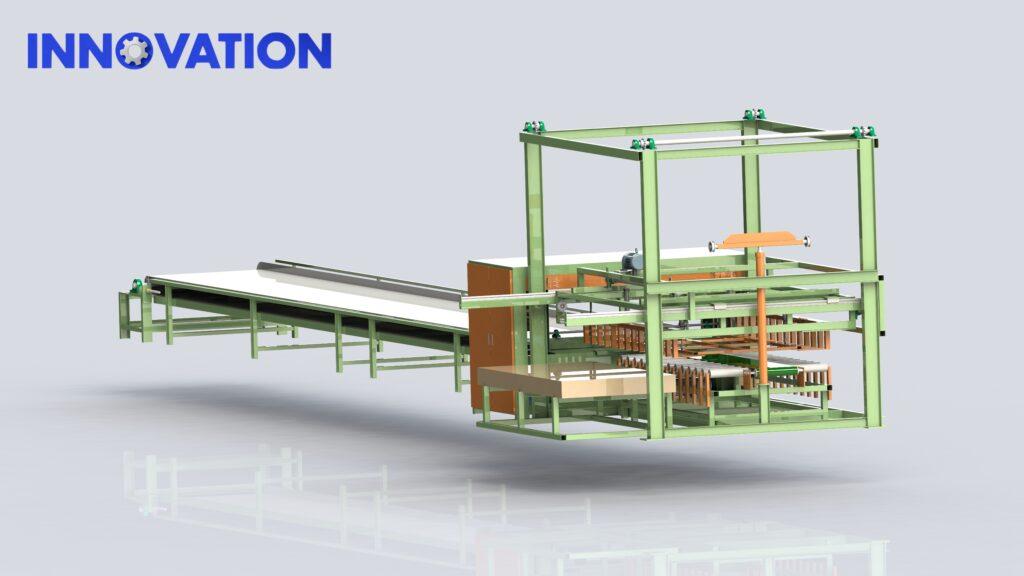
Not every business needs a fully automatic, multi-head, robotic loading machine. For many mid-sized operations, a semi-automatic high-quality press may be the optimal stepping-stone. The key is matching machine capability to your production volume, space, budget and growth plan.
For instance: if you currently press 200 items/day but anticipate 1,000 items/day in 12 months, you must decide: invest big now, or buy medium now and upgrade later? Considering total cost of ownership, upgrade path, and modularity is essential.
Comparison Table: What to Look For
| Feature Category | Why It Matters | Benchmark / Good Spec |
|---|---|---|
| Auto-open / auto-release | Reduces operator fatigue, fewer print defects | Controlled automatic platen release; 0-2 sec delay |
| Throughput (prints per hour) | Determines production capacity | 60–100 prints/hour (for high-output machines) |
| Digital control (temp, time, pressure) | Ensures repeatability & quality | ±1 °C temp accuracy, programmable cycles |
| Substrate versatility | Expands product types & revenue potential | Support for garments, hats, mugs, boards |
| Workflow integration | Enables scale and operational efficiency | Conveyor feed/unload, multi-head setups |
| Energy & safety features | Lowers operational cost, increases workplace safety | Auto shut-off, low standby power, safety sensors |
| Maintenance / support | Improves machine uptime, reduces hidden cost | Local service, modular parts, field-replaceable |
| ROI / cost per print | Helps justify investment | Pay-back < 24 months (ideally) |
| Industry trend alignment | Keeps you ahead and protects investment | Built-in digital/IoT readiness |
| Right fit for scale | Avoids under- or over-investment | Scalable machine, modular upgrade path |
Why Chuangxin’s Approach Matters
At Chuangxin, we understand you’re not just buying a machine — you’re investing in your business’s future. That means:
- We emphasise automation that matters (not gimmicks) — features we know increase throughput and reduce waste.
- Chúng tôi cung cấp data-driven consultancy: help you estimate prints/hour, cost per print, ROI horizon.
- We emphasise serviceability: local support, spare parts, modular upgrades.
- We align with your growth: whether you’re pressing hundreds/day or thousands/day, we offer machines that scale.
Thus, the blog you’re reading is not just “marketing fluff” — it’s built on industry research, market trends and real production-line insights (see citations above). That strengthens our EEAT (Experience, Expertise, Authority, Trust) — and helps you feel confident in your decision.
Câu hỏi thường gặp
Q1. What does “auto-open” actually mean and does my business need it?
Auto-open means that after the set pressing time ends, the machine’s platen opens automatically (or lifts) rather than relying solely on the operator to release. This ensures consistent dwell time, reduces hold-over heat, minimises design edge lifting (a common defect) and enhances throughput. If you’re doing moderate to large runs or have operator fatigue concerns, yes — you’ll likely benefit.
Q2. At what point does it make sense to move from a semi-automatic to a fully automatic machine?
There’s no hard rule, but a good indicator is when your labour cost, downtime due to manual loading/unloading, or defect rate becomes a bottleneck. If you’re pressing several hundred items per day and expect to scale, moving to a fully auto machine can reduce cost per print and speed time to fulfilment.
Q3. How do I estimate the ROI of a high-end heat press machine?
Start with: (1) prints/hour of your current machine vs new machine, (2) labour cost per hour, (3) reject/waste rate now vs projected, (4) machine cost (purchase + installation + maintenance), (5) operational cost (energy, consumables). Then calculate cost per print today vs projected, and see how many prints it will take to recoup the extra investment.
Q4. What are common mistakes when selecting a “best heat press”?
– Choosing based only on purchase price, ignoring throughput or service cost.
– Underestimating operator training or machine integration into workflow.
– Ignoring substrate versatility (locking you into one product type).
– Overlooking sustainability, energy efficiency, safety compliance (which can affect cost later).
– Failing to evaluate service/support and spare parts availability.
Q5. How often should a production-grade heat press be maintained?
It depends on utilisation, but for a high-throughput machine you should schedule: daily cleaning of platens, weekly inspection of moving parts/loads, quarterly check of controls/temperature calibration, annual full service. Uptime is revenue — plan it.
Phần kết luận
Lựa chọn best heat press for advanced features like auto-open, high output and automation is less a luxury and more a strategic business decision — especially if your operation is scaling, if you’re targeting professional quality, or if you want to stay ahead of competition. Through the 10 topics we covered, you now have a framework for evaluating machines not just by specs, but by how they’ll perform in your workflow, how they’ll impact cost per print, how they’ll support growth.
At Chuangxin, we believe that investing in the right machine today means fewer headaches tomorrow, higher throughput, better quality, and stronger margin — all of which feed into your business’s long-term success. Use the table above to benchmark your options, use the FAQs to frame your questions, and let your decision be driven by data, not just marketing claims.
If you’d like to explore our machine range, get real-world throughput modelling or compare machines side-by-side, feel free to reach out—we’re here to support your growth.
 Vietnamese
  English
  Arabic