
Tin tức
Máy ép ván ép hàng đầu 2026: Hướng dẫn toàn diện cho các nhà máy chế biến gỗ hiện đại
Chào mừng đến với Blog của tôi!
Tôi rất vui vì bạn đã ghé thăm. Trước khi chúng ta đi sâu vào nội dung, tôi rất muốn được kết nối với bạn ngoài trang này. Trên mạng xã hội, tôi thường xuyên chia sẻ những hiểu biết sâu sắc về ngành, cập nhật sản phẩm và những khoảnh khắc hậu trường — hơn nữa, đây còn là một nơi tuyệt vời để chúng ta tương tác!
Theo dõi chúng tôi trên Facebook: Công ty TNHH Thiết bị tự động hóa Shandong Chuangxin
Hãy cùng nhau phát triển và giữ kết nối. Giờ thì, hãy cùng khám phá blog nhé — tôi hy vọng bạn thấy nội dung này bổ ích, hấp dẫn và thực sự giá trị.
Mục lục
The plywood industry has been rapidly evolving with advances in machinery, automation, and process efficiency. In 2026, plywood manufacturers face increasing pressure to produce high-quality panels while minimizing costs, energy consumption, and labor. Modern plywood press machines are at the heart of this transformation, enabling factories to achieve precision, speed, and consistency in panel production. From cold pressing to high-capacity hot pressing, and from automated glue spreading to sanding, the selection of the right plywood press machines directly affects product quality and factory productivity.
In this blog, we provide a full guide to the latest máy ép ván ép in 2026, covering key types, operational concepts, specifications, workflow, and decision-making insights to help manufacturers make informed equipment choices.
Key Highlights of This Guide
- Detailed overview of plywood press machines used in 2026
- Step-by-step workflow of modern plywood production lines
- Conceptual understanding of glue application, pressing, sanding, and turnover processes
- Comparative analysis of hot press vs cold press machines
- Technical specifications and industrial case studies
- FAQ section with practical, user-focused questions
- Expert insights and industry standards
Hiểu biết Plywood Press Machines: Core Concepts

What Are Plywood Press Machines?
Ván ép press machines are industrial devices designed to apply pressure, heat, or both to veneer layers to form high-quality plywood panels. They are fundamental to plywood factories and can range from cold press machines for preliminary bonding to high-capacity multi-layer hot presses.
These machines enhance bonding strength, panel flatness, and production efficiency while reducing labor and material waste. They integrate with other auxiliary equipment such as glue spreaders, mixers, turnover machines, and paving systems.
Importance of Press Machines in Modern Plywood Production
Efficient press machines directly impact:
- Product quality: Reduces warping, delamination, and uneven surfaces
- Production speed: Enables high-throughput operations with automated cycles
- Cost efficiency: Minimizes glue waste, energy use, and labor intensity
- Safety: Reduces manual handling of heavy panels
Types of Plywood Press Machines
Plywood Cold Press Machine
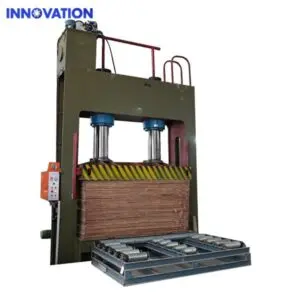
Cold press machines are used in the preliminary bonding stage. They apply uniform pressure to glued veneers, stabilizing layers before hot pressing.
Workflow of a Cold Press Machine
- Ứng dụng keo: Veneer sheets are coated using a glue spreader.
- Lắp ráp ván lạng: Layers are stacked to the desired thickness.
- Tải bảng điều khiển: Assembled panels are lifted onto the cold press platform.
- Thao tác nhấn: Uniform pressure (1–5 MPa) is applied for 3–10 minutes.
- Tháo dỡ tấm pin: Pre-pressed panels are moved to hot presses.
Lợi ích chính:
- Improves panel flatness and bonding strength
- Reduces air pockets and misalignment
- Enables continuous workflow for large production lines
Thông số kỹ thuật điển hình
| Tham số | 400T Cold Press Machine |
|---|---|
| Tổng áp suất | 400T |
| Max Panel Size | 1800 × 2440 mm |
| Hệ thống thủy lực | Trạm thủy lực tiêu chuẩn không gây ô nhiễm |
| Platen Material | Steel with precision machining |
| Chế độ điều khiển | Fully Automatic PLC |
| Khả năng chịu tải | Up to 2 tons per panel |
Máy ép nóng ván ép
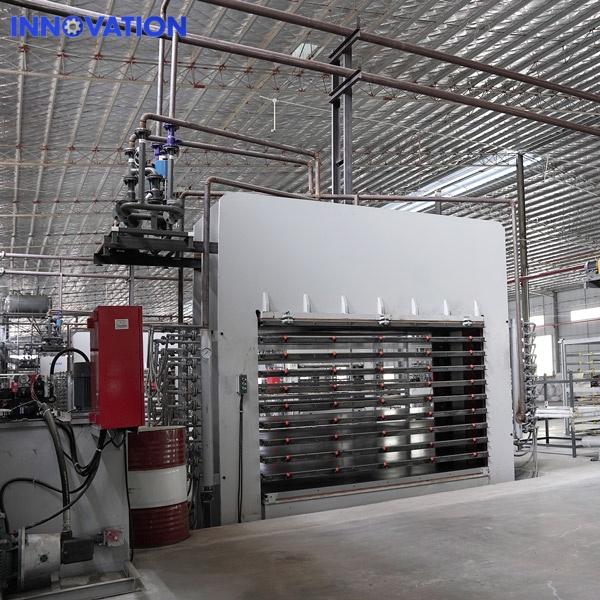
Hot press machines apply both pressure and heat, curing adhesive layers for durable plywood panels. They are available in capacities from 600T to 4000T, suitable for multi-layer panels (10–30 layers).
Thuận lợi:
- Consistent surface finish
- High bonding strength
- Efficient production cycles for commercial, LVL, and film-faced plywood
Technical Data Example:
| Đặc điểm kỹ thuật | 600T 11-Platen Hot Press |
|---|---|
| Kích thước bảng điều khiển | 1370 × 2700 mm |
| Number of Platens | 11 |
| Phương pháp gia nhiệt | Thermal oil (Steam/Electric optional) |
| Áp suất thủy lực | 26 MPa |
| Tổng công suất | 29.5 kW × 4 |
| Thời gian chu kỳ | 10–15 phút cho mỗi tấm |
Industry Case Study:
Shandong Chuangxin Automation supplied a 600T 11-platen hot press to a Southeast Asian plywood factory. Production efficiency increased by 35%, and surface defects dropped by 20% within the first quarter.
Glue Application Systems: Mixers and Spreaders
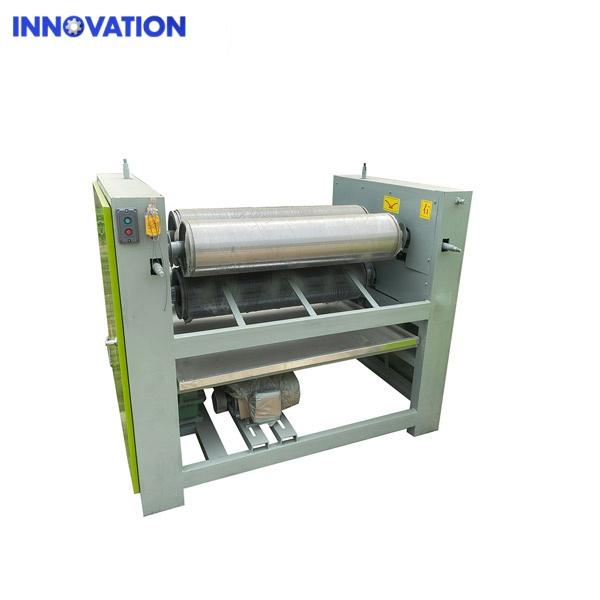
Plywood Glue Mixer:
- Prepares resin-based adhesives (UF, PF, melamine-based)
- Rapid blending ensures uniform viscosity and consistent bonding
- Reduces sedimentation and glue waste
Specifications Example:
| Người mẫu | Dung tích | Công suất động cơ | Tốc độ Trộn |
|---|---|---|---|
| CX-500 | 500L | 7,5 kW | 0–960 rpm |
| CX-1000 | 1000L | 11 kW | 0–960 rpm |
Glue Spreaders:
- Evenly apply adhesive across veneers
- Adjustable speed and thickness for different plywood types
- Reduces manual labor and improves panel quality
Plywood Turnover Machines
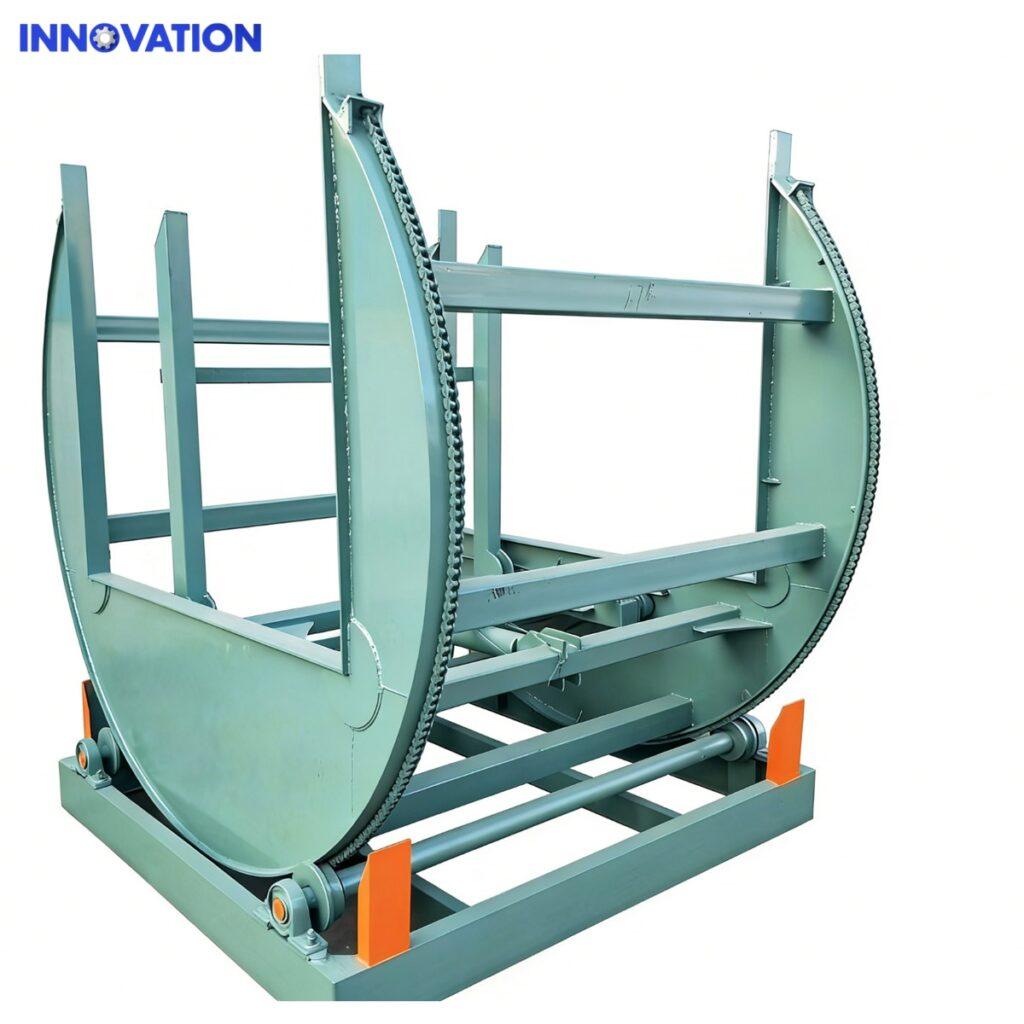
Efficient turnover machines are crucial for automated plywood lines. They rotate panels either 90° or 180° for sanding, inspection, or stacking.
Ưu điểm chính:
- Reduces manual labor and risk of injury
- Ensures consistent panel orientation
- Compatible with conveyor and automated lines
Comparison Table:
| Kiểu | Rotation Angle | Khả năng chịu tải | Ứng dụng |
|---|---|---|---|
| 90° Turnover | 90° | 1–2 tons | Stacking, trimming, sanding |
| 180° Turnover | 180° | 1–3 tons | Double-sided processing, inspection |
Máy lát ván ép
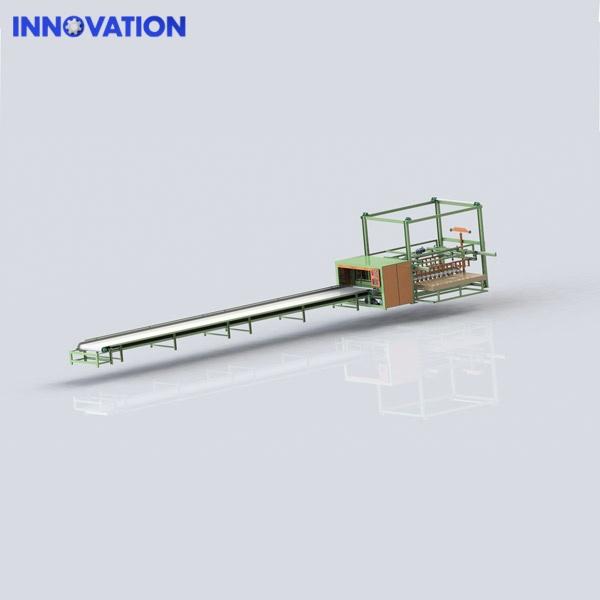
Automated plywood paving machines optimize veneer placement:
- Hydraulic and PLC-controlled feeding
- Saw or guillotine cutting systems
- Precision veneer alignment
- Reduces material waste and labor
Thông số kỹ thuật:
- Power: 13.5 kW
- Capacity: 800–1500 panels/day
- Board Stacking: 1300 mm
- Adjustable Length: 18–36 m
Máy chà nhám ván ép
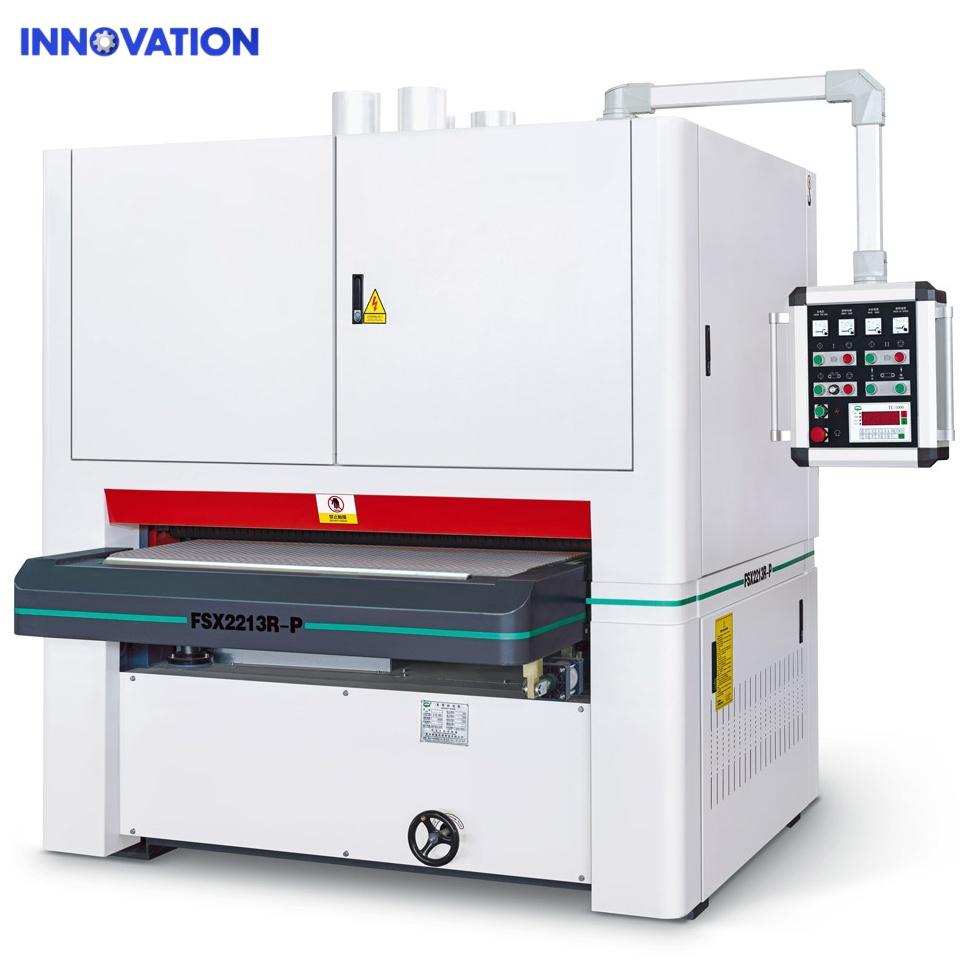
Sanding machines deliver uniform surfaces:
- Adjustable feed and belt speed
- Multiple roller sets for staggered sanding
- Industrial touch screen for precise control
- Improves furniture-grade and commercial plywood quality
Data Example:
- Belt speed: 20–24 m/s
- Processing width: 40–1300 mm
- Thickness range: 3–120 mm
- Total motor power: 297.5 kW
Edge Trimming Machines
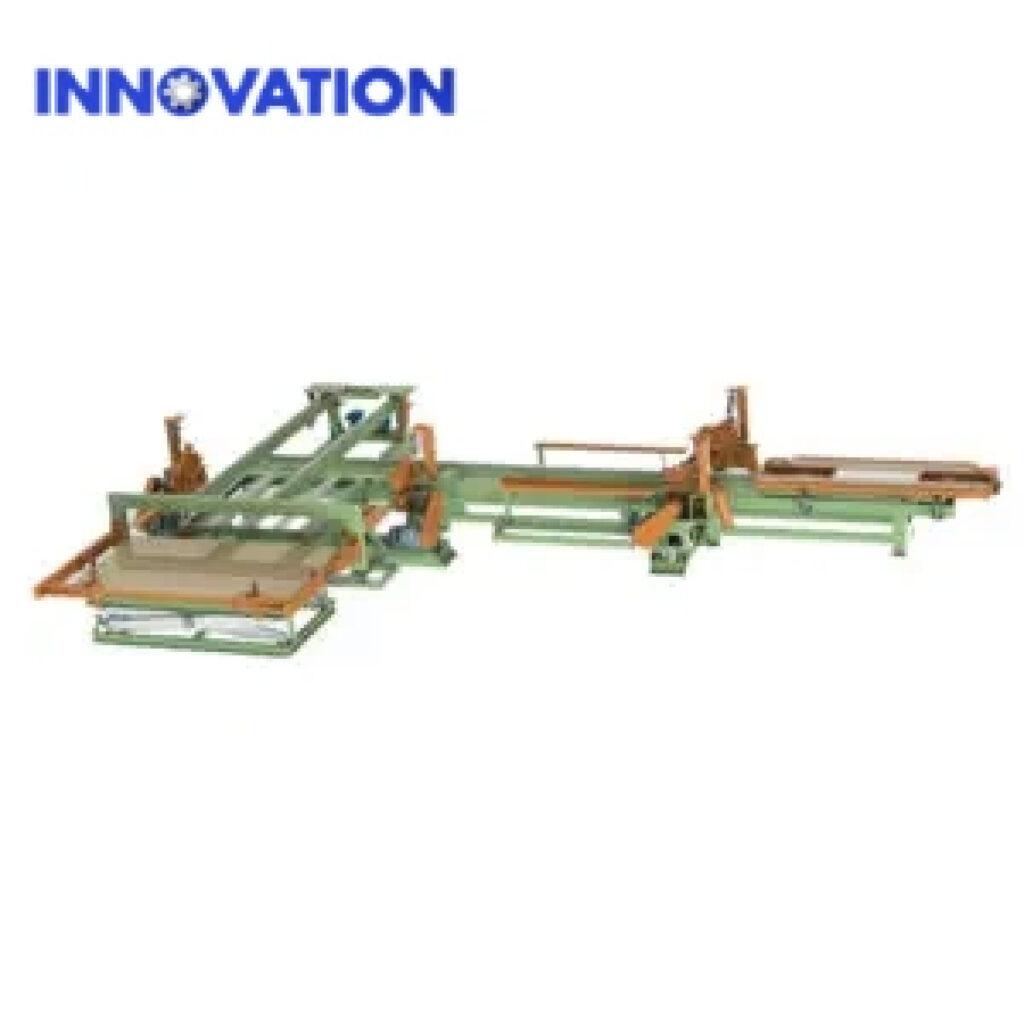
Edge trimming machines ensure smooth, precise edges:
- High-speed rotary blades
- Automated feed and width adjustment
- Reduces manual labor and improves panel quality
Benefits:
- Consistent dimensional accuracy
- High cutting precision
- Integrated PLC control for easy operation
Comparative Insights: Hot Press vs Cold Press
- Ép lạnh: Preliminary bonding, lower energy, short pressing cycles
- Ép nóng: Final curing, high-temperature bonding, durable and strong adhesion
Decision Tips:
- Use cold press for stabilization and initial layering
- Hot press is mandatory for final product strength and surface quality
Plywood Machinery Workflow Overview
- Glue Mixing: High-speed mixer prepares adhesive
- Glue Spreading: Uniform application on veneers
- Veneer Lay-Up: Automated paving machine positions layers
- Cold Pressing: Preliminary bonding
- Hot Pressing: Final curing and surface finishing
- Sanding: Smooth uniform surface
- Edge Trimming: Clean and precise edges
- Turnover and Stacking: Automated rotation for inspection or storage
Industry Standards and White Papers
- GB/T 9846.7-2015: Chinese plywood standards for panel thickness and bonding
- ANSI/HPVA HP-1-2016: U.S. hardwood plywood panel standards
- White Paper Example: “Advancements in Automated Plywood Press Technology,” International Woodworking Federation, 2025
- Studies indicate automated lines reduce labor by 40% while improving adhesive uniformity by 25%
Câu hỏi thường gặp
What is the difference between a 180° and 90° turnover machine?
180° machines completely flip panels, ideal for double-sided processing, while 90° machines adjust orientation for stacking or transfer.
How does a cold press improve final plywood quality?
Cold presses stabilize glued layers, remove air pockets, and prevent misalignment, ensuring better bonding during hot pressing.
Which glue types are compatible with industrial mixers?
UF resin, PF resin, melamine-based adhesives, and modified glue formulas are compatible, with precise viscosity control.
Có thể máy ép ván ép be customized for specific factory layouts?
Yes, most modern machines allow customization in dimensions, automation level, heating method, and PLC integration.
How do I maintain high efficiency while using multiple press machines?
Integrate glue mixers, spreaders, turnover, paving, and sanding machines into a synchronized workflow with automated controls and real-time monitoring.
Phần kết luận
Modern plywood factories require a combination of precision, automation, and durable machinery. From glue preparation to hot pressing, turnover, sanding, and trimming, each machine plays a vital role in overall production efficiency.
Công ty TNHH Thiết bị tự động hóa Shandong Chuangxin exemplifies industry-leading capabilities, offering integrated solutions with robust machinery, advanced PLC control, and customization for global plywood factories. Selecting the right combination of press machines and auxiliary systems ensures high-quality plywood, optimized labor, and competitive production efficiency in 2026 and beyond.
 Vietnamese
  English
  Arabic