
Tin tức
Wood Veneer Vacuum Press Explained for Manufacturers
Chào mừng đến với Blog của tôi!
Tôi rất vui vì bạn đã ghé thăm. Trước khi chúng ta đi sâu vào nội dung, tôi rất muốn được kết nối với bạn ngoài trang này. Trên mạng xã hội, tôi thường xuyên chia sẻ những hiểu biết sâu sắc về ngành, cập nhật sản phẩm và những khoảnh khắc hậu trường — hơn nữa, đây còn là một nơi tuyệt vời để chúng ta tương tác!
Theo dõi chúng tôi trên Facebook: Công ty TNHH Thiết bị tự động hóa Shandong Chuangxin
Hãy cùng nhau phát triển và giữ kết nối. Giờ thì, hãy cùng khám phá blog nhé — tôi hy vọng bạn thấy nội dung này bổ ích, hấp dẫn và thực sự giá trị.
Mục lục
Hiểu biết về Wood Veneer Vacuum Press in Today’s Manufacturing
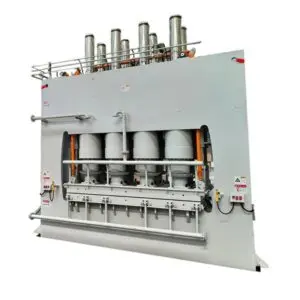
Các wood veneer vacuum press has become an essential technology in plywood veneering, premium furniture production, and decorative panel manufacturing. Compared with traditional hot press or cold press systems, vacuum pressing offers highly controlled pressure, stable heating, and exceptional surface quality. This makes it ideal for handling thin or delicate veneers without bubbles or lifting.
With the increasing use of engineered wood materials and decorative veneers, manufacturers face growing demands for consistency and efficiency. Mastering how a wood veneer vacuum press works has therefore become a competitive advantage in modern woodworking industries.
What Is a Wood Veneer Vacuum Press and Why It Matters
A wood veneer vacuum press is a laminating machine that uses negative air pressure to tightly bond thin veneer sheets onto plywood substrates. By removing trapped air, the system ensures even pressure distribution and flawless surface finishing.
Concept: Atmospheric Pressure as the Pressing Force
Instead of relying on mechanical compression, the machine creates a low-pressure environment. Atmospheric pressure then applies force naturally and uniformly across the veneer.
Concept: Thermal Adhesive Activation
Controlled heating softens adhesive, improves penetration, and shortens curing time. This ensures a stable bond while keeping veneer flat and well-aligned.
Core Components of a Wood Veneer Vacuum Press
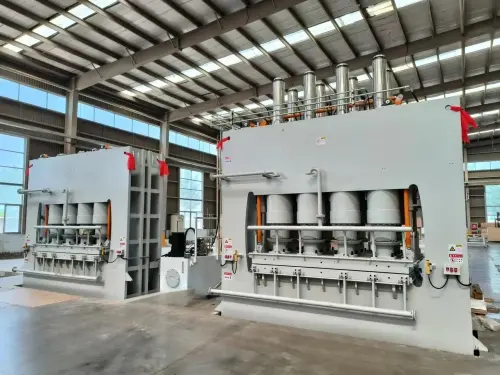
The Vacuum Pump System
This component generates a vacuum level between −0.08 MPa and −0.095 MPa. Stable negative pressure prevents bubbles and gives veneers a smooth, uniform finish.
The Heating Module
Heat sources include electric heating, oil heating, or infrared modules. Temperature stability plays a major role in adhesive curing performance.
The Pressing Table
Common table dimensions include 1220×2440 mm and 1300×2600 mm. A larger table improves efficiency for multi-board or furniture-component pressing.
The Membrane System
Silicone or rubber membranes help maintain pressure equalization, especially when pressing thin veneers or pieces with slight surface variations.
Types of Wood Veneer Vacuum Press Machines
Flat Vacuum Press for Plywood Veneer
Ideal for high-volume veneering of plywood panels. Stable heat and pressure ensure consistent surface quality.
Single-Station Flat Vacuum Press
Designed for small and mid-sized workshops. Easy to operate and maintain, suitable for daily veneering tasks.
Double-Station Flat Vacuum Press
While one station is being pressed, the other is being loaded, effectively doubling throughput. Works well in large manufacturing environments.
Automatic Veneer Pressing Line
Integrates gluing, loading, pressing, and unloading. Reduces labor costs and enhances production stability.
How the Wood Veneer Vacuum Press Works
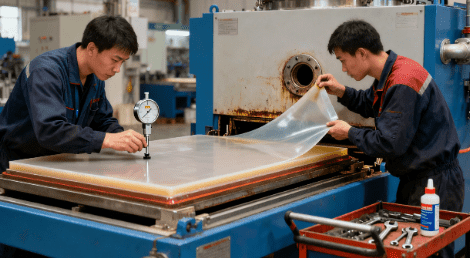
The Vacuum Laminating Principle
When the chamber closes, the pump extracts air, generating negative pressure. Atmospheric pressure pushes the veneer evenly onto the plywood while heat activates adhesive bonding.
The Step-by-Step Adhesion Process
The process usually includes surface preparation, adhesive application, vacuum extraction, thermal bonding, and controlled cooling.
Why Vacuum Pressure Ensures Superior Flatness
By removing air pockets, negative pressure eliminates most causes of surface bubbles, wrinkles, or lifting. This results in a highly uniform finish.
Data-Driven Performance Comparison: Vacuum Press vs. Traditional Pressing
Technical Comparison Table
| Parameter / Feature | Wood Veneer Vacuum Press | Ép lạnh | Hot Press |
|---|---|---|---|
| Pressure Uniformity (0–10) | 9.5 | 4.0 | 6.5 |
| Bubble Reduction Rate (%) | 92–98% | 55–70% | 75–85% |
| Suitable Veneer Thickness | 0.2–0.8 mm | ≥0.5 mm | ≥0.4 mm |
| Typical Pressing Temperature | 80–120°C | Ambient | 110–150°C |
| Typical Cycle Time | 3–10 min | 20–40 min | 6–12 min |
| Surface Defect Rate | <3% | 8–12% | 5–9% |
| Tiêu thụ năng lượng | Trung bình | Thấp | Cao |
Interpretation of the Data
The vacuum press performs best in surface quality and bubble elimination. Cold pressing is energy-efficient but unsuitable for thin veneers. Hot pressing is fast but may cause veneer discoloration and higher energy consumption.
Applications of Wood Veneer Vacuum Pressing
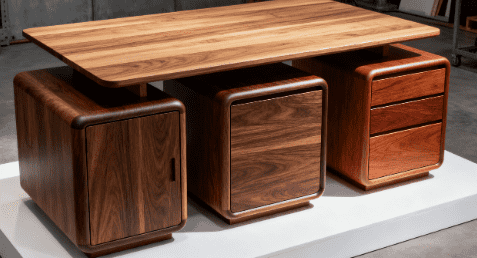
High-End Furniture Manufacturing
Premium furniture requires smooth, defect-free veneer. Vacuum pressing ensures stable and repeatable quality.
Architectural Wall Panels
Hotels, offices, and commercial spaces use veneer panels that demand consistent bonding and color accuracy.
Specialty Veneered Plywood
Industries like musical instruments, designer plywood, or curved components require precise bonding that vacuum pressure provides.
Key Concepts for Optimal Veneering Results
Vacuum Level Stability
A steady vacuum is essential for eliminating bubbles and preventing detachment.
Proper Heating Profiles
Each adhesive has a recommended temperature. Consistent heat prevents veneer discoloration and bonding failures.
Veneer Moisture Balance
Ideal veneer moisture is typically 8–12%. Excess moisture leads to swelling or trapped vapor.
Adhesive Penetration Concept
Vacuum pressure enhances glue penetration. Proper adhesive quantity ensures durable long-term bonding.
How to Select the Right Wood Veneer Vacuum Press
Matching Production Volume
Small workshops may choose single-station machines, while large factories benefit from double-station or automated systems.
Choosing Suitable Table Dimensions
Standard plywood fits best on 1220×2440 mm or 1300×2600 mm tables.
Understanding Adhesive Compatibility
UF, PVAc, and PUR adhesives respond differently to heat and pressure. Selecting the correct adhesive ensures bond strength.
Evaluating Operator Skill Levels
A vacuum press is generally easier to operate than a hot press, reducing overall training requirements.
Common Issues in Vacuum Veneering and How to Address Them
Bubbles or Blistering
Usually caused by moisture imbalance or unstable vacuum levels.
Edge Lifting
Occurs when glue coverage is insufficient or heating is inconsistent.
Surface Discoloration
Often related to overheating thin veneers during pressing.
Adhesive Starvation
Using too little glue can weaken the bond, especially because vacuum pressing enhances penetration.
Maintenance Principles for Wood Veneer Vacuum Presses
Vacuum Pump Oil and Seal Maintenance
Regular oil changes and seal inspections keep the vacuum stable and efficient.
Membrane Surface Care
Membranes must remain elastic to maintain pressure uniformity. Replace when worn.
Heating Plate Calibration
Calibrating and cleaning heating plates ensures consistent temperature distribution.
Phần kết luận
MỘT wood veneer vacuum press provides exceptional quality, consistency, and control for plywood veneering applications. By mastering concepts such as vacuum stability, adhesive behavior, moisture management, and heating profiles, manufacturers can significantly improve veneer performance. With growing demand for high-end, decorative plywood products, vacuum pressing has become one of the most reliable and efficient solutions in modern woodworking.
Câu hỏi thường gặp
What temperature range is best for plywood veneering?
Most adhesives respond well between 80°C and 120°C.
Why does veneer blister sometimes after vacuum pressing?
Blistering usually results from trapped moisture, uneven glue spread, or inadequate vacuum level.
Can the machine handle both natural and engineered veneer?
Yes, both types work well when moisture and glue application are properly controlled.
How long does each pressing cycle take?
Typically between 3 and 10 minutes, depending on adhesive and heating settings.
Do I always need to use a membrane?
Membranes are optional for flat panels but helpful for thin or sensitive veneers.
What vacuum level is recommended?
A vacuum of around −0.085 MPa is suitable for most plywood veneering.
Is vacuum pressing better than hot pressing?
For thin veneers or decorative surfaces, vacuum pressing generally produces superior results.
 Vietnamese
  English
  Arabic