
News
Wood Cold Press Machine Tips: Maximize Efficiency and Quality
Welcome to My Blog!
I’m so glad you’re here. Before we dive into the content, I’d love to connect with you beyond this page. On my social media, I regularly share industry insights, product updates, and behind-the-scenes moments — plus, it’s a great place for us to interact!
Follow us on Facebook: Shandong Chuangxin Automation Equipment Co., Ltd
Let’s grow together and stay connected. Now, let’s jump into the blog — I hope you find the content informative, engaging, and truly valuable.
Table of Contents
Key Points in This Blog
- What a wood cold press machine is and why it’s essential
- Core operational tips for optimal performance
- Maintenance and safety best practices
- Comparison between cold press and hot press techniques
- Specifications and technical data of a standard cold press machine
- Real-world applications and case studies
- Common FAQs and troubleshooting tips
- Energy-saving strategies and cost analysis
- Material considerations for veneers and laminates
- How to choose the right wood cold press machine for your business
Introduction
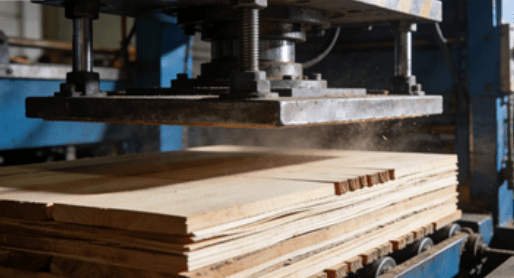
In today’s competitive wood manufacturing industry, producing high-quality, flat, and durable panels is more crucial than ever. Whether you’re manufacturing plywood, laminated boards, or furniture panels, a wood cold press machine plays a pivotal role in ensuring uniform bonding, reducing defects, and improving production efficiency.
Cold pressing is an energy-efficient alternative to hot pressing, offering reliable adhesion without the need for heat, making it perfect for eco-conscious manufacturers and facilities aiming to reduce electricity costs. In this blog, we’ll explore practical tips, detailed operational guidance, technical specifications, and real-world applications that every professional should know.
Understanding the Wood Cold Press Machine
What Is a Wood Cold Press Machine?
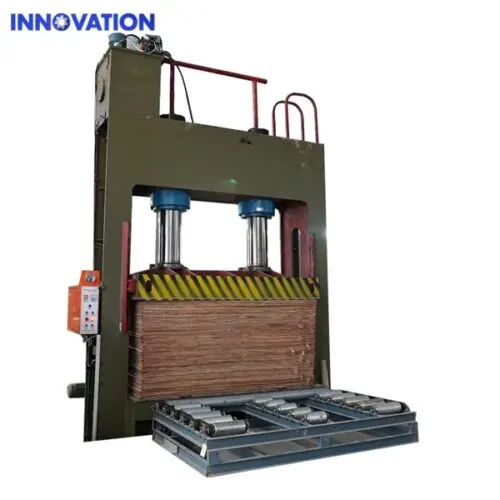
A wood cold press machine is a hydraulic press that applies uniform pressure to glued veneers or panels without using heat. It stabilizes layers before final hot pressing, improves panel flatness, and prevents air bubbles or misalignment.
Key Advantages:
- Energy Efficiency: Reduces energy consumption by avoiding heat.
- Uniform Pressure: Ensures strong initial bonding and flat surfaces.
- Ease of Operation: Low maintenance and user-friendly controls.
How Cold Press Machines Work
- Glue Application:
Adhesive is evenly applied to each veneer layer using a glue spreader. Proper application reduces defects and improves final adhesion. - Veneer Assembly:
Veneers are stacked manually or automatically to create panels of desired thickness. Layer alignment is crucial to prevent warping. - Panel Loading and Pressing:
Panels are placed on the press platform. Hydraulic cylinders apply pressure ranging from 1 to 5 MPa, depending on the panel type. - Holding Time:
Panels remain pressed for 3–10 minutes to stabilize layers. Too short reduces bonding, too long slows production. - Platen Release and Unloading:
The upper platen rises, and pre-pressed panels are removed for final hot pressing.
Technical Specifications of a Standard Cold Press Machine
| Specification | Details |
|---|---|
| Total Pressure | 400 Tons |
| Frame Structure | Welded Steel Frame |
| Upper Beam | 900 mm |
| Lower Beam | 900 mm |
| Middle Beam | 400 mm |
| Frame Plate Thickness | 30 mm |
| Upright Leg Width | 380 mm × 4 |
| Daylight Opening | 1800 mm |
| Hydraulic Cylinders | 2 units, Cast Steel, 26 MPa |
| Hydraulic System | Pollution-free standard, Jiugang valves |
| Motor | Fast Pump 7.5KW, High Pressure Pump 5.5KW |
| Control System | Fully Automatic (Schneider Components) |
Pro Tip: Choosing the right machine size and pressure capability is key. A 400T machine handles multi-layer panels efficiently, while smaller presses are suitable for low-volume production.
Wood Cold Press Machine Operational Tips
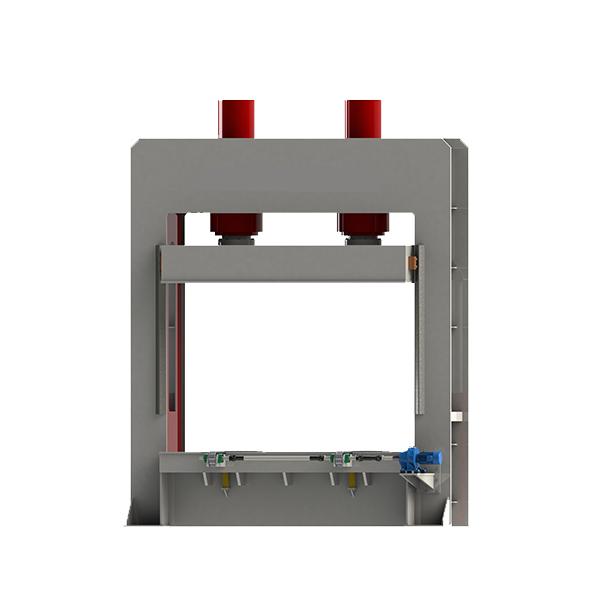
Tip 1: Monitor Hydraulic Pressure
Inconsistent pressure can cause uneven bonding. Ensure hydraulic cylinders operate at the rated 26 MPa for best results.
Tip 2: Use the Right Adhesive
Not all glues are created equal. For high-performance plywood, use adhesives compatible with cold pressing, such as phenol-formaldehyde or urea-formaldehyde resins.
Tip 3: Ensure Clean Surfaces
Dirt, dust, or old glue residues on platens can leave scratches or uneven surfaces. Clean platens regularly with industrial-grade cleaning agents.
Tip 4: Adjust Holding Time Correctly
Thicker panels require longer pressing times. For instance:
- 3–5 mm veneers: 3–4 minutes
- 10–15 mm panels: 6–8 minutes
- 20 mm+ multi-layer panels: 10 minutes
Tip 5: Optimize Loading Technique
Use forklifts or mechanical lifters to place heavy panels. This reduces labor costs and prevents misalignment during stacking.
Cold Press vs Hot Press: A Comparative Insight
| Feature | Cold Press | Hot Press |
|---|---|---|
| Energy Consumption | Low | High |
| Bonding Strength | Good initial adhesion | Maximum final bonding |
| Surface Quality | Flat with proper pressure | Excellent with heat |
| Production Cycle | 3–10 minutes | 15–30 minutes |
| Maintenance | Low | Medium |
| Environmental Impact | Eco-friendly | Higher emissions |
Concept: Cold pressing is ideal for pre-pressing and stabilization, while hot pressing ensures the final product achieves maximum bonding strength.
Material Considerations for Cold Pressing
- Veneer Type: Softwood veneers require less pressure than hardwood.
- Moisture Content: Optimal 6–10% moisture prevents delamination.
- Adhesive Type: Adjust adhesive viscosity depending on the pressing time and temperature.
Real-World Applications
- Furniture Production: Cold pressing stabilizes veneers for doors, cabinets, and panels.
- Plywood Manufacturing: Pre-pressing prevents misalignment of layers before hot pressing.
- Laminate Panels: Ensures uniform bonding and flatness across large sheets.
Energy and Cost Efficiency Tips
- Operate the cold press machine during off-peak hours to save electricity costs.
- Combine with automatic glue spreaders to reduce labor costs.
- Regular maintenance of hydraulics improves machine lifespan by 20–30%.
Advanced Concepts: Improving Panel Quality
Veneer Layer Stabilization
Cold pressing removes air bubbles, prevents warping, and ensures the panel is flat before final curing.
Continuous Production Concept
With proper operation, the cold press allows continuous pre-pressing, which can increase output by up to 15–20%.
Energy-Efficiency Concept
Operating without heat reduces electricity costs by 30–50% compared to full hot pressing cycles.
FAQ
Q1: Can a wood cold press machine handle multi-layer panels?
A1: Yes, modern machines like 400T presses can stabilize multi-layer veneers efficiently.
Q2: What is the average lifespan of a cold press machine?
A2: With proper maintenance, hydraulic machines can last 15–20 years.
Q3: How do I troubleshoot hydraulic pressure issues?
A3: Check for leaks, worn seals, or blocked valves; ensure proper oil levels.
Q4: Is cold pressing suitable for all adhesives?
A4: No. Use adhesives designed for cold pressing to achieve proper bonding.
Q5: Can cold pressing replace hot pressing entirely?
A5: No, cold pressing is mainly for pre-pressing; final curing usually requires hot pressing.
Maintenance Checklist
- Inspect hydraulic cylinders and valves weekly.
- Clean platens and check for surface wear.
- Test control system and motors monthly.
- Lubricate moving parts to prevent corrosion.
Troubleshooting Common Problems
Issue: Uneven Panel Surface
- Cause: Uneven pressure distribution
- Solution: Check hydraulic system and platen alignment
Issue: Glue Not Setting Properly
- Cause: Incorrect adhesive type or pressing time
- Solution: Adjust adhesive selection and holding time
Issue: Slow Production Cycle
- Cause: Manual loading or inefficient glue application
- Solution: Implement mechanical loading and automatic glue spreader
Case Study: Cold Press Efficiency in Plywood Production
A mid-sized plywood manufacturer upgraded to a 400T wood cold press machine. Results after 6 months:
- Defects reduced: 35% fewer delaminated panels
- Energy savings: 42% lower electricity consumption
- Production efficiency: 18% increase in pre-press output
Conceptual Insight: Investing in a high-quality cold press machine improves product quality, reduces operational costs, and allows faster production cycles.
Summary
Using a wood cold press machine effectively can transform wood panel production. From stabilizing veneers to energy savings, these machines ensure reliable bonding and high-quality panels. By following operational tips, maintenance guidelines, and understanding material considerations, manufacturers can maximize efficiency and profitability.
Key Takeaways:
- Cold pressing ensures flat, strong veneers.
- Hydraulic systems must be regularly maintained.
- Choosing the right adhesive and pressing parameters is crucial.
- Combining cold press with hot press ensures maximum panel quality.
 English
  Vietnamese
  Arabic