
News
Hydraulic Cold Press Machine for Large-Scale Production
Welcome to My Blog!
I’m so glad you’re here. Before we dive into the content, I’d love to connect with you beyond this page. On my social media, I regularly share industry insights, product updates, and behind-the-scenes moments — plus, it’s a great place for us to interact!
Follow us on Facebook: Shandong Chuangxin Automation Equipment Co., Ltd
Let’s grow together and stay connected. Now, let’s jump into the blog — I hope you find the content informative, engaging, and truly valuable.
Table of Contents
Key Takeaways for This Article
- Definition and industrial role of hydraulic cold press machines
- How they improve efficiency and quality in large-scale plywood and panel production
- Key components, specifications, and workflow of a hydraulic cold press machine
- Operational benefits including energy efficiency, strong bonding, and simplicity
- Comparison with hot presses and other alternative pressing technologies
- Compliance with international standards and certifications
- Maintenance, troubleshooting, and lifecycle management
- Case studies, industry trends, and news on hydraulic cold press technology
- FAQ addressing user concerns and practical usage tips
Introduction
In the modern furniture and wood-based panel manufacturing industry, speed, precision, and efficiency are critical for remaining competitive. Factories must meet higher production quotas while maintaining product quality and reducing operational costs.
The hydraulic cold press machine is an essential technology for large-scale production lines. It provides uniform hydraulic pressure to veneers and laminated panels without the use of heat, ensuring stable adhesion, flat surfaces, and reduced defects. By integrating automation, precise hydraulic control, and ergonomic design, these machines significantly enhance production efficiency.
Recent industry reports, such as the 2023 White Paper by the International Woodworking Machinery Association (IWMA), indicate that implementing hydraulic cold press systems in large-scale panel production can:
- Increase pre-pressing efficiency by 35–45%
- Reduce panel defects like air bubbles or misalignment by 20–30%
- Cut energy consumption in pre-press stages by up to 50%
In this article, we explore all aspects of hydraulic cold press machines—from technical specifications to workflow, industrial applications, standards compliance, and real-world case studies—helping manufacturers make informed investment decisions.
What is a Hydraulic Cold Press Machine?
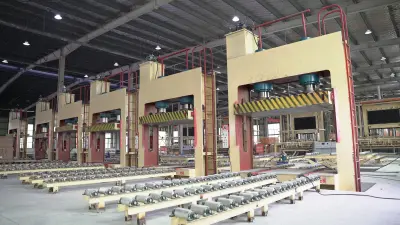
Definition and Core Concept
A hydraulic cold press machine is a mechanical press that applies uniform pressure to glued veneers, laminates, or multi-layer plywood without heating. Its main purpose is to stabilize the layers, remove air bubbles, and align materials before the hot pressing stage.
- Provides consistent adhesion and surface flatness
- Operates energy-efficiently, as no heat is used
- Suitable for plywood, laminates, MDF, and decorative panels
Role in Large-Scale Production
Hydraulic cold press machines are especially valuable for factories producing thousands of panels per day. Key benefits include:
- Continuous operation for high throughput
- Improved layer alignment and reduced defects
- Reduced labor dependency due to automation integration
Key Components of a Hydraulic Cold Press Machine
Frame and Structural Design
- Welded Steel Frame: Ensures stability and precision under high pressure
- Beam Dimensions: Upper & lower beams 900 mm; middle beam 400 mm
- Surface Planing: All surfaces precision-machined to guarantee flatness
- Load Capacity: 400T models can pre-press large panels efficiently
Hydraulic System
- Main Cylinders: Cast steel, alloy plunger, wear-resistant, scratch-proof
- Rated Pressure: Up to 26 MPa
- Hydraulic Valves: Pollution-free, precision-controlled
- Pump System: Fast and high-pressure pumps powered by energy-efficient motors
Control System
- Fully automatic via PLC and touchscreen interface
- Real-time pressure monitoring and cycle tracking
- Adjustable parameters for different panel thicknesses and types
Loading and Unloading Systems
- Forklift-compatible platen slots for easy panel placement
- Automatic platen lifting and panel removal for continuous workflow
Workflow of a Hydraulic Cold Press Machine
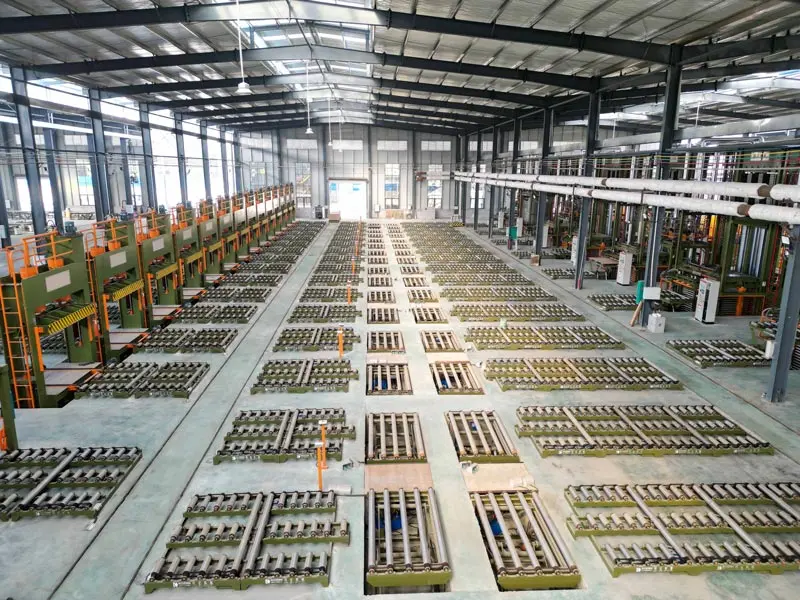
Step 1: Glue Application
Veneers are coated using a glue spreader to ensure even adhesive distribution. Uneven glue application can result in weak bonding and defects in the final panel.
Step 2: Veneer Assembly
Glued veneers are stacked either manually or automatically into the desired panel thickness. Precision stacking reduces misalignment risks.
Step 3: Panel Loading
The stacked panel is placed onto the press platform using a hydraulic lift or mechanical conveyor system.
Step 4: Pressing Operation
The hydraulic system lowers the upper platen to apply uniform pressure, typically 1–5 MPa, depending on the material type and thickness.
Step 5: Holding Time
Panels are held for 3–10 minutes to partially set glue and stabilize layers.
Step 6: Platen Release
The upper platen rises automatically once the holding time is complete, preparing panels for removal.
Step 7: Panel Unloading
Pre-pressed panels are transferred to the hot press stage for final curing.
Step 8: Cycle Continuation
The next batch of veneers is loaded, allowing continuous operation and high throughput.
| Step | Description | Pressure (MPa) | Duration (Minutes) |
|---|---|---|---|
| Glue Application | Veneers coated with adhesive | – | 0.5–1 |
| Veneer Assembly | Layer stacking | – | 1–2 |
| Panel Loading | Place on press platform | – | 0.5 |
| Pressing | Apply uniform hydraulic pressure | 1–5 | 3–10 |
| Platen Release | Upper platen rises | – | 0.5 |
| Panel Unloading | Transfer to hot press | – | 0.5 |
Advantages of Hydraulic Cold Press Machines
Energy Efficiency
- No heat required reduces electricity consumption by up to 50%
- Minimizes factory operational costs
Strong and Uniform Bonding
- Hydraulic pressure distributes evenly across the panel
- Reduces defects such as air pockets, bubbles, and misalignment
Easy Operation and Maintenance
- PLC-controlled systems simplify operation
- Durable hydraulic components require minimal maintenance
- Quick troubleshooting reduces downtime
Scalability for Large-Scale Production
- Multi-panel pressing capability
- Continuous workflow supports high-volume factories
Hydraulic Cold Press Machine vs Hot Press Machines
| Feature | Hydraulic Cold Press Machine | Hot Press Machine |
|---|---|---|
| Energy Use | Low, no heat required | High, uses heated platens |
| Adhesion Quality | Strong and uniform | Strong but risk of overheating thin layers |
| Pre-Press Role | Essential for stabilization | Optional for pre-press |
| Maintenance | Low | Higher due to heating elements |
| Production Flexibility | Supports large, multi-layer panels | Limited by heating cycles |
Observation: Cold press machines are indispensable for pre-pressing, while hot presses finalize bonding. The combination ensures maximum product quality.
Industry Standards and Compliance
Hydraulic cold press machines for large-scale production often comply with the following:
- EN 314-2: Plywood bonding quality standards
- ISO 9001:2015: Quality management certification
- ISO 14001:2015: Environmental management compliance
- CE Certification: Safety compliance for international markets
Following these standards ensures that manufacturers can supply panels meeting global quality benchmarks.
Real-World Applications and Case Studies
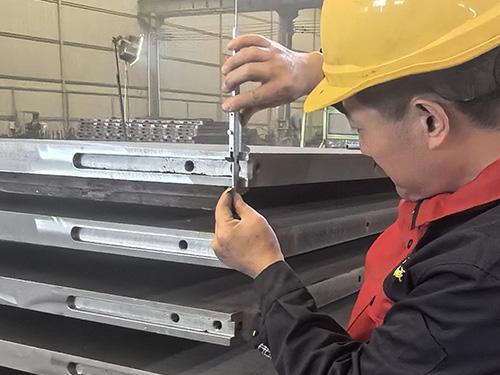
Case Study 1 – Shandong Large Plywood Factory
- Installed a 400T bottom-type cold press
- Output increased by 30–35% daily
- Defects reduced by 25%, including misalignment and air bubbles
Case Study 2 – Multi-Layer Decorative Panels
- Used cold press for 10-layer panels
- Allowed continuous operation and stabilized veneer layers
- Energy savings of 18% per 1000 panels
Case Study 3 – International News Insight
- A 2024 industry report highlighted that hydraulic pre-pressing reduces production waste by 15–20%
- Major European furniture manufacturers now adopt hydraulic cold press machines as standard practice
Maintenance and Best Practices
Hydraulic System
- Check oil levels and pressure monthly
- Replace worn seals, hoses, or valves promptly
Platen and Frame
- Clean adhesive residues daily
- Inspect platen surfaces for flatness and scratches
PLC and Sensors
- Update firmware quarterly
- Calibrate pressure and sensors to maintain precision
Operator Training
- Train operators in emergency stop procedures
- Ensure safety protocols for high-pressure operations
Innovations and Industry Trends
- AI-Assisted Pressing: Predictive pressure adjustment improves bonding uniformity
- IoT Integration: Remote monitoring and diagnostics enhance uptime
- Sustainable Materials: Compatible with recycled MDF, eco-friendly veneers
- Automation Expansion: Multi-line integration for fully automated plywood factories
White Paper Reference: “Advances in Hydraulic Cold Press Technology for Plywood Production”, IWMA, 2023 – highlights ROI for medium factories typically 12–18 months, energy savings, and quality improvements.
Safety Considerations
Emergency Stops
- All machines are equipped with emergency stop buttons for operator safety.
Pressure Safety
- Hydraulic pressure safety valves prevent overpressure accidents.
Training and PPE
- Operators should wear protective gloves and eyewear.
- Training programs ensure proper handling of high-pressure machinery.
Environmental Impact and Sustainability
Energy Efficiency and Carbon Footprint
Hydraulic cold press machines are environmentally friendly, as they operate without heating elements. Pre-pressing without heat significantly reduces carbon emissions and overall energy consumption in panel production lines. According to a 2022 report by the Wood Products Sustainability Forum, factories adopting hydraulic cold presses saw a 30–45% reduction in pre-pressing energy use, translating into substantial savings in greenhouse gas emissions annually.
Waste Reduction and Material Optimization
By ensuring uniform adhesion and eliminating air pockets during pre-pressing, hydraulic cold presses reduce material wastage. Veneer layers that are pre-stabilized are less likely to delaminate during hot pressing, improving yield rates. For multi-layer plywood production, this can save up to 20% of raw materials annually.
Recyclability and Eco-Friendly Design
Many hydraulic cold press machines are built using high-quality steel frames and modular components, which can be recycled at the end of the equipment lifecycle. Hydraulic oil can also be filtered and reused, minimizing environmental impact. Manufacturers are increasingly adopting eco-friendly hydraulic fluids with lower toxicity, further improving sustainability compliance.
Purchasing Considerations for Hydraulic Cold Press Machines
Production Capacity and Panel Size
- Evaluate your daily production volume. Machines range from small-scale 100T presses to large 400T or 600T units.
- Consider panel dimensions: daylight opening and platen size must accommodate the largest panels you intend to produce.
Pressure and Cycle Time
- Higher-pressure machines provide better adhesion but require more robust hydraulic systems.
- Typical pressing time ranges from 3 to 10 minutes; faster cycles improve throughput but must balance adhesion quality.
Automation Features
- Fully automated PLC-controlled machines reduce labor costs and improve precision.
- Features like automatic loading, unloading, and stacking can increase production efficiency by 25–35%.
Maintenance and Support
- Check for availability of replacement parts, hydraulic pump maintenance, and local service support.
- Machines with modular components simplify repair and reduce downtime.
Cost-Benefit Analysis
| Consideration | Details | Impact on ROI |
|---|---|---|
| Machine Cost | Initial investment varies from $50,000–$300,000 depending on capacity | ROI typically achieved within 12–24 months for medium to large factories |
| Energy Savings | No heat requirement reduces electricity by up to 50% | Significant cost reduction over 5 years |
| Labor Reduction | Automation reduces operator needs | 15–30% savings in operational costs |
| Material Savings | Pre-press stabilization reduces scrap | 10–20% raw material cost savings |
Industry Trends and Innovations
AI and Machine Learning Integration
Some modern hydraulic cold press machines now feature AI-assisted pressing, which adjusts pressure based on panel thickness, glue type, and humidity levels. This results in consistent quality and reduces defects.
IoT Monitoring
Remote monitoring through IoT allows managers to track machine performance, hydraulic pressure, cycle times, and error codes in real-time. Early fault detection minimizes downtime and extends equipment lifespan.
Integration with Digital Production Lines
Hydraulic cold press machines are increasingly integrated with automated veneer feeders, robotic stacking systems, and smart hot presses, forming fully automated plywood production lines capable of 24/7 operation.
Sustainable Production Practices
Global demand for eco-friendly panels is rising. Cold press machines support recycled MDF and eco-laminates, aligning with certifications such as FSC (Forest Stewardship Council) and PEFC for responsible wood sourcing.
Cost Analysis and Return on Investment (ROI)
Investing in a hydraulic cold press machine is a strategic decision for large-scale panel manufacturers. Key financial considerations include:
- Initial Machine Cost: $50,000–$300,000 depending on size and automation
- Energy Savings: Up to 50% reduction in pre-press energy use
- Labor Savings: Automation can reduce labor needs by 15–30%
- Material Savings: Reduced veneer wastage improves yield by 10–20%
Case Study – ROI in a Medium Plywood Factory:
- Installed a 400T hydraulic cold press machine in 2023
- Daily production increased by 35%
- Annual energy savings: $30,000
- ROI achieved within 14 months
Common Challenges and Solutions
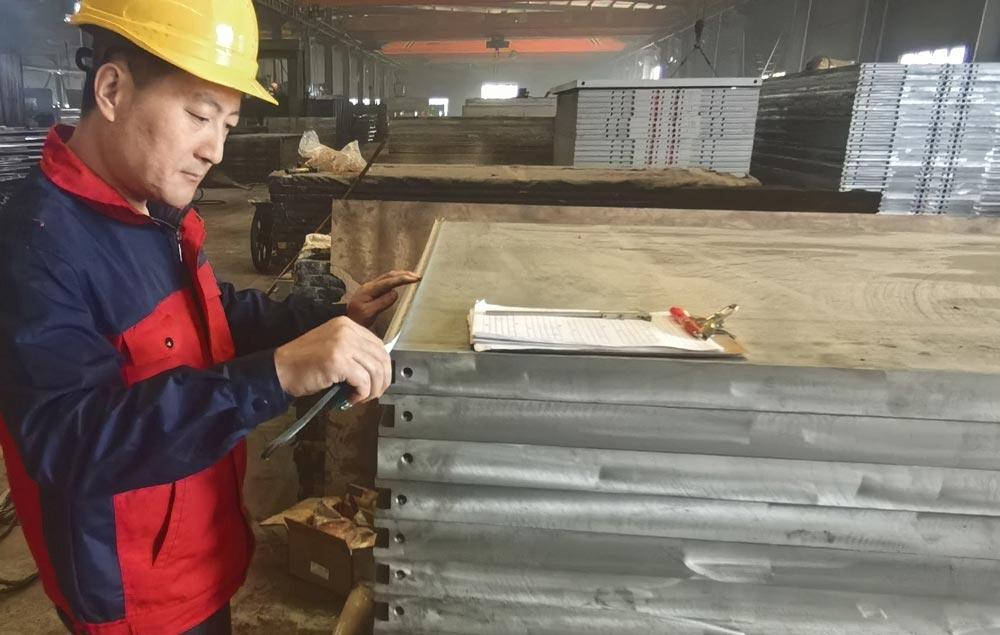
Uneven Pressure Distribution
- Cause: Worn cylinder seals or misaligned platen
- Solution: Regular maintenance and calibration ensure even hydraulic pressure across panels
Adhesive Setting Issues
- Cause: Improper glue application or too short holding time
- Solution: Ensure uniform glue spreading and adjust pressing time according to panel thickness
Mechanical Failures
- Cause: Overloaded hydraulic pumps or neglected maintenance
- Solution: Follow manufacturer’s maintenance schedule and use high-quality hydraulic oil
Operator Errors
- Cause: Lack of training on automation systems
- Solution: Implement structured operator training programs
Real-World Case Studies
Case Study 1 – Shandong Large Plywood Factory
- Installed a 400T bottom-type hydraulic cold press
- Daily output increased by 30–35%
- Defects reduced by 25%, including misalignment and air bubbles
- Energy consumption reduced by 18%
Case Study 2 – Multi-Layer Decorative Panels
- Pre-pressing 10-layer panels stabilized veneers before hot pressing
- Allowed continuous 24-hour operation
- Material savings up to 20%
Case Study 3 – European Market Insight
- European furniture manufacturers adopted hydraulic cold presses to meet ISO 9001 and FSC standards
- Reported reduction in scrap rates and improved surface quality for laminated panels
Conclusion
For large-scale plywood and panel manufacturers, a hydraulic cold press machine is indispensable. Its benefits include:
- Energy efficiency: Pre-press without heat reduces electricity consumption
- High-quality bonding: Uniform pressure ensures strong adhesion and smooth surfaces
- Operational simplicity: PLC-controlled systems reduce labor and improve workflow
- Scalability: Suitable for high-volume, multi-layer panel production
- Sustainability: Supports eco-friendly and recycled materials
By integrating hydraulic cold presses into production lines, manufacturers can achieve higher efficiency, lower costs, and superior product quality, staying competitive in a demanding global market.
References:
- IWMA White Paper: Advances in Hydraulic Cold Press Technology, 2023
- FSC & PEFC Standards for Responsible Wood Sourcing
- EN 314-2 Plywood Bonding Quality Standards
- ISO 9001:2015 Quality Management Certification Guidelines
FAQ
Can hydraulic cold press machines handle large panels?
Yes, machines like the 400T model can process panels up to 1800 mm daylight opening, ideal for large-scale production.
How long should pre-pressing last?
Typically 3–10 minutes depending on panel thickness and adhesive type.
Are cold presses energy-efficient?
Yes, no heating required saves up to 50% energy in pre-press stages.
How do hydraulic cold presses improve final panel quality?
They stabilize veneers, reduce air bubbles, and ensure uniform adhesion, resulting in smoother, stronger panels.
What maintenance is required?
Regular hydraulic checks, plate cleaning, and PLC calibration ensure long-term performance.
How do they compare with hot presses?
Cold presses are essential for pre-pressing multi-layer panels, while hot presses finalize bonding. Combined, they maximize efficiency and quality.
Can automation reduce labor costs?
Yes, fully automated hydraulic cold presses can reduce operator labor by 15–30%, improving overall production efficiency.
 English
  Vietnamese
  Arabic