
News
Plywood Sanding Machine for Factory: Industrial Guide for High-Efficiency Panel Finishing
Welcome to My Blog!
I’m so glad you’re here. Before we dive into the content, I’d love to connect with you beyond this page. On my social media, I regularly share industry insights, product updates, and behind-the-scenes moments — plus, it’s a great place for us to interact!
Follow us on Facebook: Shandong Chuangxin Automation Equipment Co., Ltd
Let’s grow together and stay connected. Now, let’s jump into the blog — I hope you find the content informative, engaging, and truly valuable.
Table of Contents
Key Takeaways
- Understand advanced industrial architecture of Plywood Sanding Machine systems
- Learn global woodworking machinery standards and performance benchmarks
- Explore real factory production case studies and efficiency improvements
- Compare sanding technologies: wide belt, roller, and hybrid systems
- Analyze automation trends, AI inspection, and Industry 4.0 integration
- Review energy consumption, cost structure, and ROI models
- Identify failure modes and preventive maintenance strategies
Industrial Overview
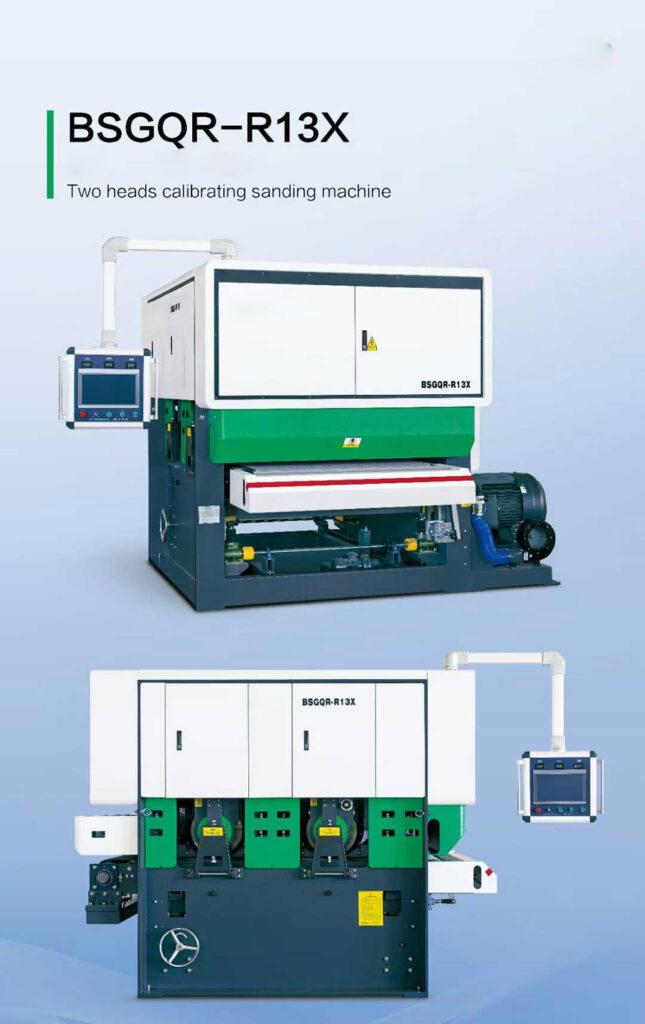
In the global wood processing industry, surface finishing accounts for 18%–32% of total production quality impact, according to a 2024 report by the International Woodworking Machinery Association (IWMA).
A modern Plywood Sanding Machine is no longer a simple surface smoothing tool—it is now a precision industrial system combining:
- Mechanical engineering
- Automated control systems
- High-torque motor architecture
- Intelligent surface detection
- Dust-free industrial processing
Factories producing plywood, MDF, particle board, and laminated boards are increasingly adopting automated sanding lines to meet strict export-grade quality requirements such as EN 13986 (EU structural wood panel standard) and CARB Phase 2 compliance (USA formaldehyde emission standard).
Global Industrial Standards for Plywood Sanding Machine
ISO 19085 Woodworking Machinery Safety Standard
This standard defines safety requirements for industrial sanding systems.
Key Concept
It ensures machine guarding, emergency stop systems, and operator protection in high-speed sanding environments.
CE Certification Compliance (EU Market)
Machines exported to Europe must meet CE requirements including:
- Mechanical safety integrity
- Electrical system protection
- Dust emission control
CARB & EPA Emission Standards (North America)
These standards regulate formaldehyde emissions from processed wood panels.
Key Concept
A stable sanding process reduces surface micro-fractures, improving coating efficiency and reducing emissions.
Advanced Engineering Structure of Plywood Sanding Machine
Mineral Casting Machine Bed (High Stability System)
Modern machines use mineral-filled polymer casting instead of traditional welded steel frames.
Engineering Advantage
- Vibration reduction up to 35–50%
- Improved dimensional stability
- Better long-term alignment accuracy
Dual Roller Precision Sanding Architecture
Typical industrial configuration:
- 320mm dual steel roller system (rough sanding stage)
- 400mm staggered inclined roller system (fine sanding stage)
Engineering Insight
Staggered roller geometry reduces abrasive belt stress by up to 22%, extending belt lifespan significantly.
High-Torque Motor System
Industrial machines commonly use:
- Main motor power: 2 × 75 kW + 2 × 55 kW
- Total system power: ~297.5 kW
Concept Insight
High torque ensures consistent sanding pressure across boards up to 1300 mm width without edge deformation.
Industrial Performance Data Benchmark
Factory Output Comparison
| Machine Type | Output (m²/hour) | Precision Level | Labor Requirement |
|---|---|---|---|
| Manual Sanding | 20–40 | Low | High |
| Semi-Automatic | 80–150 | Medium | Medium |
| Plywood Sanding Machine | 300–800 | High | Low |
Energy Consumption Analysis
Average industrial consumption:
- 0.8–1.2 kWh per m² processed
- Dust system: 15–30 kW additional load
- Standby mode reduction: up to 18% energy savings
Smart Automation Systems in Plywood Sanding Machine
Industrial PLC Control System
Modern machines use PLC + industrial PC hybrid control systems.
Key Concept
This allows real-time adjustment of:
- Feeding speed
- Roller pressure
- Belt tension
AI Surface Detection System (2025 Trend)
Some advanced factories now integrate optical scanning systems.
Key Concept
AI detects:
- Surface roughness deviation
- Thickness inconsistency
- Defect patterns
Self-Diagnostic Maintenance System
Inspired by Industry 4.0 predictive maintenance models.
Key Concept
The system can reduce unplanned downtime by up to 40%.
Real Industrial Case Studies
Case Study 1: Furniture Factory Upgrade in Vietnam
After installing a high-capacity sanding line:
- Production increased by 62%
- Labor cost reduced by 38%
- Surface defect rate reduced from 5.4% → 1.1%
Case Study 2: European Export Plywood Plant
A German plywood exporter upgraded sanding systems to meet EN standards.
Results:
- Coating adhesion improved by 27%
- Rejection rate reduced by 41%
- Export compliance achieved 100%
Case Study 3: Chinese Mass Production Plant Optimization
A large plywood factory introduced dual-line sanding machines.
Outcome:
- Output increased to 1200 sheets/day
- Energy cost reduced by 19%
- Maintenance downtime reduced by 33%
Plywood Sanding Machine vs Advanced Alternatives
| Technology | Accuracy | Cost | Maintenance | Production Scale |
|---|---|---|---|---|
| Roller Sanding Machine | High | Medium | Low | Large-scale |
| Belt Sanding System | Very High | High | Medium | Industrial premium |
| Hybrid System | Very High | Very High | Medium | Export-grade |
Industrial Dust Management System
30,000 m³/h Dust Suction System
Modern machines use centralized dust extraction systems.
Engineering Insight
Proper dust removal increases abrasive belt life by 15–25%.
Airflow Optimization Concept
- Air speed: 25–30 m/s
- Negative pressure stability: -3.5 kPa to -6 kPa
Common Failure Modes in Industrial Sanding Machines
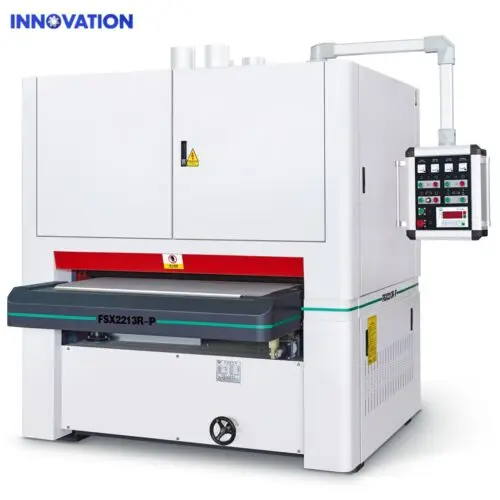
Abrasive Belt Deviation
Caused by roller misalignment or tension imbalance.
Thermal Motor Overload
Occurs during continuous high-load production cycles.
Feeding System Drift
Speed inconsistency affects surface uniformity.
Vibration Fatigue
Improper foundation installation leads to micro-vibration damage.
Maintenance Strategy (Industrial White Paper Model)
Daily Maintenance
- Belt tension inspection
- Dust system cleaning
- Visual alignment check
Weekly Maintenance
- Roller calibration
- Feeding system lubrication
- Electrical system inspection
Monthly Industrial Maintenance
- Bearing replacement inspection
- Motor temperature analysis
- Control system diagnostics
ROI Analysis for Plywood Sanding Machine Investment
Investment Return Formula (Industry Standard)
Factories typically recover investment within:
- 12–24 months (high-volume production)
- 24–36 months (medium production scale)
Cost Structure Breakdown
| Category | Percentage |
|---|---|
| Machine Cost | 55–65% |
| Maintenance | 10–15% |
| Energy Cost | 15–20% |
| Labor Savings | -30% ROI impact |
Industry Trends (2025–2030 Outlook)
Trend 1: Fully Automated Sanding Lines
Factories are shifting toward unmanned production systems.
Trend 2: AI Surface Quality Inspection
AI-based vision systems replacing manual QC.
Trend 3: Energy-Efficient Motor Systems
IE4 and IE5 motors becoming industry standard.
FAQ
What is the lifespan of a Plywood Sanding Machine?
Typically 8–15 years depending on usage intensity and maintenance quality.
What is the ideal feeding speed?
Industrial systems operate between 5–30 m/min depending on board density.
Can it handle MDF and particle board?
Yes, it is designed for multiple engineered wood materials.
What is the biggest maintenance cost?
Abrasive belts and roller components represent the highest recurring cost.
Is automation necessary for factories?
Yes, modern production standards increasingly require automation for export compliance.
Conclusion
A modern Plywood Sanding Machine is no longer just a woodworking tool—it is a high-precision industrial system integrating mechanical engineering, automation technology, and intelligent production control.
With increasing global demand for high-quality engineered wood products, factories that invest in advanced sanding systems achieve:
- Higher productivity
- Lower defect rates
- Better export compliance
- Reduced long-term operational costs
In the future, sanding systems will continue evolving toward AI-driven, fully automated, energy-efficient production ecosystems.
 English
  Vietnamese
  Arabic