
News
Cold Press Machine for Plywood and Plywood Pressing Solutions Explained
Welcome to My Blog!
I’m so glad you’re here. Before we dive into the content, I’d love to connect with you beyond this page. On my social media, I regularly share industry insights, product updates, and behind-the-scenes moments — plus, it’s a great place for us to interact!
Follow us on Facebook: Shandong Chuangxin Automation Equipment Co., Ltd
Let’s grow together and stay connected. Now, let’s jump into the blog — I hope you find the content informative, engaging, and truly valuable.
Table of Contents
Key Highlights of This Article
- Deep understanding of modern plywood pressing solutions and industrial workflow
- Engineering principles behind a cold press machine for plywood
- Global plywood manufacturing standards and compliance requirements
- Machine types, hydraulic systems, and automation technologies
- Real-world production case study and ROI analysis
- Maintenance, troubleshooting, and operational best practices
- Industry FAQs based on real search behavior and buyer intent
Introduction
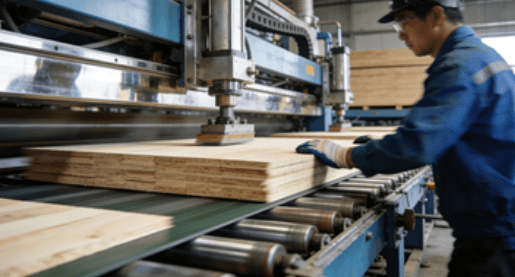
In today’s competitive wood processing industry, manufacturers are under pressure to deliver stronger panels, higher production efficiency, and lower operational costs. Plywood is widely used in furniture, construction, packaging, and interior decoration, and its quality depends heavily on the pressing stage.
Among all production equipment, the cold press machine for plywood plays a critical role in stabilizing veneer layers before final hot pressing. Without proper pre-pressing, plywood panels are more likely to suffer from delamination, air gaps, and structural deformation.
Modern factories are increasingly adopting automated plywood pressing solutions to meet global standards such as CARB Phase II, EPA TSCA Title VI, EN 13986, and ISO bonding performance requirements.
Global Plywood Industry Overview and Market Demand
Growing Demand for Engineered Wood Products
The global plywood market continues to expand due to urbanization and infrastructure development. Industry reports suggest steady growth driven by Asia-Pacific, North America, and Europe.
Key drivers include:
- Increased demand for sustainable construction materials
- Rising furniture manufacturing output
- Growth in prefabricated housing systems
- Shift from solid wood to engineered panels
Quality Pressure in Export Markets
Export-oriented manufacturers must comply with strict quality regulations. This increases the need for stable pre-pressing systems such as cold press machines.
Cold Press Machine for Plywood Working Principle Explained
Hydraulic Pressure Engineering Concept
The machine operates by applying controlled hydraulic pressure across stacked veneer layers. This pressure ensures adhesive penetration and uniform bonding.
Typical industrial pressure range:
- 1 MPa to 5 MPa for pre-pressing applications
- Up to 26 MPa hydraulic system capability in heavy-duty machines
Adhesive Stabilization Mechanism
Glue used in plywood production (UF, MUF, or phenolic resin) requires controlled pressure to activate bonding. Cold pressing ensures:
- Even glue distribution
- Reduced resin displacement
- Stable initial curing phase
Pre-Compression Structural Behavior
When pressure is applied, air pockets between veneer layers are eliminated. This improves density consistency and prevents delamination during hot pressing.
Technical Architecture of Cold Press Machine for Plywood
Heavy-Duty Frame System Design
Industrial machines use welded steel frames with high rigidity.
Common specifications:
- Steel plate thickness: 25–40 mm
- Reinforced vertical columns for load resistance
- Precision machining for parallel platen alignment
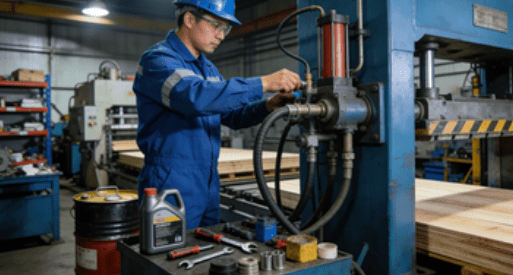
Hydraulic System Configuration
A stable hydraulic system is essential for uniform pressing.
Core components include:
- High-pressure plunger pump
- Hydraulic valves (industrial grade, e.g., Taiwan or European systems)
- Oil filtration system
- Dual-cylinder synchronization design
PLC Automation Control System
Modern plywood pressing solutions integrate PLC control for:
- Pressure adjustment
- Time control
- Automatic cycle operation
- Safety interlocks
This reduces human error and improves production consistency.
Workflow of Cold Press Machine for Plywood Production Line
Veneer Preparation Stage
Wood veneers are dried and treated to optimal moisture content (typically 6%–12%).
Proper moisture control is critical for adhesive bonding performance.
Glue Application Process
Resin is evenly applied using a glue spreader system.
Uniform coating thickness ensures stable bonding strength.
Layer Assembly Process
Veneers are stacked in cross-grain orientation.
This improves dimensional stability and reduces warping risk.
Pressing and Stabilization Phase
The machine applies pressure for 3–10 minutes depending on:
- Panel thickness
- Resin type
- Production speed requirements
Transfer to Hot Pressing
After stabilization, panels move to hot press machines for final curing.
Cold Press Machine for Plywood Types and Configurations
Bottom-Type Cold Press Machine
- Suitable for medium-scale production
- Easier loading and maintenance
- Lower initial investment cost
Multi-Layer Hydraulic Press System
- High productivity output
- Supports continuous pressing cycles
- Used in industrial plywood factories
Fully Automatic Production Line
- Integrated conveyor systems
- PLC-controlled operation
- Minimal labor requirement
Industry Standards and Compliance Requirements
International Quality Standards
Plywood products must meet several global standards:
- EN 13986 (Europe) – Wood-based panels for construction
- ISO 16978 / ISO 12460 – Testing bonding strength and formaldehyde emission
- CARB Phase II / EPA TSCA Title VI – Formaldehyde emission control (USA)
Adhesive Performance Standards
Bond strength testing typically requires:
- Shear strength ≥ industry minimum threshold
- No visible delamination after boiling test cycles
- Moisture resistance stability
A properly calibrated cold press machine for plywood helps manufacturers consistently meet these requirements.
Comparative Analysis: Cold Press vs Hot Press Systems
| Feature | Cold Press System | Hot Press System |
|---|---|---|
| Heat Usage | None | Required |
| Energy Consumption | Low | High |
| Function | Pre-bond stabilization | Final curing |
| Cycle Time | 3–10 minutes | 5–15 minutes |
| Output Role | Structural alignment | Final strength |
| Defect Control | High (air removal) | High (bond curing) |
Cold pressing is not a replacement for hot pressing but a complementary stage in the production chain.
Production Efficiency and ROI Analysis
Productivity Improvement Factors
Factories using advanced plywood pressing solutions report:
- 15%–30% reduction in defective panels
- 20%–40% improvement in production stability
- Reduced adhesive waste due to better pressure control
ROI Calculation Example
Assume a medium factory producing 5000 panels/day:
- Defect reduction saves 200 panels/day
- Average panel value: $5
- Daily savings: $1000
- Monthly savings: $30,000
Investment in a cold press system can often be recovered within 8–18 months depending on production scale.
Real-World Case Study: Furniture Manufacturing Plant Upgrade
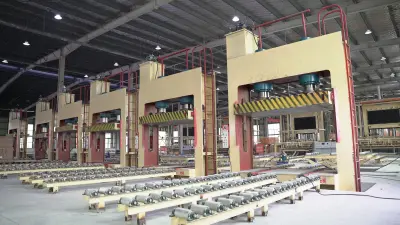
A furniture manufacturing company in Southeast Asia upgraded its production line with an automated cold press machine for plywood system.
Before Upgrade:
- High defect rate (12%)
- Frequent delamination issues
- Manual pressure inconsistencies
After Upgrade:
- Defect rate reduced to 4%
- Production cycle stabilized
- Labor requirement reduced by 30%
Key Outcome:
The company increased export capacity by 25% within one year due to improved panel quality consistency.
Maintenance and Operational Best Practices
Hydraulic System Maintenance
- Replace hydraulic oil every 6–12 months
- Clean filters regularly
- Check pressure calibration weekly
Mechanical Inspection
- Inspect platen alignment monthly
- Check frame welding integrity
- Lubricate moving components
Common Operational Mistakes
- Overloading panels beyond capacity
- Incorrect glue application thickness
- Ignoring moisture content of veneers
Troubleshooting Common Issues
Uneven Pressure Distribution
Caused by hydraulic imbalance or platen misalignment.
Solution: recalibrate hydraulic system and inspect cylinders.
Delamination After Hot Pressing
Often due to insufficient pre-pressing time or glue failure.
Solution: adjust pressing cycle and adhesive ratio.
Slow Production Cycle
May result from outdated hydraulic pumps.
Solution: upgrade to high-efficiency plunger pump system.
Safety Standards in Plywood Pressing Solutions
Modern equipment follows strict industrial safety regulations:
- Emergency stop systems
- Pressure overload protection
- Automatic shutdown sensors
- Operator safety guards
These features ensure safe operation in high-pressure environments.
Industry Whitepaper Insights (Summary)
Recent wood processing industry analyses highlight:
- Growing demand for automated plywood production lines
- Increasing adoption of hydraulic pre-press systems
- Shift toward energy-efficient manufacturing equipment
- Strong focus on emission-compliant adhesive systems
Manufacturers investing in automation consistently outperform traditional manual systems in productivity and product consistency.
Conclusion
Efficient plywood production depends on precision, stability, and process control. A cold press machine for plywood is a foundational component in modern plywood pressing solutions, ensuring veneer alignment, improving bonding quality, and reducing production defects.
As global demand for engineered wood products continues to rise, manufacturers investing in advanced pressing systems gain a significant competitive advantage in quality, efficiency, and compliance.
FAQ
What is a cold press machine for plywood used for?
It stabilizes veneer layers before hot pressing by applying uniform hydraulic pressure.
Is cold pressing necessary in plywood manufacturing?
Yes, it significantly improves bonding stability and reduces production defects.
How long is the pressing cycle?
Typically between 3 and 10 minutes depending on material thickness and glue type.
What pressure is used in cold pressing?
Industrial systems usually operate between 1–5 MPa during pre-pressing.
Does cold pressing replace hot pressing?
No, it is a pre-processing step that works alongside hot pressing.
What industries use plywood pressing solutions?
Furniture, construction, interior design, packaging, and modular housing industries.
What is the lifespan of a cold press machine?
With proper maintenance, industrial machines can operate reliably for 10–15 years.
 English
  Vietnamese
  Arabic