
News
Laminating Press Buying Tips: A Complete Industrial Buyer’s Guide for Wood Panel Manufacturing
Welcome to My Blog!
I’m so glad you’re here. Before we dive into the content, I’d love to connect with you beyond this page. On my social media, I regularly share industry insights, product updates, and behind-the-scenes moments — plus, it’s a great place for us to interact!
Follow us on Facebook: Shandong Chuangxin Automation Equipment Co., Ltd
Let’s grow together and stay connected. Now, let’s jump into the blog — I hope you find the content informative, engaging, and truly valuable.
Table of Contents
Key Takeaways
- A laminating press is the core equipment in modern wood-based panel production lines
- Performance depends on pressure, temperature uniformity, and automation level
- Different press types (hot, cold, continuous) serve different industrial scenarios
- Total cost includes energy consumption, maintenance, and production efficiency—not just purchase price
- Global standards such as EN 12781 and ISO-based quality systems influence machine selection
- Proper selection can improve yield rate by 10–25% and reduce adhesive waste significantly
- Long-term ROI is heavily influenced by automation and hydraulic system stability
Introduction
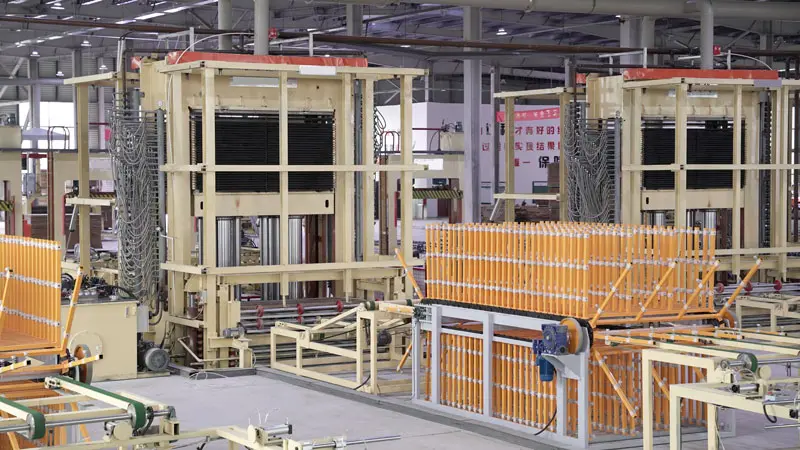
In modern wood-based panel manufacturing, the laminating press is not just a piece of equipment—it is the core determinant of product quality, production efficiency, and long-term profitability. Whether producing MDF boards, plywood, HPL panels, or decorative laminated surfaces, the pressing process directly defines bonding strength, surface flatness, and defect rate.
Industry reports from global wood machinery associations indicate that over 60% of production defects in panel factories originate from inconsistent pressing conditions, not raw materials. This makes the laminating press one of the most critical investment decisions for manufacturers.
At the same time, global demand for engineered wood products continues to grow. According to market research published in 2025, the global wood panel machinery market is expected to maintain a CAGR of around 5.8% from 2024 to 2030, driven by construction, furniture manufacturing, and prefabricated housing expansion.
In this context, choosing the right laminating press is not simply a procurement decision—it is a long-term production strategy.
What Is a Laminating Press in Modern Industrial Systems
A laminating press is a hydraulic or mechanical system designed to bond multiple layers of material under controlled temperature, pressure, and time cycles. It is widely used in:
- MDF (Medium Density Fiberboard) production
- Plywood manufacturing
- HPL (High Pressure Laminate) surface processing
- Decorative furniture panel production
- Composite material bonding industries
Core Working Principle of a Laminating Press
The process typically includes:
- Heating system activation (thermal oil or electric heating plates)
- Hydraulic pressure application (typically 5–25 MPa depending on product type)
- Adhesive curing under controlled temperature (120°C–220°C range)
- Cooling and stabilization stage
Why Process Control Matters
Even a 2°C temperature deviation or 5% pressure instability can result in:
- Delamination defects
- Surface blistering
- Uneven board thickness
- Reduced mechanical strength
This is why industrial laminating press systems are equipped with PLC control systems and precision sensors.
Laminating Press Buying Tips Based on Industrial Standards
When evaluating a laminating press, buyers should not rely solely on price or brand reputation. Instead, they must analyze structural design, automation level, and compliance with international manufacturing standards.
Key International Standards Relevant to Laminating Press Equipment
Modern production lines often follow these standards:
- EN 12781 (Wood-based panels – Pressing quality requirements)
- ISO 2426 (Panel dimensional stability testing methods)
- CE Machinery Directive 2006/42/EC
- ISO 9001 manufacturing quality system compliance
These standards ensure:
- Uniform pressure distribution
- Safe hydraulic system operation
- Energy efficiency compliance
- Repeatable production quality
Technical Parameters That Define Laminating Press Performance
Pressure System Performance
Industrial laminating press systems typically operate in:
- Light-duty systems: 5–10 MPa
- Medium-duty systems: 10–20 MPa
- Heavy industrial systems: 20–25 MPa
Higher pressure is required for dense materials like HPL and multi-layer plywood.
Temperature Control Accuracy
High-end systems maintain:
- ±1°C temperature accuracy (premium systems)
- ±3°C standard industrial systems
Stable temperature ensures consistent adhesive curing and reduces defect rate.
Hydraulic System Stability
A high-quality hydraulic system includes:
- Multi-cylinder synchronization
- Anti-leak sealing system
- Pressure feedback control loop
Industry testing shows that synchronized hydraulic systems improve panel uniformity by up to 18% compared to single-cylinder systems.
Laminating Press Types and Industrial Applications
Hot Laminating Press Systems
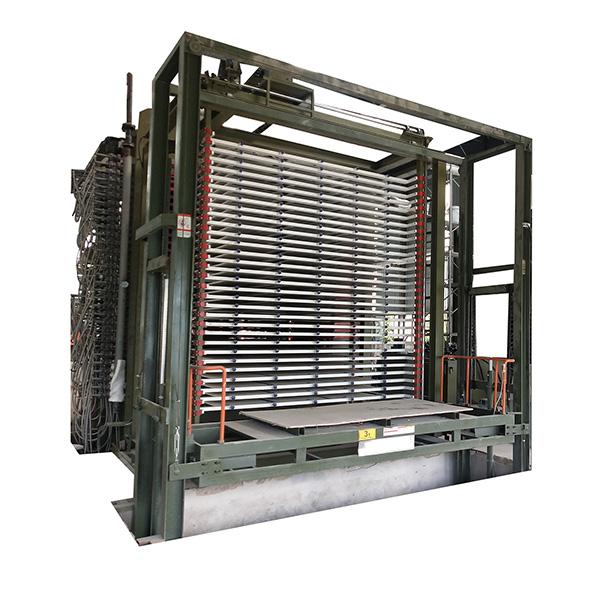
Hot press systems are the most widely used in industrial panel production.
Typical characteristics:
- Temperature range: 120°C–220°C
- High bonding strength
- Suitable for MDF, plywood, and veneer panels
Cold Laminating Press Systems
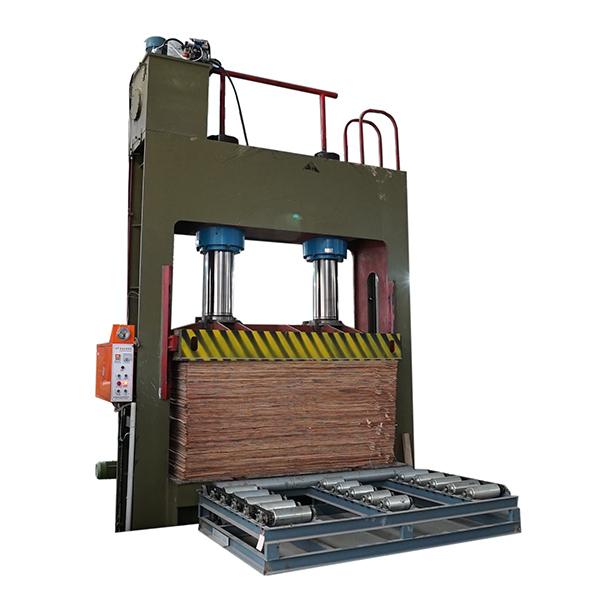
Cold presses are mainly used for pre-pressing and temporary bonding.
Advantages:
- Low energy consumption
- Simple structure
- Lower maintenance cost
Limitations:
- Lower final bonding strength
- Requires secondary processing
Continuous Laminating Press Systems
Continuous presses represent the most advanced industrial solution.
Key features:
- Continuous production line integration
- Fully automated feeding and pressing
- High throughput capacity
Production efficiency can increase by 30–50% compared to batch press systems.
Laminating Press Technology Comparison Table
| System Type | Efficiency | Energy Use | Investment Cost | Ideal Application |
|---|---|---|---|---|
| Hot Press | Medium | High | Medium | MDF, plywood |
| Cold Press | Low | Low | Low | Pre-pressing |
| Continuous Press | Very High | Medium | High | Mass production |
Cost Structure Analysis of Laminating Press Investment
Equipment Purchase Cost
The initial cost depends on:
- Press size (4×8 ft, 5×10 ft, custom formats)
- Automation level
- Hydraulic system design
- Heating technology
Operational Energy Cost
Energy consumption typically accounts for:
- 25%–40% of total production cost in hot press systems
Energy-efficient systems can reduce consumption by 15–30%.
Maintenance Cost Factors
Key maintenance components include:
- Hydraulic oil replacement (every 6–12 months)
- Plate surface calibration
- Heating system inspection
- Sensor and PLC updates
Poor maintenance increases downtime risk by up to 20% annually.
Industry Case Study: Laminating Press Upgrade Impact
A furniture panel manufacturer in Southeast Asia upgraded from a standard hot press to an automated laminating press line.
Before Upgrade:
- Defect rate: 8.2%
- Output efficiency: 1,200 boards/day
- Energy consumption: high variability
After Upgrade:
- Defect rate reduced to: 3.1%
- Output increased to: 1,650 boards/day
- Energy savings: ~22%
Key Improvement Factors:
- PLC-controlled pressure system
- Real-time temperature adjustment
- Multi-layer hydraulic synchronization
This demonstrates how laminating press modernization directly impacts profitability.
Global Industry Trends in Laminating Press Technology
Smart Manufacturing Integration
Modern laminating press systems increasingly include:
- IoT-based monitoring systems
- Remote diagnostics
- AI-based pressure optimization
Energy Efficiency Improvements
New-generation systems focus on:
- Reduced heat loss insulation
- Low-energy hydraulic pumps
- Heat recovery systems
Market News Insight (2025 Industry Direction)
Recent industry white papers indicate:
- Increased demand for automated panel production lines in Asia
- Growing investment in eco-friendly adhesive systems
- Shift toward modular laminating press design for flexible factories
Common Laminating Press Buying Mistakes
Choosing Based on Price Only
Low-cost machines often lack:
- Stable hydraulic systems
- Accurate temperature control
- Long-term durability
Ignoring Production Scale
Mismatch between capacity and demand leads to:
- Production bottlenecks
- Equipment overload
- Reduced service life
Overlooking Spare Parts Availability
A reliable supplier should provide:
- Fast delivery of hydraulic components
- Heating plate replacements
- Control system upgrades
Laminating Press Selection Strategy for Buyers
Small Workshop Scenario
Recommended configuration:
- Semi-automatic hot press
- Lower tonnage system
- Compact footprint design
Medium Factory Scenario
Recommended configuration:
- PLC-controlled hot press
- Multi-layer pressing system
- Moderate automation level
Large Industrial Plant Scenario
Recommended configuration:
- Fully automated continuous press line
- Integrated conveyor systems
- Smart monitoring platform
Laminating Press ROI Calculation Model
A simplified ROI evaluation includes:
- Production output increase
- Energy cost reduction
- Labor cost savings
- Defect rate reduction
Industry benchmarks show:
- Payback period: 18–36 months for mid-to-high-end systems
- ROI improvement: 20–45% depending on automation level
Environmental and Sustainability Considerations
Modern laminating press systems increasingly support:
- Low-emission adhesive curing processes
- Energy-efficient heating systems
- Reduced formaldehyde emissions in MDF production
Environmental compliance is becoming a mandatory requirement in Europe and North America, making sustainable press systems a long-term investment necessity.
FAQ
What industries use a laminating press?
It is widely used in furniture manufacturing, plywood production, MDF board processing, and decorative surface lamination industries.
What pressure range is required for industrial use?
Most industrial systems operate between 5–25 MPa depending on material density and application.
How long does a laminating press last?
With proper maintenance, service life typically ranges from 10 to 20 years.
Is automation necessary for small factories?
Not mandatory, but automation significantly improves consistency and reduces labor dependency.
What is the most important factor when buying a laminating press?
Pressure stability, temperature control accuracy, and hydraulic system quality are the most critical factors.
Conclusion
Selecting the right laminating press is a strategic decision that directly influences production quality, operational efficiency, and long-term competitiveness. Modern systems are no longer simple mechanical presses—they are intelligent production platforms integrating hydraulics, thermal control, automation, and data monitoring.
For manufacturers aiming to scale production or improve product consistency, investing in a high-performance laminating press system is not optional—it is essential for maintaining competitiveness in the global wood panel industry.
 English
  Vietnamese
  Arabic