
Products
Engineered Wood Veneer
Product category
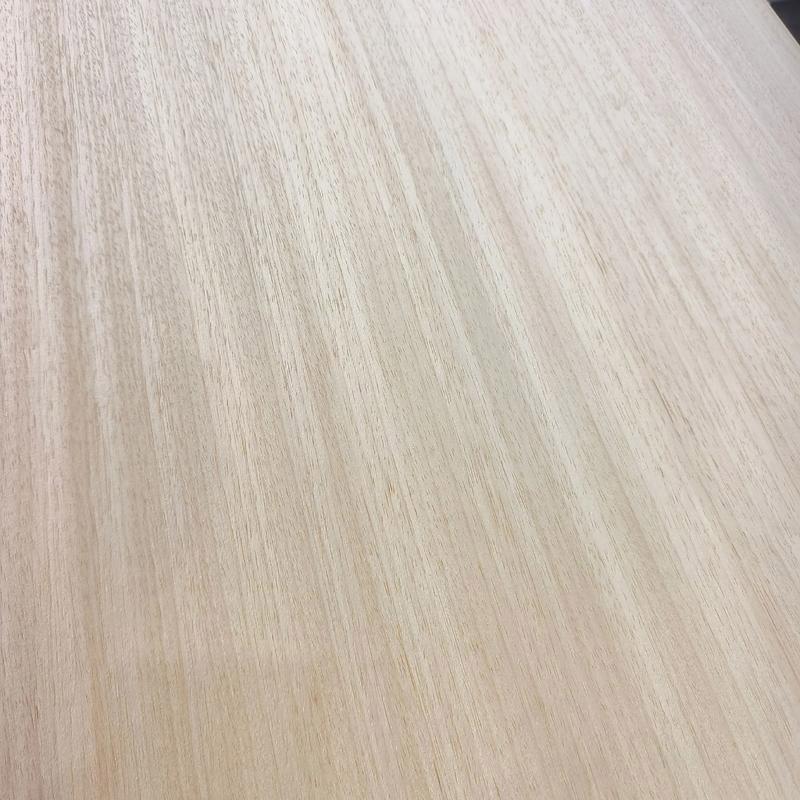
Engineered Wood Veneer
Engineered wood veneer
Engineered wood veneer, also known as reconstituted veneer or man-made veneer, is a modern decorative surfacing material designed to offer consistent appearance, environmental sustainability, and cost efficiency. It is manufactured by slicing fast-growing plantation species (such as poplar or ayous), dyeing the veneers, and laminating them into blocks that are re-sliced to produce sheets with controlled grain patterns and colors.
Unlike natural veneer, which varies in appearance due to the irregularity of real wood, engineered veneer can be produced with uniform grain, color, and texture. This makes it a popular choice for designers and manufacturers seeking repeatable patterns for large-scale projects without compromising the beauty of wood. Engineered veneers can replicate the look of premium species such as oak, walnut, maple, teak, and ebony, while avoiding the cost and environmental impact of harvesting rare or endangered timbers.
Sizes
Standard and special sizes are available:
Standard: 4’×8’ (1220×2440 mm), 4’×10’ (1220×3050 mm), 4’×12’ (1220×3660 mm)
Oversized: 5’×8’ (1525×2440 mm), 5’×10’ (1525×3050 mm), 5’×12’ (1525×3660 mm)
Custom Orders: Available upon request, including cross-grain formats and longer panels.
Advantages
Consistency – Uniform grain and color across batches for seamless large-area applications.
Design Flexibility – Can mimic exotic species or create custom colors and grain designs not found in nature.
Sustainability – Made from fast-growing, renewable species, reducing pressure on natural forests.
Workability – Easy to glue, cut, sand, and finish, similar to natural veneer.
Cost Efficiency – Lower cost compared to rare hardwood veneers while achieving similar aesthetics.
Applications
Engineered wood veneer is widely used in:
Furniture Manufacturing – Desktops, cabinets, shelving, and decorative panels.
Architectural Interiors – Wall panels, partitions, ceilings, and reception counters.
Cabinetry – Kitchen cabinets, wardrobes, and bathroom vanities.
Doors – Flush doors and panel doors for residential, commercial, and hospitality projects.
Retail & Office Fit-Outs – Display fixtures, counters, and workstations.
Marine & Vehicle Interiors – Decorative finishes in yachts, RVs, and specialty vehicles.
Backings
Engineered veneer is available in different backings to suit various applications:
Raw Veneer – For traditional wood veneering processes.
Paper-Backed Veneer (10 mil or 20 mil) – Provides stability and ease of handling.
Bubble Free Veneer (BFV) – Eliminates air pockets for large flat panels.
PSA (Pressure Sensitive Adhesive) – Peel-and-stick for fast installation without glue.
Cutting & Grain Options
Because engineered veneers are reconstituted, they can be sliced to produce any desired grain pattern:
Straight Grain – Linear, even pattern for a clean, modern look.
Quartered or Rift – Simulates traditional hardwood cuts.
Custom Patterns – Wave, cross, or geometric effects achievable during production.
Conclusion
Engineered wood veneer combines the beauty of natural wood with the precision and consistency of modern manufacturing. It offers a sustainable, affordable, and versatile alternative to traditional veneers, making it ideal for architects, interior designers, and furniture makers who require high-quality decorative surfaces with predictable results. Its uniformity, design versatility, and eco-friendly profile make it an increasingly popular choice in both residential and commercial projects worldwide.
 English
  Vietnamese
  Arabic