
News
Wood-Based Board Machinery for Modern Factories: Innovative Solutions for Efficient Production
Welcome to My Blog!
I’m so glad you’re here. Before we dive into the content, I’d love to connect with you beyond this page. On my social media, I regularly share industry insights, product updates, and behind-the-scenes moments — plus, it’s a great place for us to interact!
Follow us on Facebook: Shandong Chuangxin Automation Equipment Co., Ltd
Let’s grow together and stay connected. Now, let’s jump into the blog — I hope you find the content informative, engaging, and truly valuable.
Table of Contents
Introduction
- Overview of wood-based board machinery and its role in modern factories
- Key types of machinery: Hot Press Machine, Plywood Paving Machine, Edge Trimming Machine, Core Veneer Composer, Plywood Turnover Machine, Lifting Tables, Glue Mixers, Glue Spreaders
- Comparison of machine types and automation levels
- Benefits of integrating modern machinery: efficiency, labor reduction, quality consistency
- Technical specifications, standards, and best practices
- Case studies, industry news, and emerging trends
- FAQ section addressing common search queries
In today’s competitive plywood and panel production industry, modern factories require state-of-the-art wood-based board machinery to optimize efficiency, reduce labor costs, and maintain high product quality. The integration of automation, precision control, and innovative designs is transforming the production process. From adhesive mixing to panel pressing and edge trimming, each piece of equipment plays a critical role in ensuring smooth workflow and consistent board quality.
Understanding Wood-Based Board Machinery for Modern Factories
What is Wood-Based Board Machinery?
Wood-based board machinery refers to specialized industrial equipment used to manufacture plywood, MDF, blockboard, particleboard, and other engineered wood products. These machines automate critical processes such as veneer pressing, glue application, edge trimming, and core assembly, ensuring high precision and production consistency.
Modern factories use wood-based board machinery to:
- Improve production efficiency and throughput
- Reduce human error and labor intensity
- Enhance product quality and durability
- Support sustainable and eco-friendly manufacturing practices
Core Types of Wood-Based Board Machinery
Hot Press Machines

Hot press machines use heat and pressure to bond veneer layers, producing strong and smooth plywood panels. The Plywood Hot Press Machine is equipped with an advanced hydraulic system and digital temperature controls, providing uniform heat distribution for consistent bonding.
Key Features:
- Platen size up to 1370 × 2700 mm
- Total pressure: 600T
- Multi-platen design with 11 pressing plates
- Thermal oil heating for uniform temperature control
- Automated loading and unloading systems
Benefits:
- High production efficiency: Up to 600 panels/day depending on size and thickness
- Precise temperature and pressure control ensures consistent quality
- Reduced labor costs due to automation
Plywood Paving Machines
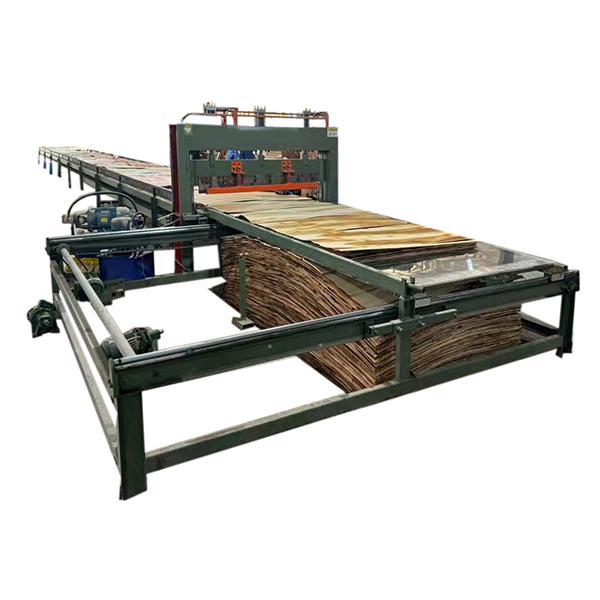
Plywood paving machines automate the veneer lay-up process, ensuring precise glue application and alignment.
Concepts:
- Automated feeding systems deliver veneers smoothly to the working area
- Hydraulic and PLC-controlled positioning units manage speed and placement
- Dual cutting options for saw and guillotine methods
Performance Data:
| Model | Power | Capacity (pcs/day) | Board Width | Length Options |
|---|---|---|---|---|
| Standard | 13.5kW | 800–1500 | 1300 mm | 18–36 m |
| High-Capacity | 18kW | 1500–2500 | 1400 mm | 24–36 m |
Advantages:
- Uniform glue application improves bonding strength
- Supports various plywood types and production scales
- Reduces labor intensity and improves overall workflow
Edge Trimming Machines
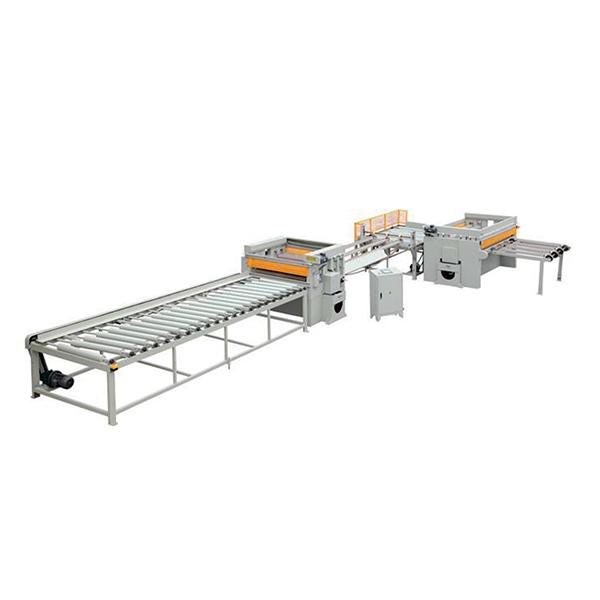
Edge trimming machines ensure clean and smooth panel edges after lamination or pressing. These machines are essential for MDF and plywood production lines.
Features:
- High-speed rotary blades
- Automated feed rollers for consistent trimming
- PLC-controlled cutting width adjustment
Specifications Example:
- Frame dimensions: 100 × 200 × 5 mm
- Daily output: 2800 pcs
- Motor configuration: 10 kW × 4 main saw motors
Conceptual Advantage:
- High precision cutting ensures uniform edge quality
- Labor cost reduction due to automation
- Enhanced product aesthetics and consistency
Core Veneer Composers
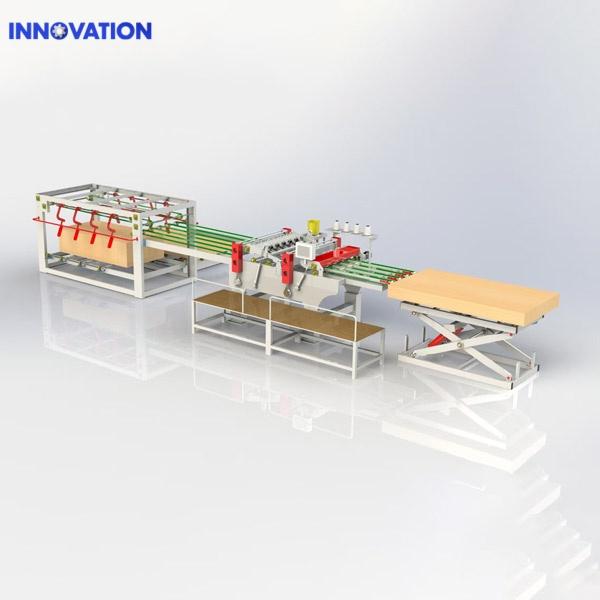
Core veneer composers assemble narrow veneer strips into high-quality core sheets, using precision finger-joint or butt-joint technology.
Key Components:
- Alignment rollers and sensors for precise positioning
- Glue spreader for even adhesive application
- Hydraulic pressing units for strong joints
Benefits:
- Converts small veneer pieces into usable sheets, reducing waste
- High consistency in sheet thickness and quality
- Automation reduces labor and improves safety
Plywood Turnover Machines
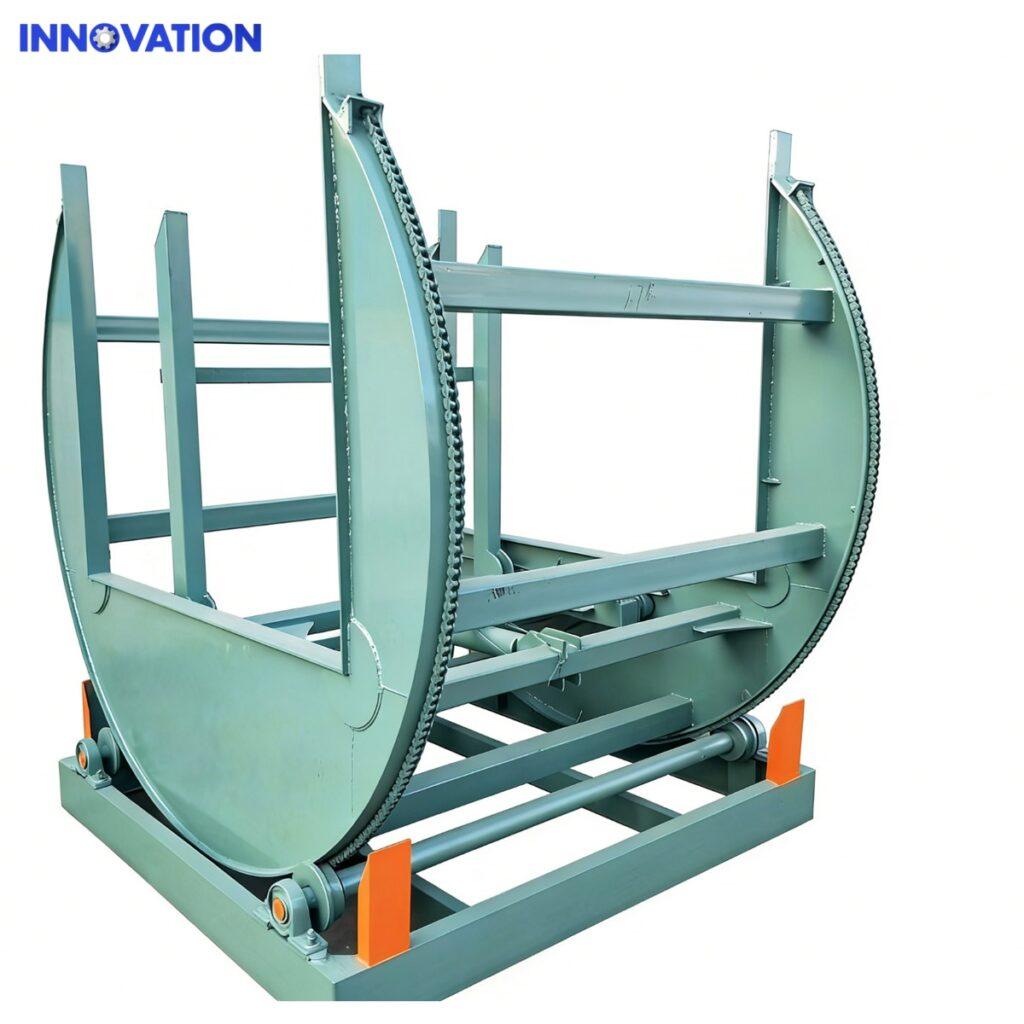
Turnover machines flip or rotate plywood panels during production. Two common types are 180° and 90° turnover machines.
180° Turnover Machine:
- Rotates entire panel stacks to process the opposite side
- Load capacity: 1–3 tons
- Ideal for sanding, inspection, and double-sided processing
90° Turnover Machine:
- Adjusts panel orientation from horizontal to vertical
- Used in conveyor transfer, stacking, and packaging
Benefits:
- Improves material handling efficiency
- Reduces manual labor and ensures safety
- Integrates with automated production lines
Plywood Lifting Tables
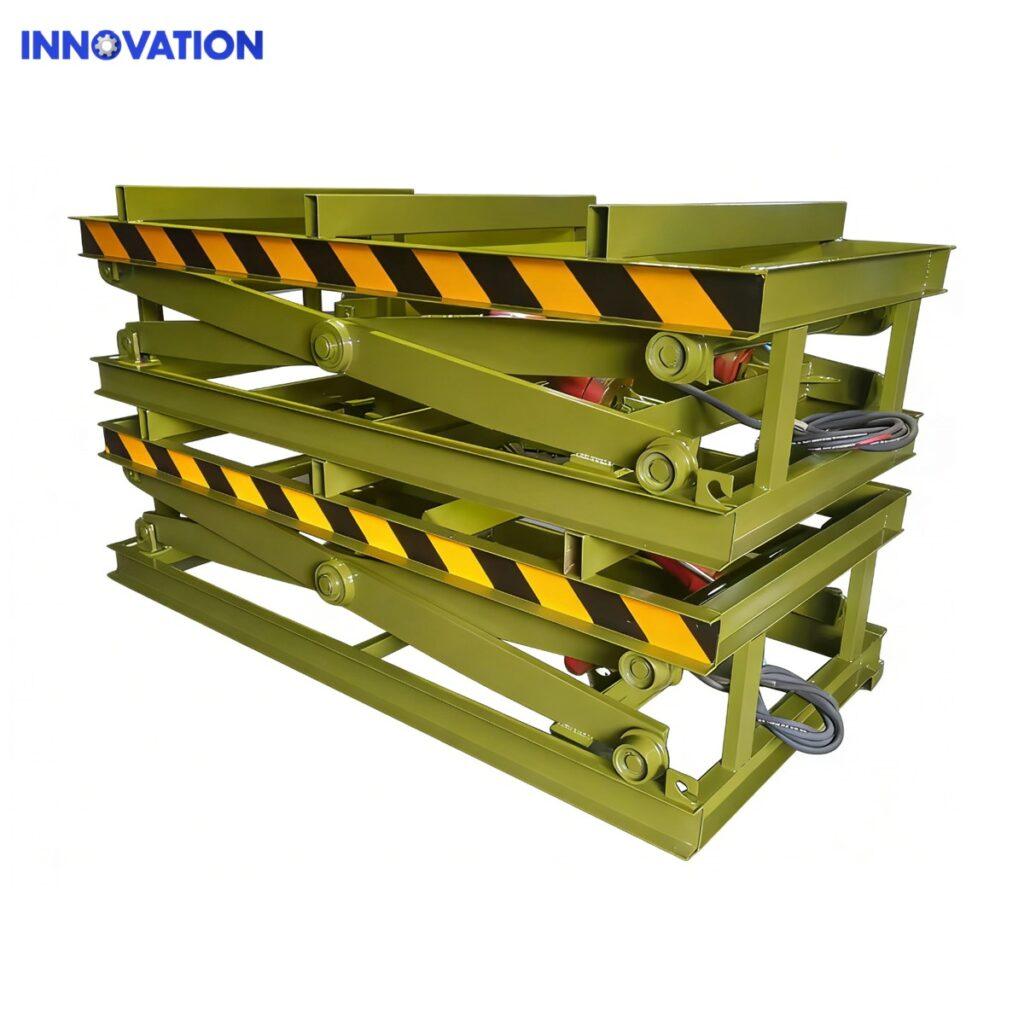
Lifting tables provide vertical movement and positioning for plywood stacks.
Types:
- Direct Lifting Table: Vertical lift, high stability
- Angle Iron Lifting Table: Heavy-duty, suitable for large stacks
- E-Type Lifting Table: Forklift-accessible, efficient for logistics
Technical Specs Example:
| Type | Platform Size (mm) | Load Capacity | Lifting Height (mm) |
|---|---|---|---|
| Direct | 1500 × 1500 | 1–3 tons | 500–1500 |
| Angle Iron | 2000 × 2000 | 3–5 tons | 800–2000 |
| E-Type | Custom | 1–2 tons | 500–1500 |
Applications:
- Feeding boards into presses or sanding lines
- Supporting stacking and packaging processes
- Enhancing safety and operational efficiency
Plywood Glue Mixers
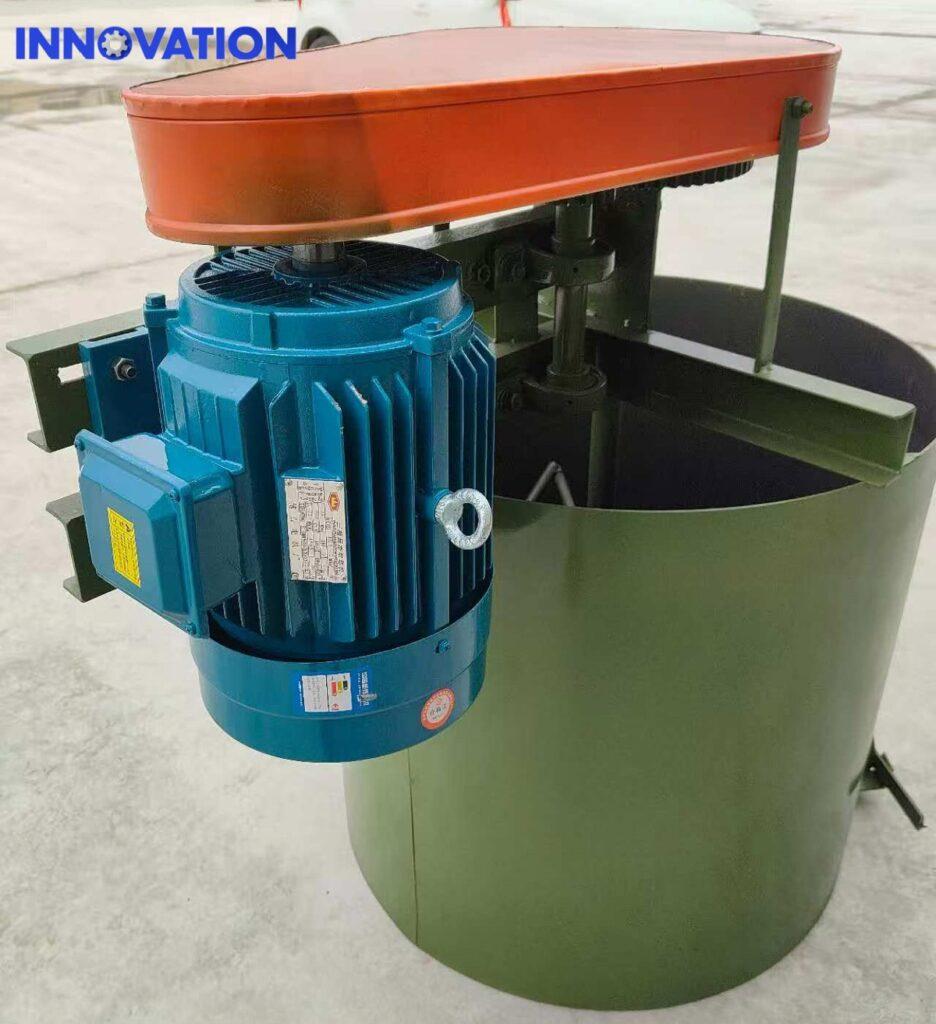
Glue mixers prepare resin adhesives like UF, PF, and melamine-based resins for uniform bonding.
Specifications Example:
- Capacity: 500–2000L
- Motor Power: 7.5–22 kW
- Mixing Speed: 0–960 rpm adjustable
Advantages:
- Stable glue viscosity ensures consistent bonding
- Reduces adhesive waste and improves board quality
- Supports high-output industrial operations
Glue Spreaders
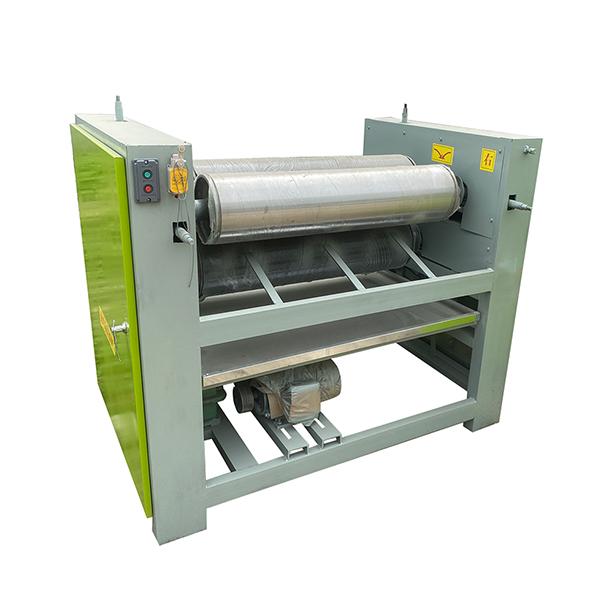
Glue spreaders apply adhesive evenly on plywood surfaces, enhancing bond strength and reducing production defects.
Features:
- Adjustable roller speed and thickness
- Durable rubber or stainless steel rollers
- Compact design for medium-sized production lines
Benefits:
- Uniform glue coverage
- Reduced labor requirements
- Improved product quality and production efficiency
Comparing Wood-Based Board Machinery Options
Automation vs. Manual Machinery
- Automated Systems: Higher efficiency, consistent quality, reduced labor
- Manual or Semi-Automatic Systems: Lower initial investment, flexible operation
Hot Press vs. Cold Press
| Feature | Hot Press | Cold Press |
|---|---|---|
| Pressing Method | Heat + Pressure | Pressure only |
| Panel Quality | Smooth, strong bonding | Adequate, slower bonding |
| Production Rate | High | Medium |
| Energy Usage | High | Low |
Industry Standards and Compliance
Modern plywood machinery often follows international standards such as:
- ISO 9001 for quality management
- CE Certification for European safety compliance
- GB/T 9846 for plywood production in China
Adhering to standards ensures safety, product consistency, and market acceptance.
Case Study: Efficiency Improvement in a Plywood Factory
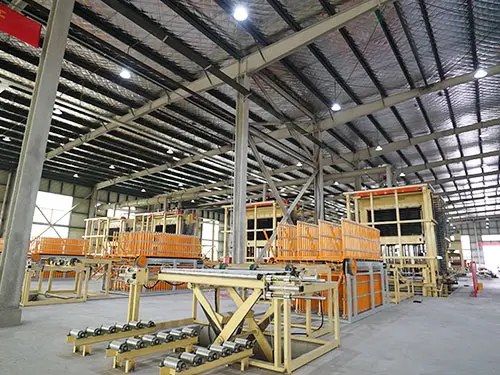
A leading plywood factory in Shandong implemented a full line of automated wood-based board machinery, including:
- Plywood Hot Press Machine with 11 platens
- Core Veneer Composer for high-quality core sheets
- Plywood Turnover Machines (180° and 90°)
- Edge Trimming Machines
Results:
- Production increased by 35%
- Labor costs reduced by 25%
- Product defect rate decreased from 4.5% to 1.2%
This demonstrates the value of integrating modern machinery in factory operations.
Emerging Trends in Wood-Based Board Machinery
- Smart factory integration with IoT monitoring
- Energy-efficient thermal oil and electric heating systems
- Automated glue application with real-time viscosity control
- Modular and flexible machinery designs for custom factory layouts
Industry white papers and research reports indicate that factories implementing automation and precise control systems see up to 40% improvement in throughput while maintaining consistent quality.
FAQ
What is the most important machine for a plywood factory?
The Hot Press Machine is essential for bonding veneer layers efficiently and ensuring panel strength.
How can I reduce labor costs in plywood production?
Automating veneer laying, edge trimming, panel flipping, and glue application can significantly reduce manual labor and improve efficiency.
Can wood-based board machinery handle multiple panel sizes?
Yes, most modern machinery supports adjustable platen sizes, cutting widths, and stacking heights to accommodate various panel dimensions.
How do I choose between semi-automatic and fully automatic systems?
Consider production volume, budget, and labor availability. High-volume factories benefit most from fully automated systems.
Are these machines energy-efficient?
Modern machines often use energy-efficient motors, thermal oil heating, and optimized hydraulic systems to reduce power consumption while maintaining high output.
Conclusion
Integrating advanced wood-based board machinery is essential for modern plywood and panel factories aiming to enhance efficiency, reduce labor, and maintain high product quality. By investing in hot press machines, plywood paving systems, edge trimmers, core veneer composers, turnover machines, lifting tables, glue mixers, and spreaders, manufacturers can optimize production workflows and meet stringent quality standards.
The evolution of automation, precise control systems, and energy-efficient technologies continues to shape the future of wood-based board manufacturing. Choosing the right machinery tailored to factory size, production needs, and panel types ensures sustainable, profitable, and competitive operations.
 English
  Vietnamese
  Arabic